
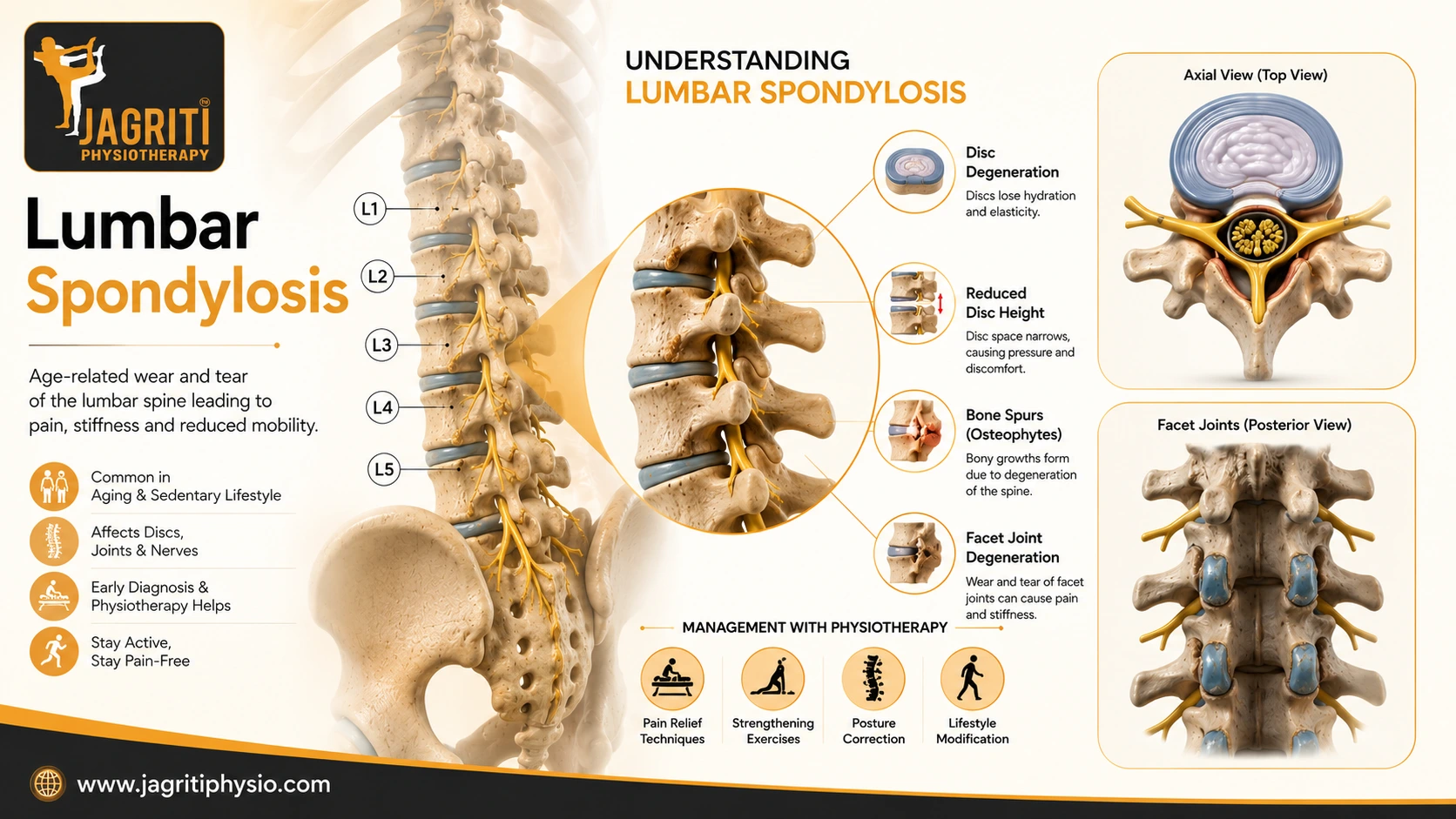
Lumbar spondylosis is a common age-related condition that affects the lower part of the spine. It develops as the discs, joints, bones, and other structures of the lumbar spine gradually undergo degenerative changes. Some people have these changes without noticeable symptoms, while others may experience lower back pain, stiffness, reduced movement, or symptoms that extend into the legs.
The good news is that lumbar spondylosis can often be managed with appropriate exercise, physiotherapy, lifestyle changes, and medical care when needed. Treatment usually focuses on reducing pain, improving mobility, strengthening supporting muscles, and helping you return to normal activities.
In this guide, we explain the symptoms, causes, risk factors, diagnosis, treatment options, lumbar spondylosis exercises, and when you should seek professional help.
What Is Lumbar Spondylosis?
Lumbar spondylosis refers to degenerative changes in the lower spine, particularly the vertebrae, discs, and facet joints. These changes become more common with age.
The discs between the vertebrae can gradually lose some of their height and flexibility. The joints and surrounding structures may also develop changes. In some people, these changes can contribute to irritation or narrowing around spinal nerves.
Importantly, having degenerative changes on an X-ray or scan does not always mean that a person will have pain. Symptoms need to be assessed together with the person’s medical history and physical examination.
Common Symptoms of Lumbar Spondylosis
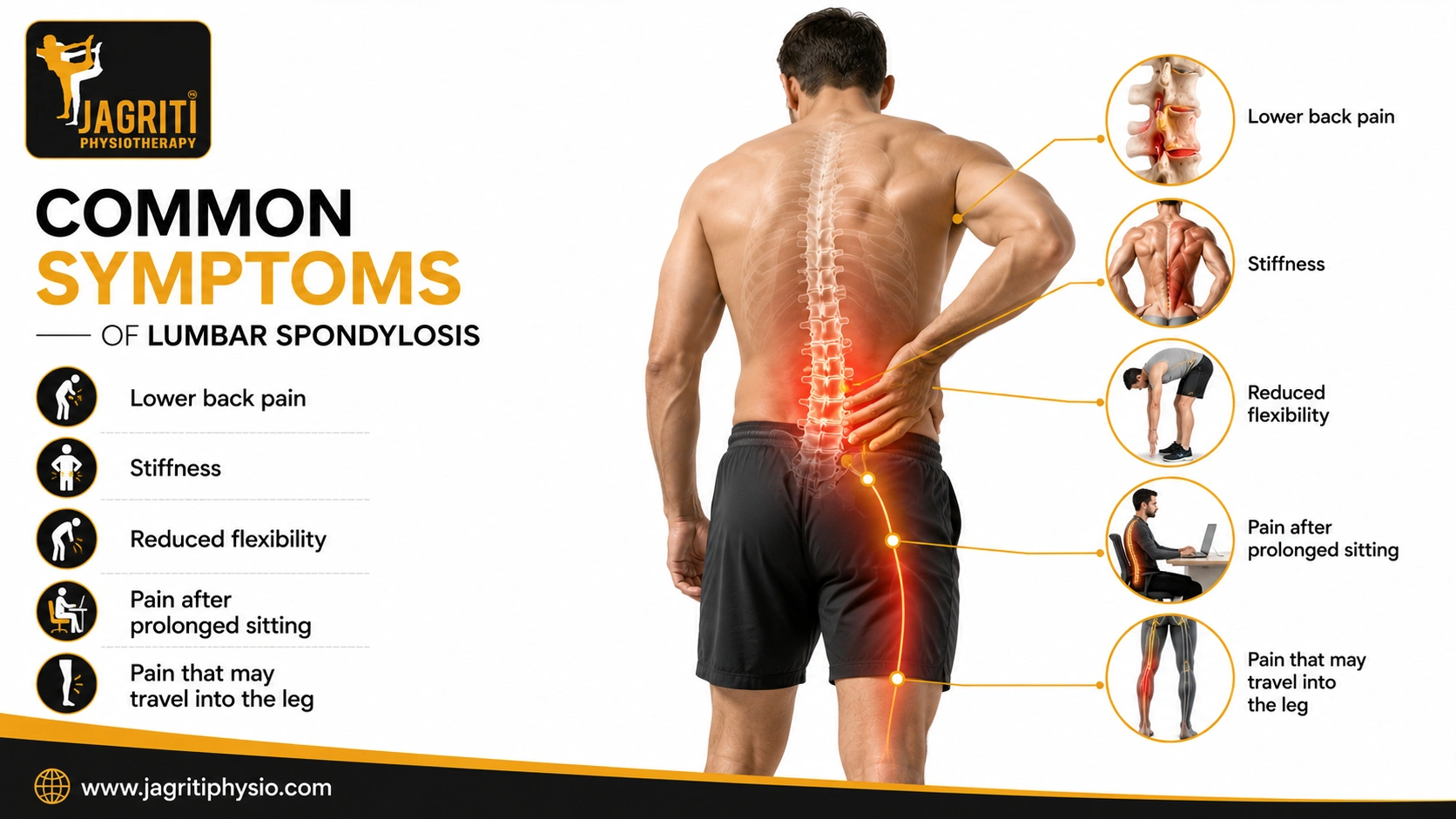
Lumbar spondylosis symptoms can vary considerably from person to person. Some people have no symptoms, while others may experience persistent or recurring lower back problems.
Common symptoms include:
1. Lower Back Pain
Pain in the lower back is one of the most common symptoms. It may be mild and occasional or become more persistent during periods of increased activity.
2. Back Stiffness
You may notice stiffness after waking up, sitting for a long time, or remaining in one position for an extended period.
3. Reduced Flexibility
Certain movements, such as bending, twisting, or changing positions, may become uncomfortable or more difficult.
4. Pain After Prolonged Sitting or Standing
Long periods of sitting, standing, driving, or working in one position can aggravate some people’s lower back symptoms.
5. Pain That Travels Into the Leg
If degenerative changes affect or irritate a spinal nerve, pain may extend from the lower back toward the buttock or leg. Numbness, tingling, or weakness may also occur when nerves are involved.
However, leg symptoms can have several different causes, so they should not automatically be attributed to lumbar spondylosis.
If lower back pain keeps returning, interferes with daily activities, or becomes difficult to manage, it is important to understand when to see a physiotherapist for back pain.
What Causes Lumbar Spondylosis?
The main factor associated with lumbar spondylosis is age-related degeneration of the spine.
Over time, the structures of the spine experience normal mechanical stress. The discs may become less hydrated and flexible, while the facet joints and surrounding tissues can also develop degenerative changes.
Other factors that may contribute to back problems or increase mechanical stress on the lower back include:
- Previous back injuries
- Repetitive lifting or physically demanding work
- Poor movement or lifting techniques
- Low levels of physical activity
- Prolonged sitting
- Excess body weight
- Poor posture or prolonged awkward positions
- Reduced strength of the core and lower-body muscles
It is important to remember that back pain can have many possible causes, including disc problems, muscle strains, arthritis, spinal stenosis, and other conditions. A proper clinical assessment is therefore important before assuming that lumbar spondylosis is the cause.
Who Is More Likely to Develop Lumbar Spondylosis?
Lumbar spondylosis becomes more common with increasing age, but younger adults can also experience lower back pain and degenerative changes.
Risk may be influenced by:
- Increasing age
- Previous spinal injury
- Physically demanding occupations
- Repetitive lifting
- Long periods of inactivity
- Being overweight
- Poor physical conditioning
- Repeated stress on the lower back
Having one or more risk factors does not mean that you will necessarily develop painful lumbar spondylosis.
How Is Lumbar Spondylosis Diagnosed?
A healthcare professional usually begins with a detailed medical history and physical examination.
They may assess:
- Location and pattern of your pain
- Spinal movement
- Muscle strength
- Reflexes
- Sensation
- Walking pattern
- Leg symptoms
- Activities that increase or decrease symptoms
Imaging such as an X-ray or MRI may be considered when clinically appropriate. MRI can provide more information about discs, nerves, and other soft tissues, while X-rays can show certain structural changes in the spine.
However, imaging findings need to be interpreted alongside symptoms and examination findings. Degenerative changes on imaging do not always explain the amount of pain a person experiences.
Lumbar Spondylosis Treatment
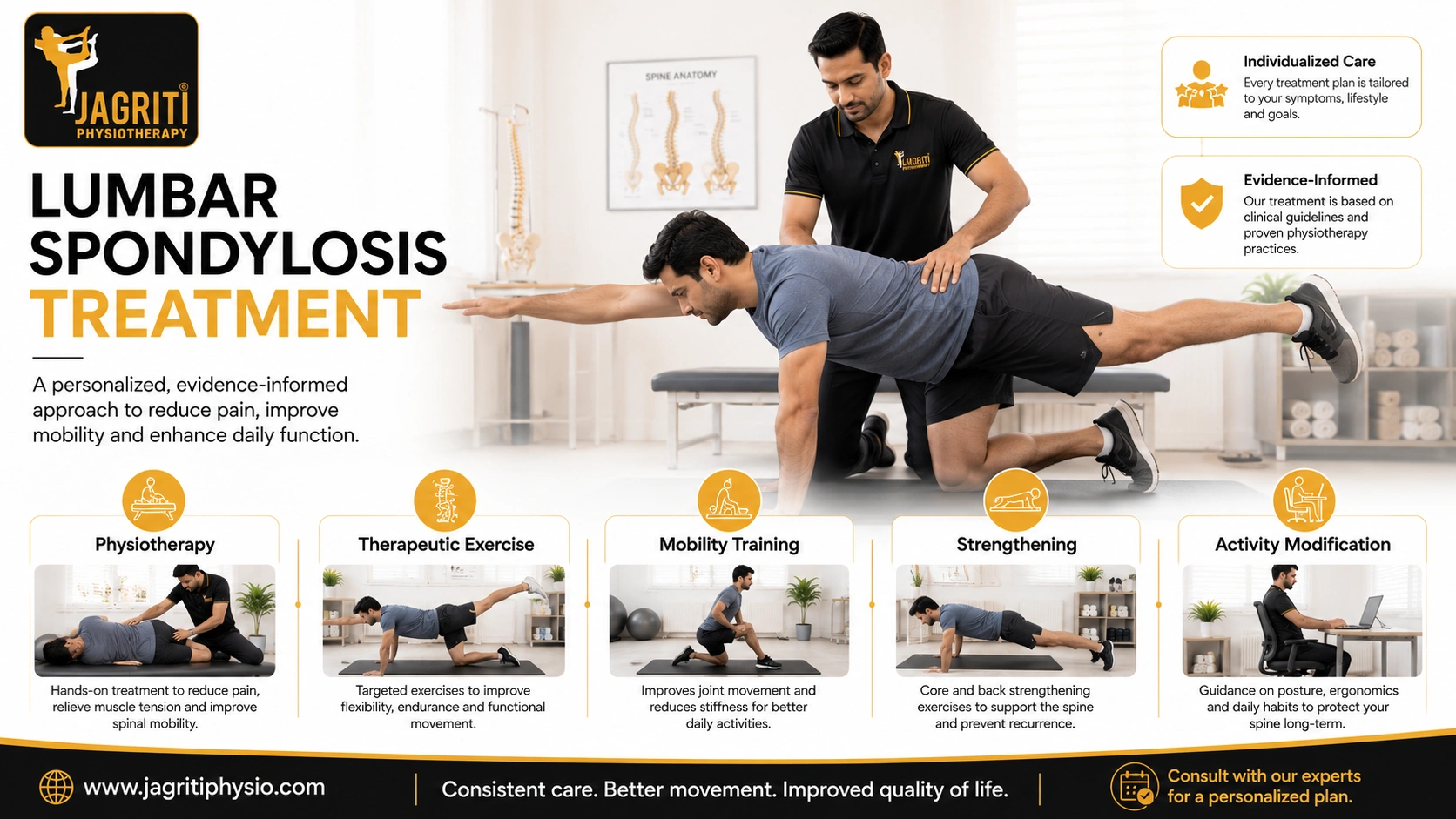
Treatment depends on your symptoms, physical findings, activity level, and whether nerves are involved.
1. Physiotherapy
Physiotherapy for lumbar spondylosis may help improve movement, muscle strength, flexibility, posture, and physical function.
A physiotherapist can assess your symptoms and create an individualized exercise programme based on your condition and goals.
Treatment may include:
- Therapeutic exercises
- Core strengthening
- Mobility exercises
- Flexibility exercises
- Postural and movement education
- Activity modification
- Manual therapy when appropriate
- Progressive strengthening
The goal is not simply to provide temporary pain relief. A good rehabilitation programme aims to help you move more confidently and maintain your physical function.
Physical therapy can teach exercises that improve flexibility and strengthen the back and abdominal muscles, while also helping people modify movements during painful episodes.
If you are experiencing persistent lower back pain or stiffness, a professional assessment can help identify the most appropriate treatment and exercise programme. At Jagriti Physiotherapy, Jaipur, physiotherapy care can focus on improving mobility, strengthening supporting muscles, and helping patients manage back pain through individualized rehabilitation.
2. Regular Physical Activity
Remaining active is generally preferable to prolonged bed rest for most people with back pain.
Low-impact activities such as walking, swimming, or other suitable forms of exercise may help maintain mobility and physical fitness. The appropriate activity depends on your symptoms and overall health.
If an activity consistently increases your symptoms, reduce or modify it rather than forcing through significant pain.
3. Medicines
Depending on your individual situation, a doctor or pharmacist may recommend medication for short-term pain management.
Commonly used medicines may include pain relievers or anti-inflammatory medicines, but these are not suitable for everyone. Factors such as kidney disease, stomach problems, cardiovascular conditions, other medicines, pregnancy, and allergies can affect whether a medicine is appropriate.
Always follow professional advice and the instructions provided with the medicine.
4. Lifestyle Changes
Lifestyle measures can support long-term back health.
Helpful habits may include:
- Taking regular movement breaks
- Maintaining a healthy body weight
- Building overall muscle strength
- Using safe lifting techniques
- Avoiding prolonged static positions
- Staying physically active
- Improving your workstation or sitting setup
- Following an individualized exercise programme
Best Exercises for Lumbar Spondylosis
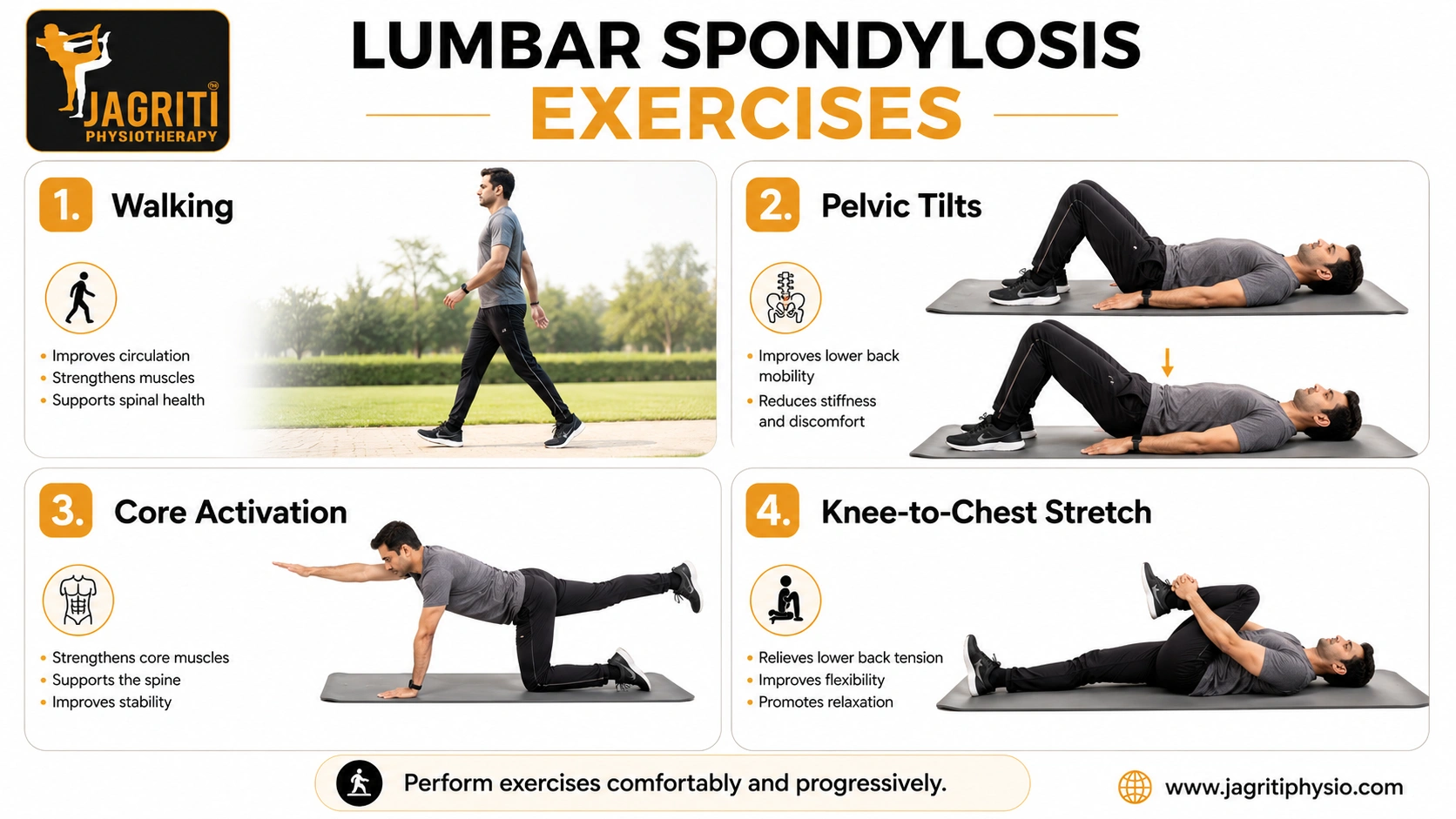
There is no single exercise that is best for everyone with lumbar spondylosis. Exercise should be selected according to symptoms, mobility, strength, age, and other health conditions.
Some people may benefit from exercises such as:
1. Walking
Walking is a simple way to maintain general physical activity. Start with a comfortable duration and gradually increase it if your symptoms remain manageable.
2. Pelvic Tilts
Lie on your back with your knees bent. Gently tighten your abdominal muscles and make a small controlled movement of your pelvis. Avoid forcing the movement.
3. Core Activation
Gentle abdominal bracing can help you learn to engage your trunk muscles without excessive movement of the spine.
4. Knee-to-Chest Stretch
While lying on your back, gently bring one knee toward your chest if this movement is comfortable for you. Hold briefly and return slowly.
5. Hip and Lower-Body Strengthening
Strengthening the hips and legs can help improve overall movement and physical function. Exercises may include controlled bridges or other strengthening movements prescribed by a physiotherapist.
6. Gentle Mobility Exercises
Controlled spinal and hip mobility exercises can help maintain movement and reduce stiffness.
Do not copy an exercise programme simply because it worked for someone else. The right exercises depend on the cause and pattern of your symptoms. Stop an exercise if it significantly increases your pain or produces new neurological symptoms and seek professional advice.
Regular exercise and appropriate movement are commonly recommended as part of managing back pain, while prolonged bed rest is generally discouraged.
Exercises and Activities to Be Careful With
When your back is painful, be cautious with activities that repeatedly aggravate your symptoms.
Depending on your condition, these may include:
- Heavy lifting
- Sudden twisting movements
- High-impact exercise during a painful flare-up
- Lifting with poor technique
- Exercises that consistently increase leg pain or numbness
- Very heavy resistance training without proper guidance
This does not mean that you must permanently avoid these activities. In many cases, a gradual and properly supervised return to activity is possible.
Can Lumbar Spondylosis Be Cured?
Lumbar spondylosis is associated with degenerative changes in the spine, so treatment generally focuses on managing symptoms and improving function rather than reversing every structural change.
Many people can manage their symptoms successfully with exercise, physiotherapy, physical activity, lifestyle changes, and appropriate medical treatment.
The goal is to reduce pain, improve mobility, increase strength, and help you return to your normal activities.
When Should You See a Physiotherapist?
Consider consulting a physiotherapist if your lower back pain:
- Keeps returning
- Limits daily activities
- Makes sitting, standing, or walking difficult
- Causes stiffness or reduced mobility
- Interferes with work or exercise
- Has not improved with appropriate self-care
- Is affecting your confidence in movement
A physiotherapist can assess your movement and develop a rehabilitation programme based on your individual needs.
When Should You See a Doctor Urgently?
Most back pain is not caused by a serious condition, but certain symptoms require prompt medical assessment.
Seek urgent medical attention if back pain is associated with:
- New or worsening weakness in the legs
- Significant loss of sensation
- Loss of bladder or bowel control
- Numbness around the genital or anal area
- Severe symptoms following significant trauma
- Fever or feeling seriously unwell
- Unexplained weight loss
- Other symptoms that concern you
These symptoms can indicate conditions that require medical evaluation and should not simply be assumed to be lumbar spondylosis.
How to Manage Lumbar Spondylosis in Daily Life
Small changes can make daily activities more comfortable.
Try to:
- Change position regularly instead of sitting for several hours continuously.
- Take short walking or movement breaks.
- Use safe lifting techniques.
- Keep frequently used items within an easy-to-reach position.
- Maintain regular physical activity.
- Follow your physiotherapist’s exercise programme consistently.
- Increase exercise gradually rather than suddenly.
- Pay attention to symptoms that spread into the legs.
Consistency is often more useful than doing a very intense workout occasionally.
Final Thoughts
Lumbar spondylosis is a common degenerative condition of the lower spine that may cause back pain, stiffness, reduced mobility, and sometimes leg symptoms when nerves are affected.
Although the underlying degenerative changes cannot simply be reversed, many people can improve their comfort and physical function through physiotherapy, appropriate exercise, regular movement, lifestyle changes, and medical care when required.
The most effective exercise programme is one that is appropriate for your symptoms and performed consistently. If your pain is persistent, worsening, or affecting your daily activities, a qualified healthcare professional or physiotherapist can help determine the most suitable treatment approach.
Medical Disclaimer: This article is intended for general educational purposes and should not replace an individual medical assessment, diagnosis, or treatment plan. If you have persistent, severe, or worsening symptoms, consult a qualified healthcare professional.
Frequently Asked Questions (FAQs)
1. Is lumbar spondylosis the same as a slipped disc?
Ans: No. Lumbar spondylosis refers to degenerative changes affecting structures of the spine, while a slipped or herniated disc involves displacement of disc material. They are different conditions, although symptoms can sometimes overlap.
2. Is walking good for lumbar spondylosis?
Ans: Walking can be a useful form of low-impact physical activity for many people with back pain. Start at a comfortable level and gradually increase activity if symptoms remain manageable.
3. Can physiotherapy help lumbar spondylosis?
Ans: Yes. Physiotherapy can help improve strength, flexibility, mobility, movement patterns, and physical function. A programme should be individualized rather than based on a generic exercise list.
4. Can lumbar spondylosis be treated without surgery?
Ans: Many people are managed without surgery using conservative approaches such as exercise, physiotherapy, activity modification, and appropriate medical treatment. Surgery is generally considered only in selected cases when clinically indicated.
5. What exercises are best for lumbar spondylosis?
Ans: There is no universal best exercise. Walking, mobility work, core strengthening, and hip or lower-body strengthening may be appropriate for some people, but exercises should be selected according to the individual’s symptoms and physical assessment.
6. Can lumbar spondylosis cause leg pain?
Ans: It can be associated with leg symptoms when degenerative changes affect or irritate spinal nerves. However, leg pain can have several causes, so persistent numbness, weakness, or radiating pain should be professionally assessed.
About the Author

Dr Deepesh nainani
Dr. Deepesh Nainani (PT) is a leading physiotherapist in Jaipur, offering expert, patient-focused care. He leads Jagriti Physiotherapy with a skilled team across multiple specialties. Known for his achievements and modern treatment approach, he ensures effective recovery and long-term results, making him a trusted choice for physiotherapy in Jaipur.
Get Quote Now

