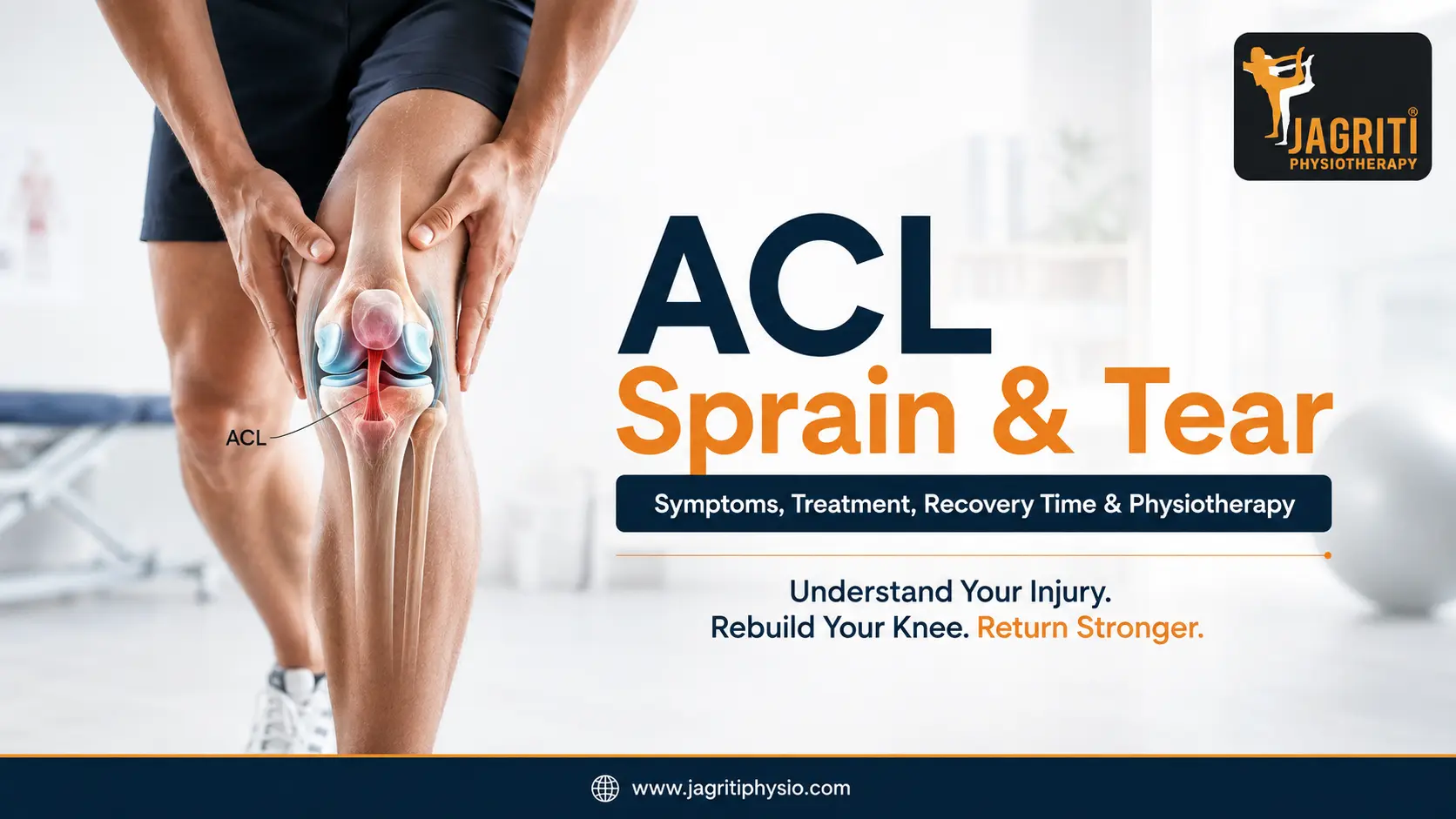
An ACL sprain or tear is one of the most important knee injuries to understand, particularly for people who participate in football, cricket, basketball, badminton, running, gym training, or other activities that involve jumping, pivoting, sudden stopping, or rapid changes of direction.
The anterior cruciate ligament (ACL) helps control forward and rotational movement of the shinbone relative to the thighbone. When the ACL is stretched or torn, the knee may become painful, swollen, weak, or unstable. The severity can range from a mild ligament injury to a complete ACL rupture, and treatment depends on the type of injury, knee stability, associated damage, activity level, and personal goals.
This guide explains ACL sprain symptoms, ACL tear diagnosis, grade 1 ACL recovery time, ACL sprain recovery time, ACL tear treatment, ACL rehabilitation exercises, ACL reconstruction rehabilitation, and when physiotherapy may be appropriate.
Important: This article is for general education and does not replace an examination by a qualified healthcare professional. ACL injuries can occur together with meniscus, cartilage, bone, or other ligament injuries, so persistent pain, swelling, instability, or difficulty walking should be professionally assessed.
What Is the ACL?
The anterior cruciate ligament (ACL) is one of the major ligaments inside the knee. It connects the femur (thighbone) to the tibia (shinbone) and contributes to knee stability, particularly during movements involving rotation, cutting, pivoting, and changes in direction.
The ACL works together with other knee ligaments, the menisci, muscles, tendons, and the surrounding joint structures.
An ACL sprain means the ligament has been stretched or damaged. In a more severe injury, the ligament may be partially or completely torn.
Understanding the difference between an ACL sprain and an ACL tear is important because treatment and recovery expectations can be very different.
What Causes an ACL Injury?
ACL injuries commonly happen when the knee experiences a sudden force or movement that exceeds the ligament’s ability to control the joint.
Common mechanisms include:
- Quickly changing direction while running
- Sudden deceleration or stopping
- Landing awkwardly after a jump
- Pivoting while the foot remains planted
- Direct impact or collision during sport
- Hyperextension of the knee
- Poor landing mechanics during jumping activities
ACL injuries can occur during both contact and non-contact situations. Sports involving repeated cutting, jumping, landing, and rapid direction changes can place considerable demands on the knee.
ACL Sprain Grades: Grade 1, Grade 2 and Grade 3
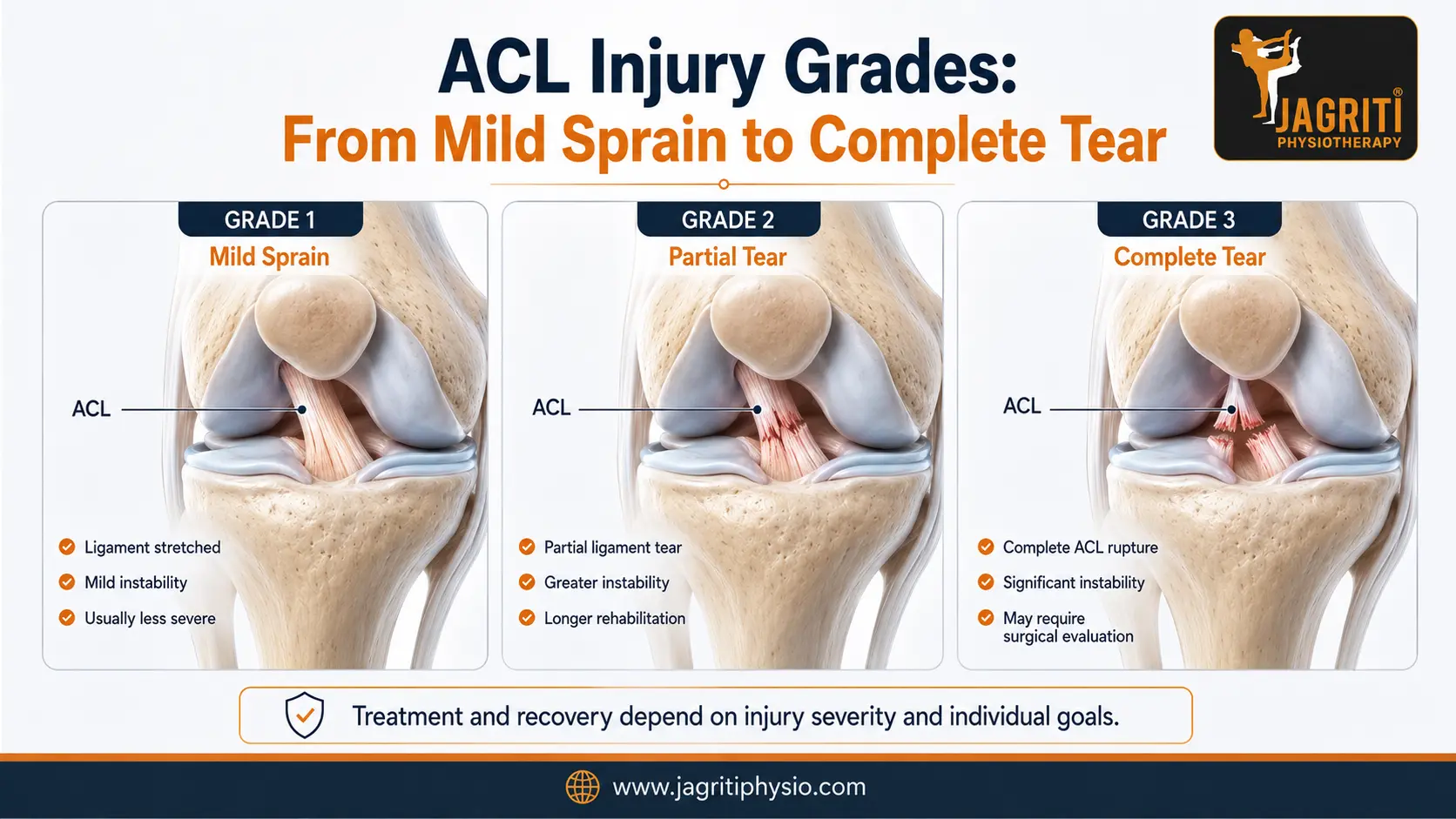
ACL injuries are often described according to severity.
Grade 1 ACL Sprain
A grade 1 ACL sprain generally involves stretching or minor damage to the ligament without major loss of stability.
Typical symptoms can include:
- Mild knee pain
- Limited swelling
- Mild tenderness
- Little or no feeling of instability
- Relatively normal ability to walk
Grade 2 ACL Sprain
A grade 2 ACL injury generally indicates a partial tear of the ligament.
Symptoms may include:
- Moderate pain
- Increased swelling
- Reduced range of motion
- Difficulty with certain movements
- Weakness
- A feeling that the knee may give way
The amount of instability can vary considerably between individuals.
Grade 3 ACL Tear
A grade 3 ACL injury is generally considered a complete rupture of the ligament.
Possible symptoms include:
- Significant swelling
- Knee instability
- Difficulty changing direction
- Reduced confidence in the knee
- Difficulty returning to sports involving pivoting or cutting
- Functional limitations during daily activities or exercise
A complete ACL tear does not automatically mean that every person needs surgery. Treatment decisions should be based on the individual’s examination, activity demands, associated injuries, knee instability, and goals.
Common ACL Injury Symptoms
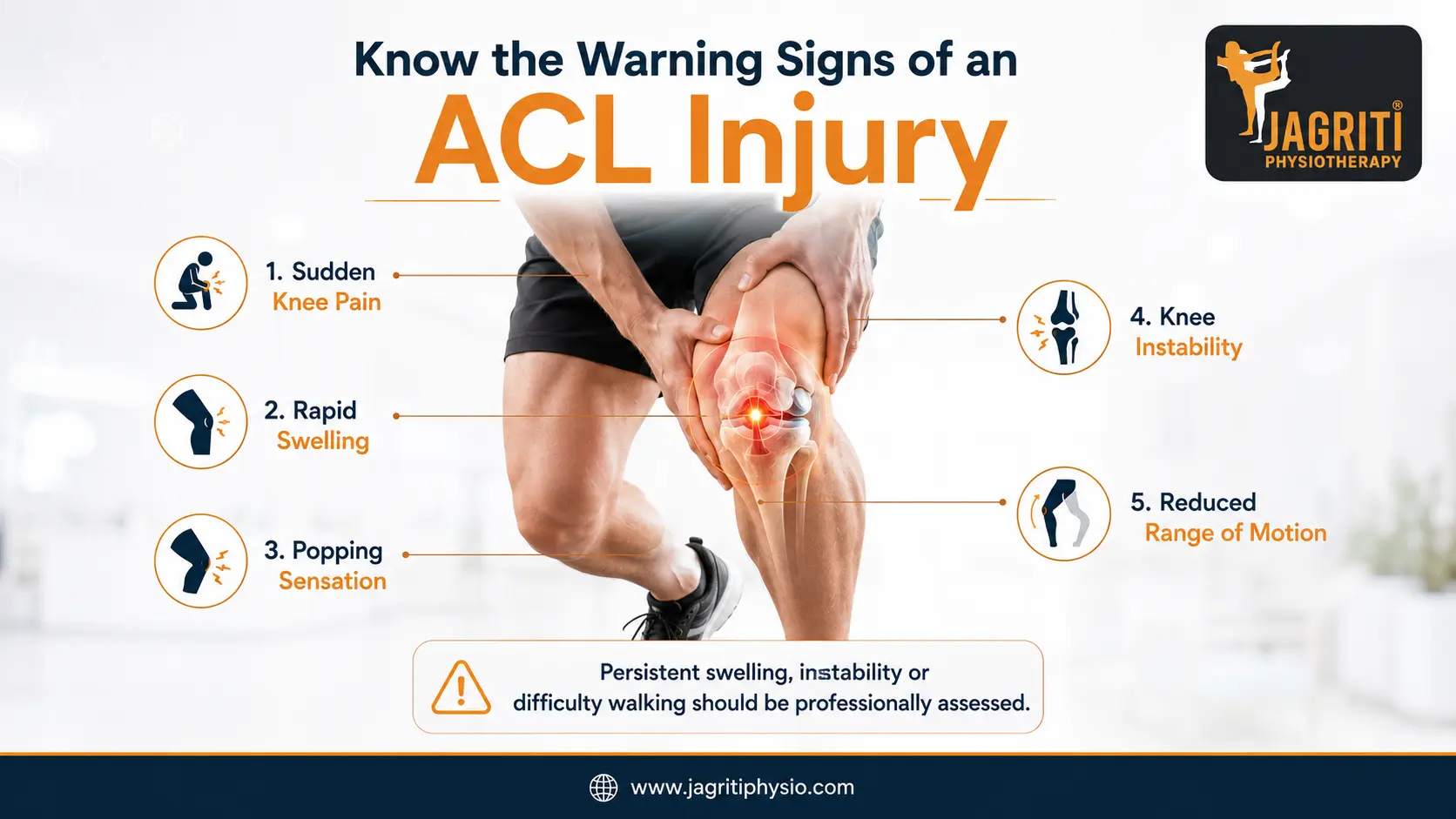
The symptoms of an ACL injury can vary, but common signs include:
1. Sudden Knee Pain
Pain may occur immediately after the injury, although some people experience relatively little pain during the first moments after an ACL tear.
2. Rapid Swelling
Swelling that develops relatively quickly after a knee injury can be an important clinical finding. Rapid swelling may indicate bleeding within the joint, although it is not specific to an ACL tear.
3. A Popping Sensation
Some people report hearing or feeling a “pop” at the time of injury. However, not everyone with an ACL injury experiences this.
4. Instability or Giving Way
A knee that feels unstable, particularly during turning, descending stairs, or sport-specific movements, can indicate a problem with knee stability.
5. Reduced Range of Motion
Pain and swelling can make it difficult to fully straighten or bend the knee.
6. Difficulty Returning to Sport
Activities that involve running, cutting, jumping, landing, or pivoting may become difficult or unsafe.
These symptoms can also occur with other knee injuries, including meniscus injuries, collateral ligament injuries, cartilage damage, or fractures. A clinical assessment is therefore important.
How Is an ACL Injury Diagnosed?
An ACL diagnosis usually starts with a detailed history and physical examination.
A physiotherapist, sports medicine clinician, or orthopaedic professional may assess:
- How the injury occurred
- Knee swelling
- Pain and tenderness
- Range of motion
- Muscle strength
- Walking pattern
- Knee stability
- Functional movement
- Whether other structures may also be injured
Specific clinical tests may be used to assess ACL integrity and knee stability.
Is an MRI Needed for an ACL Tear?
An MRI scan can provide detailed information about the ACL and other soft-tissue structures, including the menisci and cartilage. It may be particularly useful when the diagnosis is uncertain or when associated injuries are suspected.
An X-ray may also be used when a fracture or other bony injury needs to be ruled out.
Importantly, imaging should be interpreted together with the patient’s symptoms and physical examination rather than used in isolation.
What Should You Do Immediately After an ACL Injury?
If you have just injured your knee, avoid returning immediately to sport or strenuous exercise.
Early management may include:
Protect the knee: Avoid activities that increase pain or instability.
Use relative rest: Reduce aggravating activities while maintaining appropriate movement as tolerated.
Manage swelling: Elevation and compression may help with swelling. A cold pack can provide temporary pain relief for some people.
Use walking support when necessary: Crutches or another aid may be appropriate when normal walking is difficult, but this should depend on the injury and professional advice.
Arrange an assessment: Significant swelling, instability, difficulty bearing weight, or persistent pain warrants professional evaluation.
Early rehabilitation is important because prolonged inactivity is not usually the goal. The appropriate approach is to gradually restore mobility, muscle activation, strength, balance, and function according to the individual’s condition.
ACL Tear Treatment: Do You Always Need Surgery?
No. Not every ACL injury requires ACL reconstruction surgery.
Depending on the person and the injury, treatment may involve:
- Structured physiotherapy
- Activity modification
- Strength and neuromuscular training
- Rehabilitation before surgery
- Rehabilitation without surgery
- ACL reconstruction when clinically appropriate
- Management of associated meniscus or other knee injuries
For some people, especially those whose daily activities do not require high levels of pivoting or cutting, rehabilitation without reconstruction may be a reasonable option.
For others, particularly individuals who want to return to sports involving repeated pivoting and who have persistent functional instability or associated knee injuries, ACL reconstruction may be considered.
Current patient guidance also emphasizes that physiotherapy rehabilitation is important whether or not ACL reconstruction is performed.
ACL Physiotherapy: Why Rehabilitation Matters
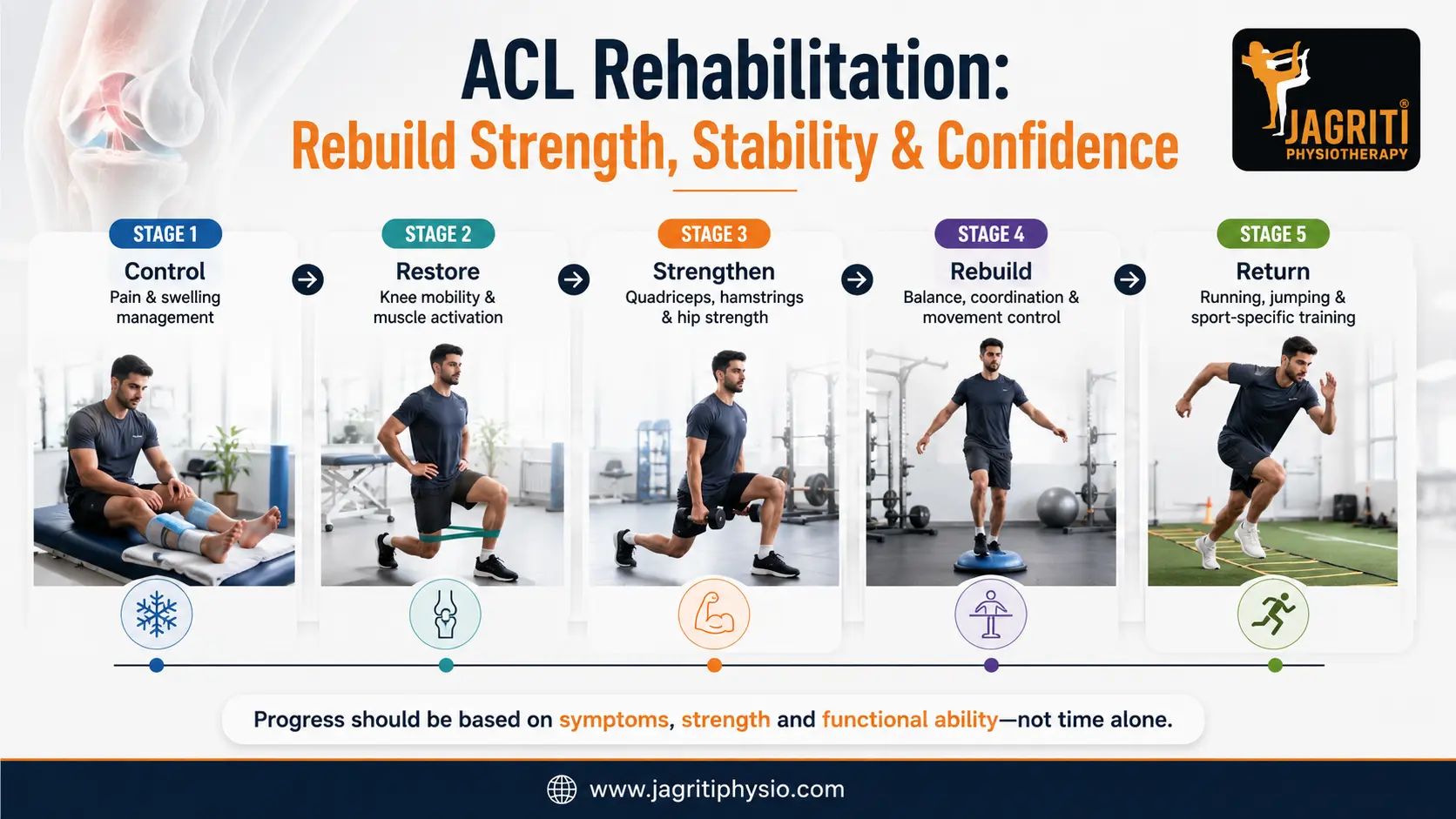
Physiotherapy for ACL injury focuses on restoring the abilities the knee needs for everyday life and sport.
A comprehensive ACL rehabilitation programme may address:
Pain and Swelling Management
Reducing excessive swelling and improving comfort can help restore movement and allow rehabilitation to progress.
Knee Range of Motion
Regaining appropriate knee extension and flexion is an important early rehabilitation goal.
Quadriceps Strength
The quadriceps can become weak after an ACL injury or surgery. Restoring strength is essential for walking, stair climbing, squatting, running, and sport.
Hamstring and Hip Strength
The hamstrings and hip musculature also contribute to lower-limb control and knee function.
Balance and Proprioception
Proprioception refers to the body’s ability to sense joint position and movement. Balance and neuromuscular exercises can help improve control during functional activities.
Movement Quality
Rehabilitation should not focus only on how much weight someone can lift. The way the person lands, decelerates, squats, steps, jumps, and changes direction can also matter.
Evidence-based ACL rehabilitation approaches use combinations of strength, functional, movement-quality, and psychological assessments to guide progression.
ACL Rehabilitation Exercises
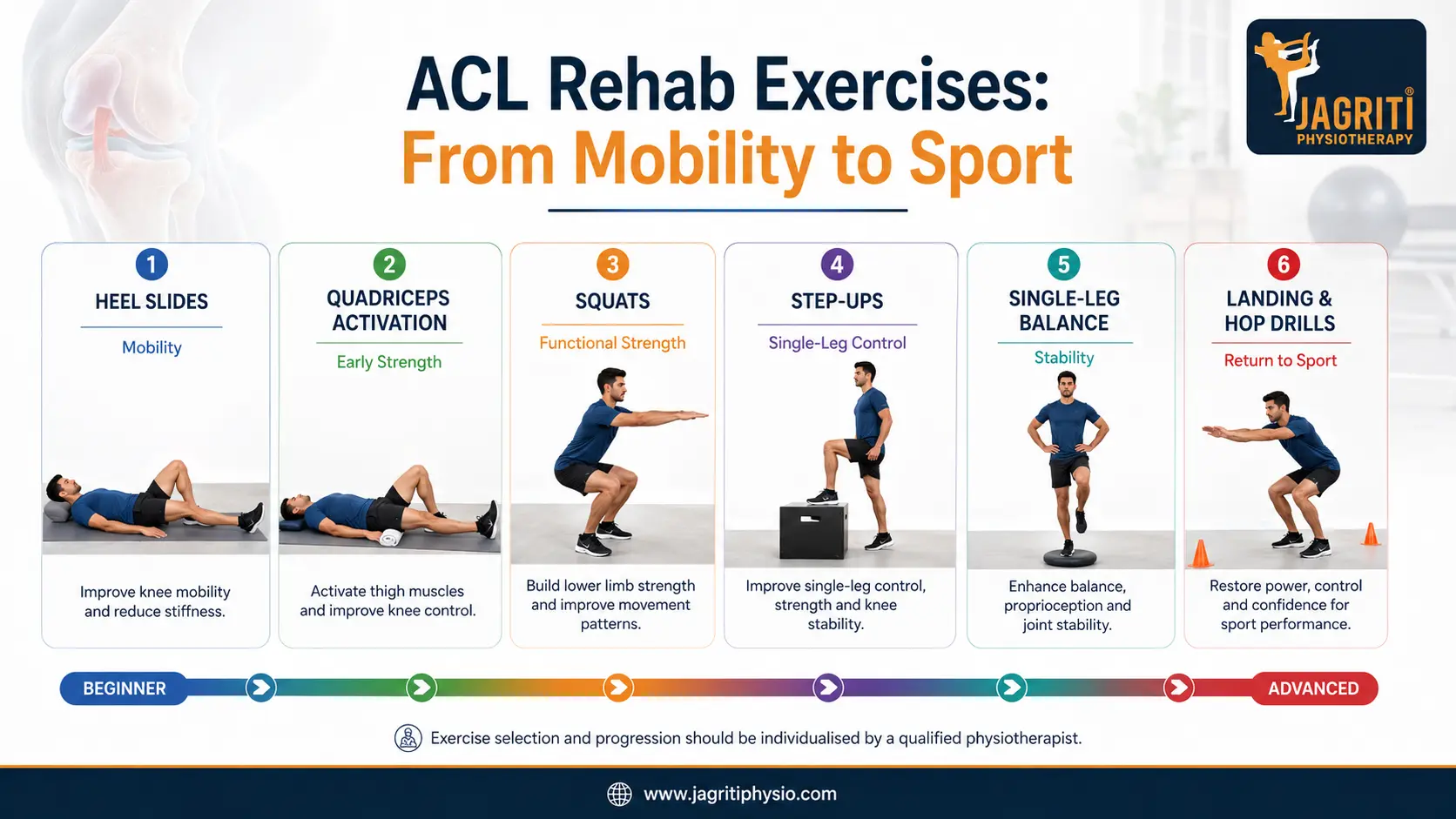
The appropriate exercises depend on the stage of recovery and whether the ACL has been treated conservatively or surgically.
Depending on the individual’s assessment, a physiotherapist may introduce exercises such as:
Early-Stage Exercises
- Knee range-of-motion exercises
- Heel slides
- Quadriceps activation
- Straight-leg raises when appropriate
- Gentle weight-bearing exercises
- Controlled mobility work
Strengthening Exercises
As the knee becomes stronger and more stable, rehabilitation may progress to:
- Squats
- Step-ups
- Split squats
- Leg presses
- Hamstring strengthening
- Hip strengthening
- Calf strengthening
- Progressive resistance exercises
Neuromuscular and Balance Training
Later rehabilitation may include:
- Single-leg balance
- Controlled landing drills
- Dynamic balance activities
- Deceleration drills
- Agility exercises
- Jumping and hopping progressions
These exercises should not be treated as a universal ACL workout routine. Exercise selection, range, resistance, speed, and progression should be adjusted according to the person’s symptoms, examination findings, healing stage, surgery status, and functional goals.
ACL Sprain Recovery Time: How Long Does It Take?
One of the most common questions is:
“How long does an ACL sprain take to heal?”
There is no single recovery time that applies to every ACL injury.
A grade 1 ACL sprain recovery time may be much shorter than recovery from a complete ACL tear. Recovery is affected by the severity of the injury, associated injuries, swelling, strength deficits, treatment approach, rehabilitation adherence, activity requirements, and individual response to rehabilitation.
For a mild ACL sprain, people may return to normal activities relatively quickly, provided symptoms and function improve appropriately.
A partial ACL tear can take longer and may require a structured rehabilitation programme.
A complete ACL rupture can involve a much longer recovery, especially when surgery and return-to-sport rehabilitation are involved.
Therefore, the phrase “ACL sprain recovery time” should not be interpreted as a fixed number of days or weeks.
How Long Does It Take to Recover After ACL Reconstruction?
ACL reconstruction rehabilitation is typically measured in months rather than weeks.
The early phase may focus on reducing swelling, restoring knee movement, activating the quadriceps, and developing normal walking mechanics.
Later phases progressively build:
- Strength
- Single-leg control
- Balance
- Neuromuscular coordination
- Running capacity
- Jumping and landing ability
- Agility
- Sport-specific movement
- Psychological readiness
Evidence-based rehabilitation recommendations commonly support a longer, criteria-based rehabilitation process rather than simply returning to sport because a certain number of months have passed.
When Can You Return to Running or Sports After an ACL Injury?
Returning to sport should not be based on the calendar alone.
A person may need to demonstrate adequate:
- Knee range of motion
- Pain and swelling control
- Quadriceps and hamstring strength
- Single-leg control
- Balance
- Jump and landing mechanics
- Hop performance
- Running tolerance
- Sport-specific ability
- Psychological readiness
Research has highlighted that many athletes may still have strength or functional deficits even at around nine months after ACL reconstruction, reinforcing the importance of criteria-based rehabilitation rather than using time alone.
More recent evidence also suggests that completing rehabilitation and meeting objective discharge criteria may be more informative for return to pivoting sports than using nine months as a universal cut-off by itself.
Can an ACL Tear Heal Without Surgery?
The answer depends on the type of injury.
A partial injury may sometimes be managed successfully without reconstruction, particularly when the knee remains functionally stable and the person’s goals are compatible with non-operative rehabilitation.
A complete ACL rupture generally has less potential for spontaneous restoration of normal ligament structure and stability. However, some individuals can function well without reconstruction after appropriate rehabilitation.
The decision should consider:
- Degree of instability
- Sport and activity demands
- Occupation
- Age and individual circumstances
- Associated meniscus or cartilage injuries
- Previous knee problems
- Rehabilitation goals
- Patient preference
There is no single treatment that is ideal for every ACL injury.
ACL Injury Prevention
Although not every ACL injury can be prevented, exercise-based injury-prevention programmes can help address modifiable risk factors.
A prevention programme may include:
- Strength training
- Landing technique
- Deceleration training
- Balance exercises
- Neuromuscular training
- Hip and lower-limb control
- Sport-specific warm-ups
- Progressive conditioning
This is especially relevant for athletes participating in sports that involve frequent cutting, jumping, and rapid changes of direction. Clinical practice guidance supports exercise-based knee and ACL injury-prevention approaches.
When Should You See a Physiotherapist for an ACL Injury?
Consider professional assessment when you experience:
- Significant knee swelling after an injury
- Persistent knee pain
- Knee instability or giving way
- Difficulty fully straightening the knee
- Difficulty walking normally
- Reduced confidence using the affected leg
- Difficulty returning to exercise
- Symptoms that continue despite initial rest
- Problems following ACL surgery
- Difficulty progressing through rehabilitation
A physiotherapist can assess movement, strength, mobility, functional capacity, and rehabilitation needs and can coordinate referral when further medical investigation is appropriate.
ACL Physiotherapy in Jaipur
At Jagriti Physiotherapy in Jaipur, ACL rehabilitation can be approached as a progressive, individualised process rather than a one-size-fits-all exercise programme.
The rehabilitation goal may be to help a patient:
Reduce pain and swelling → restore knee mobility → rebuild strength → improve balance and movement control → regain daily function → progress toward running and sport when appropriate.
Jagriti Physiotherapy provides physiotherapy care for sports injuries and musculoskeletal conditions in Jaipur, with personalised treatment plans based on the patient’s condition and goals.
For patients recovering after ACL reconstruction, rehabilitation should also be coordinated with the treating orthopaedic team and progressed according to the surgical protocol and clinical findings.
Final Takeaway
An ACL sprain or tear is not simply a matter of waiting for knee pain to disappear. Successful recovery involves restoring the qualities the knee needs for everyday activity, work, exercise, and sport.
The right treatment depends on the severity of the injury, knee stability, associated damage, lifestyle, and personal goals.
Whether your injury is a grade 1 ACL sprain, partial ACL tear, complete ACL tear, or an ACL injury after reconstruction, a structured rehabilitation programme can help guide the recovery process.
For people in Jaipur looking for ACL injury physiotherapy, ACL rehabilitation, sports injury physiotherapy, or knee physiotherapy, professional assessment can help determine the appropriate next step.
Medical References:
This article is informed by established clinical and research sources concerning ACL injury diagnosis, rehabilitation and return to sport, including NHS patient guidance, peer-reviewed PubMed research, and clinical practice recommendations.
Frequently Asked Questions About ACL Sprains and Tears
1. How long does a grade 1 ACL sprain take to recover?
Ans: A grade 1 ACL sprain is generally less severe than a partial or complete tear, so recovery may be faster. However, there is no fixed recovery period. Return to activity should depend on pain, swelling, range of motion, strength, stability, and functional performance rather than time alone.
2. What is the recovery time for an ACL sprain?
Ans: ACL sprain recovery time varies considerably. Mild injuries may recover relatively quickly, while partial or complete tears can require substantially longer rehabilitation. Associated meniscus or cartilage injuries can also affect recovery.
3. Can I walk with an ACL tear?
Ans: Some people can walk after an ACL tear, while others may have substantial pain, swelling, weakness, or instability. Being able to walk does not rule out an ACL injury.
4. Does an ACL tear always require surgery?
Ans: No. Treatment depends on the type of injury, symptoms, functional instability, associated injuries, activity requirements, and personal goals.
5. Is physiotherapy necessary after ACL reconstruction?
Ans: Yes. Rehabilitation is a major part of recovery after ACL reconstruction. It is used to restore mobility, strength, neuromuscular control, functional capacity, and readiness for normal activity or sport.
6. When can I return to sports after ACL surgery?
Ans: There is no universal return-to-sport date. Return should be based on rehabilitation progress and objective criteria such as strength, hopping ability, movement quality, sport-specific function, and psychological readiness.
7. Can an ACL sprain get worse if ignored?
Ans: Continuing high-risk activities despite pain or instability can increase the chance of further knee problems. An unstable knee may also place additional stress on other structures. Appropriate assessment can help determine the safest way to return to activity.
8. Should I exercise with an ACL injury?
Ans: Exercise is often an important part of ACL rehabilitation, but the correct exercises depend on the injury stage and treatment approach. Exercises that are appropriate after professional assessment may be inappropriate at another stage of recovery.
About the Author

Dr Deepesh nainani
Dr. Deepesh Nainani (PT) is a leading physiotherapist in Jaipur, offering expert, patient-focused care. He leads Jagriti Physiotherapy with a skilled team across multiple specialties. Known for his achievements and modern treatment approach, he ensures effective recovery and long-term results, making him a trusted choice for physiotherapy in Jaipur.
Get Quote Now

