

You get out of bed, place your foot on the floor, and suddenly feel a sharp or aching pain under your heel.
After walking for a few minutes, it may start to feel better.
This pattern of heel pain in the morning, especially during the first few steps after waking up or after sitting for a long time, is commonly associated with plantar heel pain or plantar fasciitis. However, heel pain can have several causes, so the pattern and location of your symptoms matter.
The good news is that many cases can improve with appropriate activity changes, supportive footwear, stretching, strengthening and physiotherapy.
Quick Answer: Why Does My Heel Hurt When I Wake Up?
A common reason is irritation of the plantar fascia a strong band of tissue running along the bottom of your foot from the heel towards the toes.
The plantar fascia helps support the arch and manage the load placed through your foot while standing and walking.
With plantar heel pain, symptoms are often worse during the first few steps in the morning or after a period of rest. The discomfort may then ease as you move, before becoming noticeable again after prolonged standing, walking or running.
Morning heel pain does not automatically mean you have plantar fasciitis, so persistent symptoms should be assessed properly.
What Is Plantar Fasciitis?
Plantar fasciitis, also called plantar heel pain or plantar fasciopathy in some clinical resources, affects the tissue running across the sole of your foot.
Pain is usually felt around the bottom of the heel or where the heel meets the arch.
Common symptoms include:
- Pain during the first steps after waking
- Pain after sitting for a long time
- Tenderness under the heel
- Pain after prolonged standing or walking
- Symptoms that initially improve with gentle movement
- Pain when stretching the bottom of the foot
These patterns are widely recognised in plantar heel pain.
Why Is Heel Pain Worse During the First Steps in the Morning?
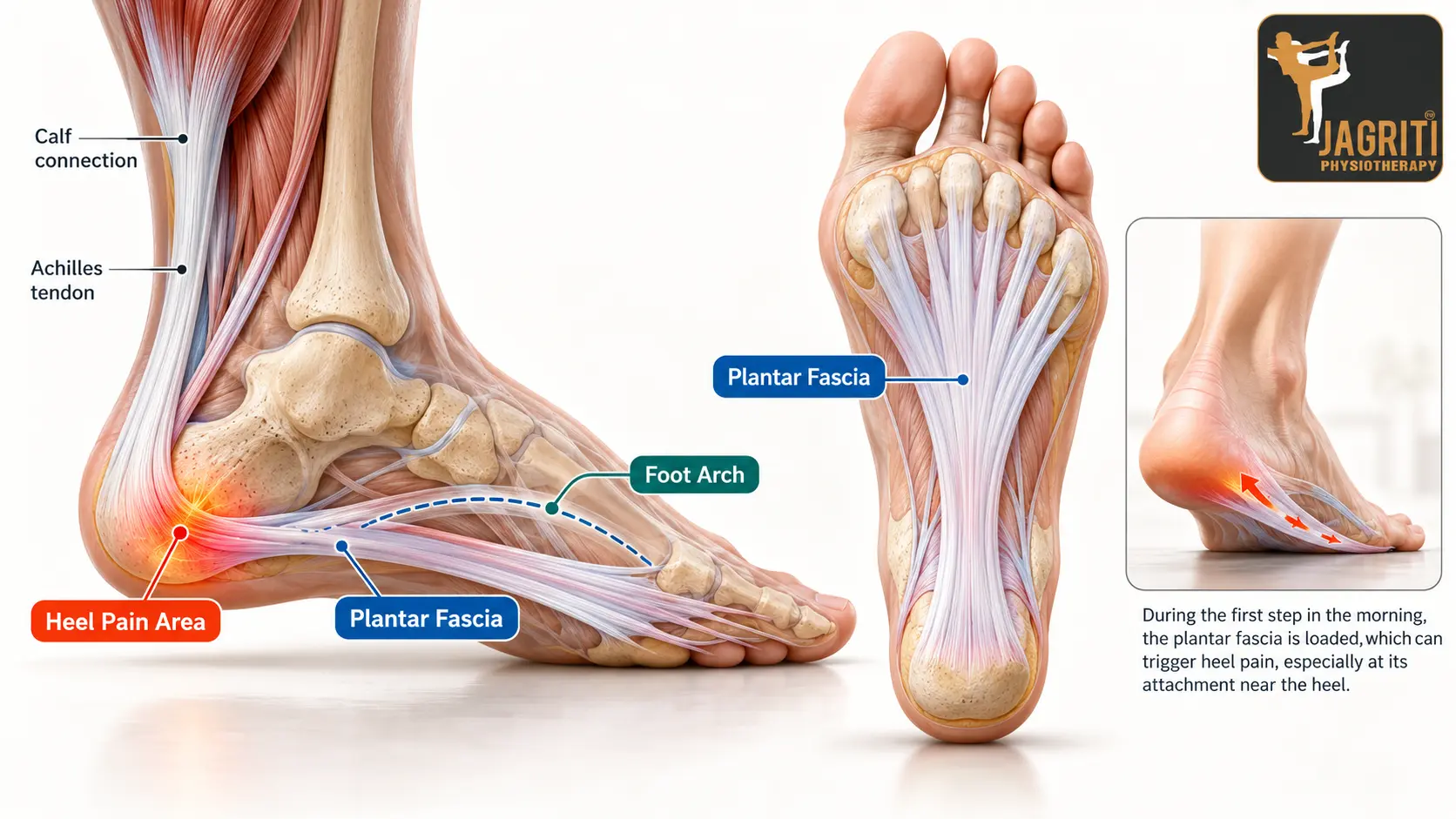
During sleep, your foot is relatively inactive for several hours.
When you suddenly stand and begin walking, the plantar fascia and surrounding tissues are loaded again. If this area is sensitive, those first steps can feel particularly painful.
This explains why someone may say:
“My heel hurts badly when I wake up, but after walking for a few minutes it feels better.”
Improvement after moving does not necessarily mean the underlying problem has disappeared. Long periods of walking, standing or exercise can sometimes cause symptoms to increase again later in the day.
Common Causes and Contributing Factors
1. Sudden Increase in Activity
Starting a new walking routine, running more kilometres, returning to sport or suddenly spending much more time on your feet can increase the load placed on your plantar fascia.
Your tissues may simply not yet be adapted to that increased demand.
2. Prolonged Standing
Jobs that involve long periods of standing or walking can repeatedly load the heel.
Hard surfaces may make symptoms more noticeable in some people.
3. Unsupportive Footwear
Shoes with poor cushioning or support may aggravate an already sensitive heel.
Walking barefoot on hard floors and regularly wearing flat, unsupportive footwear may also contribute to symptoms.
4. Tight Calf Muscles
Reduced calf and ankle flexibility may influence the amount of stress placed through the foot during walking.
For this reason, calf mobility is often considered during assessment and rehabilitation for plantar heel pain.
5. Changes in Body Weight
Increased body weight can increase the load that your feet need to manage during standing and walking.
This does not mean body weight is always the cause, but it can be one of several contributing factors.
What Can You Do for Morning Heel Pain?

1. Move Your Foot Before Getting Out of Bed
Before immediately standing, gently move your ankle and toes.
Try:
- Moving your ankle up and down
- Making slow ankle circles
- Gently pulling your toes towards you
- Lightly stretching the sole of your foot
This can help prepare the foot for the first steps of the morning.
2. Stretch Your Calf
Stand facing a wall.
Place the painful side behind you, keep the heel on the floor and gently lean forward until you feel a stretch in your calf.
Avoid forcing the stretch.
Stretching the calf and plantar fascia is commonly included in conservative management for plantar heel pain.
3. Plantar Fascia Stretch
Sit comfortably and place the affected foot over your opposite knee.
Gently pull your toes backwards until you feel a mild stretch along the bottom of your foot.
Hold comfortably and release.
You should feel a stretch—not sharp pain.
4. Gradually Strengthen the Foot and Calf
Stretching alone may not be enough.
Depending on your symptoms, rehabilitation may also involve progressive strengthening of the foot, calf and surrounding muscles.
Your exercise level should gradually increase rather than jumping immediately into demanding activities.
Should You Stop Walking?
Not necessarily.
Complete rest is rarely the only long-term solution.
Instead, consider temporarily reducing activities that clearly aggravate symptoms.
For example, if you recently increased your daily walking from 3,000 steps to 10,000 steps and your heel became painful, temporarily reducing the load may give the tissues time to settle while you progressively rebuild tolerance.
Low-impact activities can sometimes help you remain active while limiting repeated stress on the heel.
The correct level depends on your individual condition.
What Shoes Are Best for Morning Heel Pain?
Choose footwear that feels comfortable and provides adequate cushioning and support.
You may want to avoid spending long periods:
- Barefoot on hard flooring
- Wearing worn-out shoes
- In very flat unsupportive footwear
- In footwear that increases your symptoms
Supportive shoes and, when appropriate, heel pads or insoles are commonly suggested as part of conservative heel-pain management.
There is no single shoe that is best for every person, so comfort and individual foot mechanics matter.
Is a Heel Spur Causing the Pain?
Not necessarily.
A heel spur seen on an X-ray does not automatically explain why someone has heel pain.
Some people can have heel spurs without experiencing symptoms, and plantar heel pain can occur without a spur being the main problem. Recent NHS guidance notes that current evidence does not support assuming that a bony heel spur itself is responsible for plantar heel pain.
This is one reason treatment should focus on your symptoms and physical assessment rather than an imaging finding alone.
How Can Physiotherapy Help Heel Pain?
Physiotherapy starts by identifying what may be contributing to the symptoms.
An assessment may look at:
- Exact location of pain
- Ankle mobility
- Calf flexibility
- Foot movement
- Strength
- Walking pattern
- Footwear
- Daily standing and walking load
- Running or sports activity
- Previous foot or ankle injuries
Treatment can then be personalised rather than giving every patient the same exercises.
A physiotherapy programme may include mobility exercises, progressive strengthening, activity modification, movement guidance and advice on gradually returning to normal walking or sport.
Jagriti Physiotherapy in Jaipur provides orthopaedic, sports injury and personalised physiotherapy services, which makes the homepage a relevant internal destination from this article.
When Should You Get Heel Pain Checked?
Consider professional assessment if:
- Pain keeps returning
- Symptoms are getting worse
- Heel pain affects normal walking
- Pain is stopping you from exercising or working
- You experience tingling or loss of sensation
- Symptoms are not improving despite sensible self-management
Seek more urgent medical assessment after an injury if there is severe pain, significant swelling, a snap or popping sound, visible deformity, or you cannot walk normally.
Heel pain can also come from conditions other than plantar fasciitis, including Achilles tendon problems, bursitis or injuries, so avoid assuming the diagnosis from one symptom alone.
Heel Pain Treatment in Jaipur
If your first steps every morning are painful, simply waiting for the problem to disappear may not address the factors causing it to return.
A physiotherapist can assess your foot and ankle movement, strength, activity level and walking pattern before creating a rehabilitation plan suited to your condition.
At Jagriti Physiotherapy in Jaipur, patients can access personalised physiotherapy assessment and rehabilitation for musculoskeletal, orthopaedic and sports-related problems.
Final Takeaway
Heel pain during your first few steps in the morning is common, but it should not automatically be ignored or labelled as plantar fasciitis.
If the pain is coming from plantar heel irritation, useful first steps often include:
- Adjusting excessive activity temporarily
- Wearing comfortable supportive footwear
- Avoiding prolonged barefoot walking on hard floors
- Improving calf and foot mobility
- Gradually strengthening the foot and lower leg
If your heel pain keeps returning, worsens or begins affecting your normal routine, an individual assessment can help identify the cause and guide the right treatment.
Frequently Asked Questions
1. Why does my heel hurt when I first get out of bed?
Ans: Pain during the first steps after waking is commonly associated with plantar heel pain or plantar fasciitis because the sensitive plantar fascia is loaded again after several hours of rest.
2. Is morning heel pain always plantar fasciitis?
Ans: No. Plantar fasciitis is a common cause, but Achilles problems, bursitis, injury and other conditions can also cause heel pain.
3. Why does my heel pain disappear after walking?
Ans: With plantar heel pain, symptoms may temporarily reduce after several minutes of movement. However, they may return after prolonged standing, walking or exercise.
4. Should I walk barefoot with plantar fasciitis?
Ans: Walking barefoot on hard surfaces may aggravate symptoms for some people. Supportive footwear is often more comfortable while the heel is sensitive.
5. Can tight calves cause heel pain?
Ans: Reduced calf flexibility can be one contributing factor in plantar heel pain, although it is rarely the only factor.
6. What exercise is best for heel pain?
Ans: Calf stretching, plantar fascia stretching and progressive strengthening are commonly used, but the best exercise programme depends on the cause of your heel pain.
7. Can physiotherapy help plantar fasciitis?
Ans: Physiotherapy can assess mobility, strength, activity load and movement factors, then guide an individual rehabilitation programme.
8. How long does heel pain take to improve?
Ans: Recovery varies substantially between individuals. Plantar heel pain can improve gradually but may persist for several months in some people, particularly if contributing load factors continue.
About the Author

Dr Deepesh nainani
Dr. Deepesh Nainani (PT) is a leading physiotherapist in Jaipur, offering expert, patient-focused care. He leads Jagriti Physiotherapy with a skilled team across multiple specialties. Known for his achievements and modern treatment approach, he ensures effective recovery and long-term results, making him a trusted choice for physiotherapy in Jaipur.
Get Quote Now

