
Does your knee feel normal while walking but start hurting as soon as you climb stairs?
You are not alone. Knee pain while climbing stairs is a common complaint and can occur in people of different ages—from runners and gym-goers to office workers and older adults.
The important thing is that stair-related knee pain is a symptom, not a diagnosis.
Pain may come from the kneecap area, muscles around the knee, changes within the joint, overuse, or an injury. Understanding where your pain occurs and what triggers it can help determine the right treatment.
Quick Answer: Why Does My Knee Hurt When Climbing Stairs?
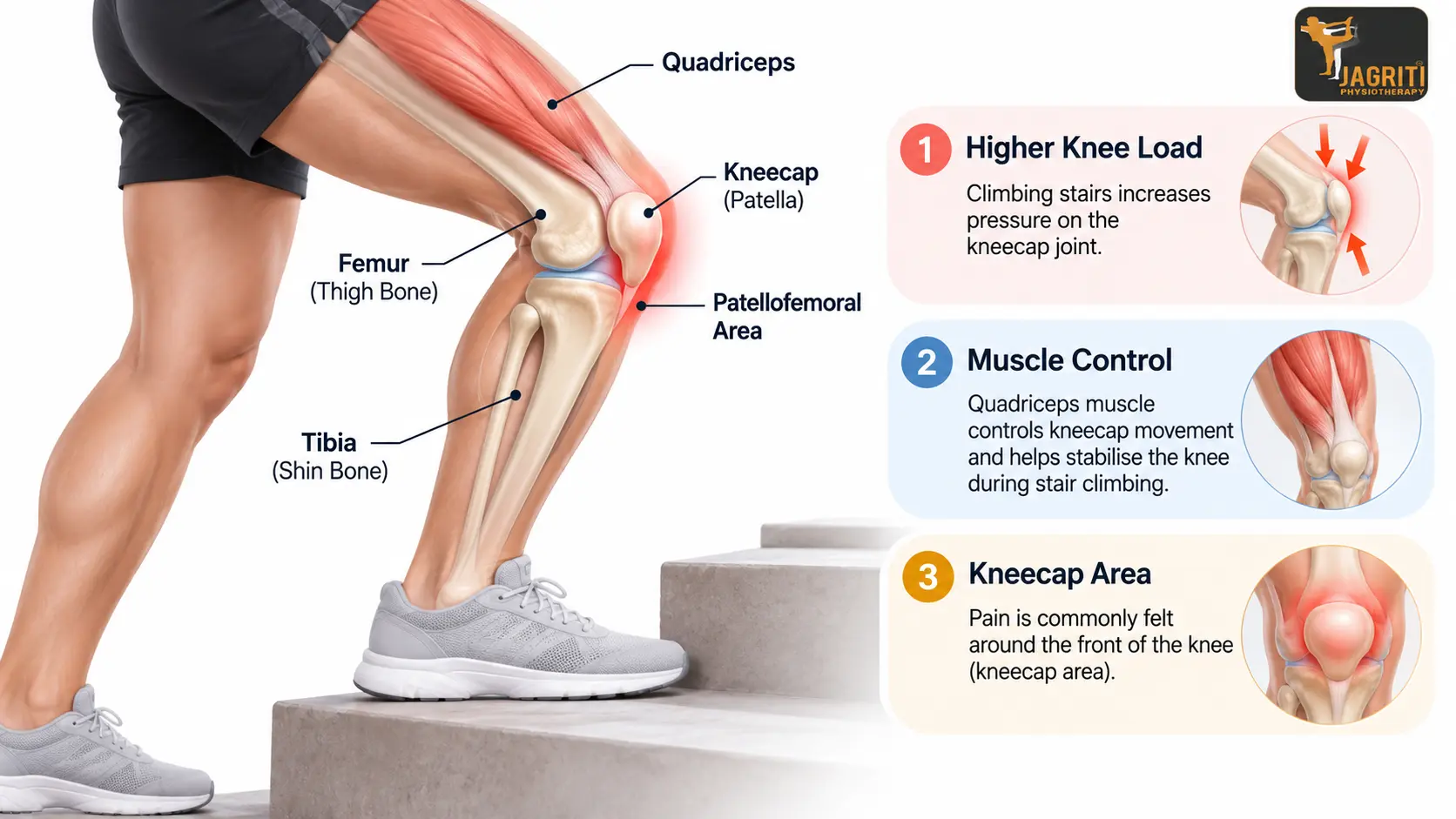
Climbing stairs requires your knee to bend while your muscles support and move your body weight. This increases the demand placed on the knee compared with normal level walking.
Pain around or behind the kneecap during activities such as climbing stairs, squatting, running and prolonged sitting is commonly associated with patellofemoral pain. Weakness or reduced control of the hip and thigh muscles may also contribute.
However, not every person with stair pain has the same condition. A proper assessment is important when symptoms persist.
Common Causes of Knee Pain While Climbing Stairs
1. Patellofemoral Pain
Patellofemoral pain is often felt around or behind the kneecap.
You may notice pain when:
- climbing or descending stairs
- squatting
- running
- getting up from a chair
- sitting with your knees bent for a long time
may develop after a sudden increase in activity or when the muscles controlling the hip and knee are not handling the required load effectively.
If your pain is mainly around the front of your knee, read our detailed guide on Patellofemoral Pain Syndrome.
2. Weak Quadriceps and Hip Muscles
Your quadriceps, glutes and other hip muscles help control your leg when you walk, squat or use stairs.
If these muscles lack strength or control, everyday movements can become more demanding for the knee.
A physiotherapy programme may therefore include both knee and hip strengthening, rather than focusing only on the painful area. Structured strengthening is commonly used in the management of patellofemoral knee pain.
3. Knee Osteoarthritis
Knee osteoarthritis can cause pain, stiffness and difficulty with activities that place more demand on the joint.
People may notice that stairs, getting up from a chair, prolonged walking or repeated bending become uncomfortable.
Osteoarthritis is more common with increasing age, but knee pain alone does not confirm arthritis. A clinical assessment can help identify whether joint changes are contributing to your symptoms.
4. Sudden Increase in Activity
Did you recently:
- start running?
- increase your gym workouts?
- begin playing a sport?
- walk much more than usual?
- start repeatedly using stairs?
A sudden increase in activity can expose the knee to more load than it has adapted to.
Reducing the aggravating activity temporarily and rebuilding strength gradually may be more useful than stopping all movement for a long period.
5. Previous Knee Injury
Previous ligament, meniscus or other knee injuries can sometimes affect strength, movement and confidence even after the initial injury has settled.
If stair pain started after a fall, twist, sports injury or direct impact, getting the knee assessed is preferable to relying only on home exercises.
Why Does My Knee Hurt More Going Downstairs?
Many people notice more pain going downstairs than going upstairs.
When descending stairs, the thigh muscles have to control your body as you lower yourself to the next step. This requires controlled loading through a bent knee.
If your knee is already sensitive or your muscles are not controlling this movement well, going downstairs can become uncomfortable.
This does not automatically mean that your knee is damaged. The exact cause depends on your symptoms, strength, movement pattern and medical history.
What Should Lower Back Exercises Feel Like?
This is an important distinction.
A gentle stretch or mild muscular effort can be normal when starting an exercise. However, sharp, severe, rapidly increasing or unfamiliar pain is a reason to stop and reassess.
You should also pay attention to symptoms that travel into the leg, particularly if they are accompanied by numbness, tingling or weakness.
An exercise that feels helpful for one person may not be appropriate for another. Lower back pain can have different causes and presentations, so exercise selection should be individualized when symptoms persist.
Exercise and physical activity are important components of managing many types of low back pain, but they work best as part of an approach suited to the person’s symptoms, function and goals.
Exercises That May Help Knee Pain on Stairs
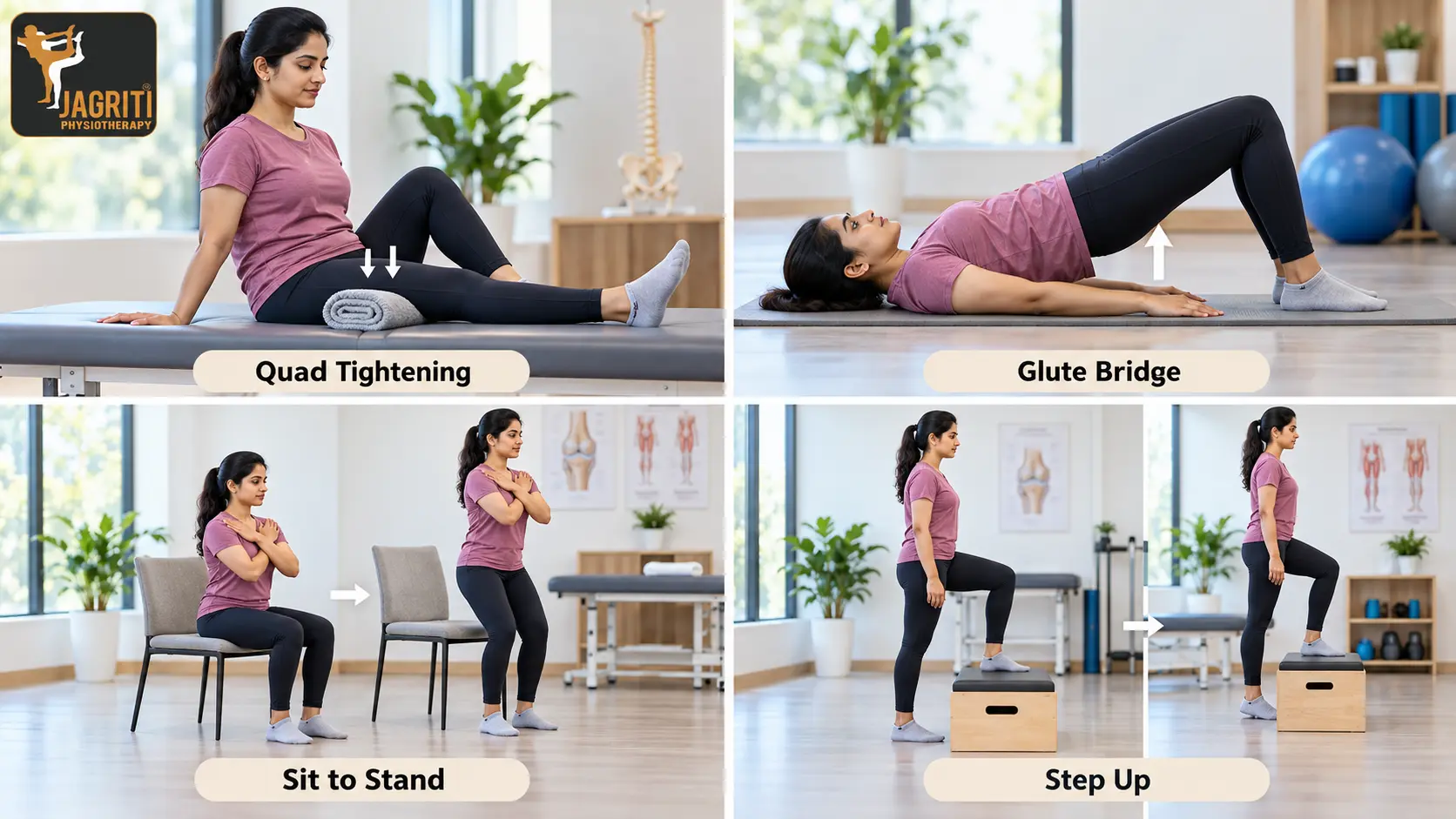
There is no single exercise programme suitable for every cause of knee pain.
For many people, however, gradually strengthening the muscles around the knee and hip forms an important part of rehabilitation.
1. Quadriceps Tightening
Sit or lie down with your leg straight.
Tighten the muscles at the front of your thigh by gently pressing the back of your knee towards the bed or floor.
Hold briefly, relax and repeat.
2. Glute Bridge
Lie on your back with your knees bent and feet flat.
Tighten your buttock muscles and slowly lift your hips.
Pause briefly and lower yourself with control.
3. Sit-to-Stand
Sit on a stable chair with your feet comfortably apart.
Lean slightly forward and stand using your legs. Slowly return to sitting.
Start with a comfortable height rather than forcing a deep knee bend.
4. Controlled Step-Up
Place one foot on a low step.
Slowly push through that leg to step up and then return with control.
Keep your knee comfortably aligned with your foot rather than allowing it to collapse inward.
Important: Exercises should not cause a significant or lasting increase in symptoms. If an exercise clearly worsens your pain, swelling or function, stop and have the knee assessed.
For a more detailed exercise programme, see our Physiotherapy Exercises for Knee Pain guide.
Should I Avoid Stairs Completely?
Usually, complete avoidance is not the long-term goal.
If stairs are currently painful, temporarily reducing repeated stair use may help settle irritation. But rehabilitation generally aims to gradually restore the strength and control needed for normal daily activities.
Depending on the cause, your physiotherapist may adjust:
- exercise intensity
- number of repetitions
- stair technique
- daily activity level
- hip and knee strength
- balance and movement control
The goal is not simply to avoid movement—it is to make movement more comfortable and manageable.
How Can Physiotherapy Help?
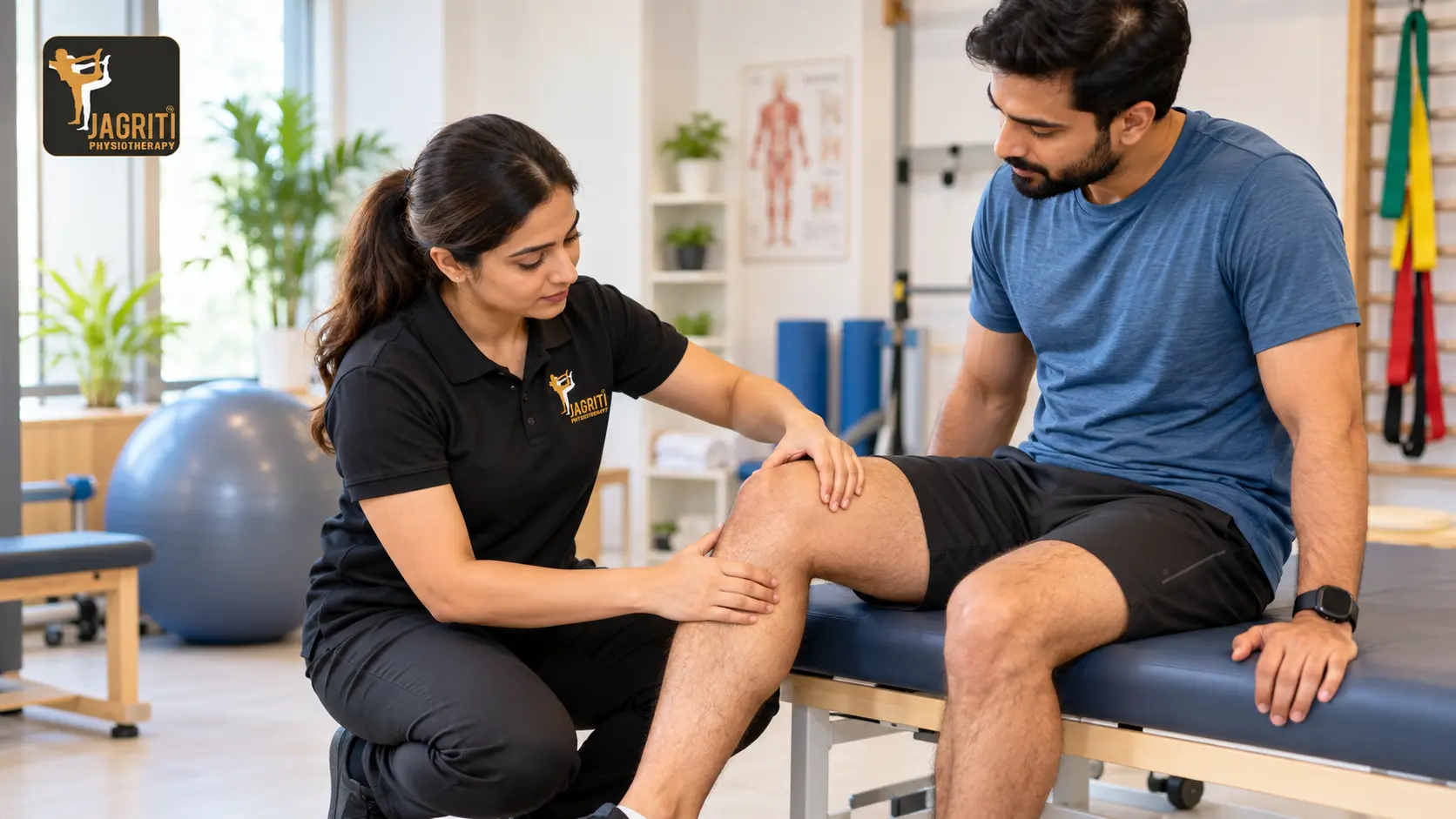
Physiotherapy for knee pain starts by identifying why the knee hurts, rather than treating every patient with the same exercises.
A physiotherapist may assess:
- location of your pain
- knee movement
- swelling
- quadriceps strength
- hip strength
- balance
- walking pattern
- squat and step control
- previous injuries
- activity or training habits
Treatment can then be tailored to the findings.
For many knee problems, rehabilitation includes progressive strengthening, movement retraining, activity modification and a gradual return to normal activities.
At Jagriti Physiotherapy in Jaipur, knee rehabilitation is based on individual assessment rather than a one-size-fits-all exercise plan.
When Should You Get Knee Pain Checked?
Arrange an assessment if your pain:
- keeps returning
- is gradually getting worse
- limits stairs or normal walking
- is associated with repeated swelling
- causes the knee to give way or lock
- started after an injury
- does not improve with sensible activity modification
Seek prompt medical attention if the knee is severely painful, you cannot put weight on it, it becomes very swollen or changes shape after an injury.
Knee Pain Treatment in Jaipur
If climbing stairs, walking, exercising or getting up from a chair is becoming difficult because of knee pain, identifying the cause early can help you choose the right rehabilitation plan.
Jagriti Physiotherapy provides assessment and physiotherapy for knee and joint problems in Jaipur, including personalised exercise programmes aimed at improving strength, mobility and everyday function.
Final Takeaway
Knee pain while climbing stairs should not simply be ignored if it keeps returning.
Sometimes the problem is related to activity overload or reduced muscle strength. In other cases, conditions affecting the kneecap or knee joint may be involved.
Instead of guessing the cause or completely avoiding activity, focus on identifying the reason for your symptoms and rebuilding strength gradually.
If knee pain is interfering with stairs, walking or your normal routine, a personalised physiotherapy assessment can help determine the most appropriate next step.
Frequently Asked Questions
1. Why does my knee hurt only when climbing stairs?
Ans: Stairs require greater knee bending and muscle control than normal level walking. Problems around the kneecap, reduced muscle strength, overuse or other knee conditions may therefore become noticeable first on stairs.
2. Is knee pain while climbing stairs a sign of arthritis?
Ans: It can occur with knee osteoarthritis, but stair pain alone does not mean you have arthritis. Patellofemoral pain, overuse and other conditions can cause similar symptoms.
3. Can weak muscles cause knee pain on stairs?
Ans: Weakness or reduced control of the quadriceps and hip muscles can contribute to some types of knee pain and may make stair climbing more difficult.
4. Is walking good for knee pain?
Ans: Gentle walking is often manageable, but the appropriate amount depends on the cause and severity of your symptoms. Reduce or modify activities that clearly cause a significant worsening of pain.
5. Should I exercise if my knee hurts?
Ans: For many knee conditions, appropriate exercise is an important part of recovery. However, the type and intensity of exercise should match your condition.
6. Why does my knee hurt when going downstairs?
Ans: Descending stairs requires the thigh muscles to control your body as the knee bends. This increased demand can make existing kneecap or knee symptoms more noticeable.
7. Can physiotherapy help knee pain while climbing stairs?
Ans: Physiotherapy can help identify factors such as muscle weakness, movement control, reduced mobility and activity overload, then create a rehabilitation programme based on those findings.
8. When should I see a physiotherapist for knee pain?
Ans: Consider an assessment when pain persists, repeatedly returns, affects daily activities, follows an injury, or occurs with swelling, locking or instability.
About the Author

Dr Deepesh nainani
Dr. Deepesh Nainani (PT) is a leading physiotherapist in Jaipur, offering expert, patient-focused care. He leads Jagriti Physiotherapy with a skilled team across multiple specialties. Known for his achievements and modern treatment approach, he ensures effective recovery and long-term results, making him a trusted choice for physiotherapy in Jaipur.
Get Quote Now

