
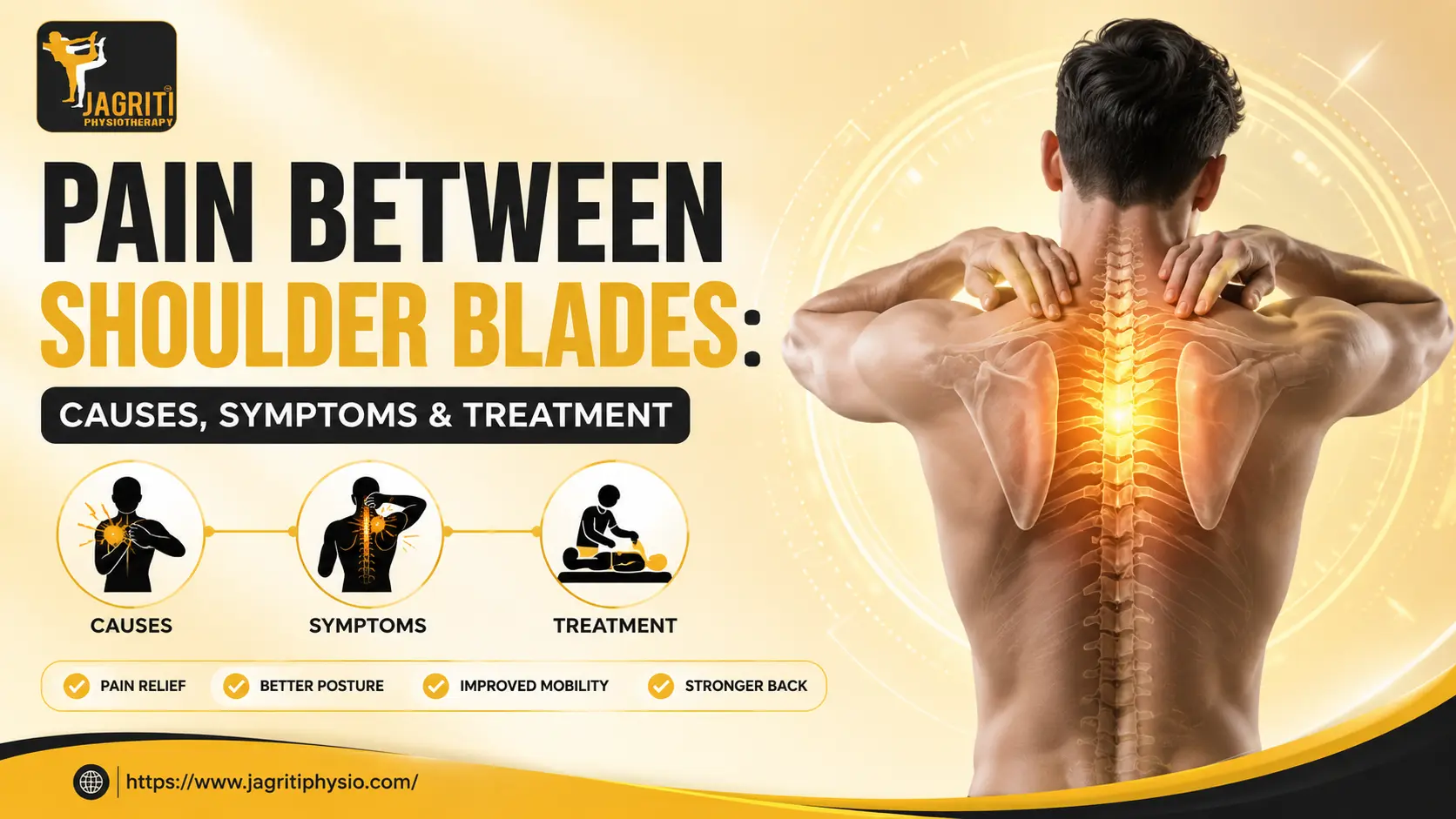
Pain between the shoulder blades is a common type of upper or middle back pain that can feel dull, sharp, burning, tight, or aching. It may develop after prolonged sitting, poor posture, repetitive activity, exercise, lifting, or an injury. In some cases, the pain can also be related to the neck, thoracic spine, nerves, shoulder blade movement, or referred pain from another part of the body.
Pain between the shoulder blades is commonly associated with muscle strain, prolonged sitting, posture-related stress, repetitive activity, or problems involving the upper and middle back. Treatment depends on the underlying cause and may include activity modification, exercise, physiotherapy, ergonomic changes, and medical evaluation when necessary. Persistent, severe, unexplained, or sudden pain—especially when accompanied by chest symptoms, breathing difficulty, weakness, numbness, or other warning signs—should be assessed by a healthcare professional.
What Does Pain Between the Shoulder Blades Feel Like?
Pain in the area between the shoulder blades, also called interscapular pain, can feel different depending on its cause.
Common symptoms include:
- Dull or aching pain in the upper or middle back
- Tightness around the shoulder blades
- Sharp or stabbing pain with certain movements
- Burning or localized discomfort
- Muscle stiffness or spasms
- Pain that increases after prolonged sitting
- Discomfort while twisting, bending, lifting, or reaching
- Pain that spreads toward the neck, shoulder, chest, or arm
Keeping track of when the pain starts, what makes it worse, and whether it is associated with other symptoms can help a healthcare professional identify the possible cause.
What Causes Pain Between the Shoulder Blades?
There are several possible causes of pain between the shoulder blades. Some are related to muscles and posture, while others may involve the spine, nerves, shoulders, or other medical conditions.
1. Poor Posture and Desk Work
Spending several hours at a computer or using a mobile phone can place prolonged stress on the upper back and shoulder muscles. Rounded shoulders and forward-head posture may contribute to muscle fatigue and discomfort.
People who work at a desk for long periods may notice pain between the shoulder blades that becomes worse toward the end of the day.
2. Muscle Strain or Overuse
Heavy lifting, repetitive movements, gym workouts, sports, or sudden increases in physical activity can strain muscles around the shoulder blades.
Muscle-related pain may be accompanied by tenderness, stiffness, muscle spasms, or pain that increases when the affected area is moved.
3. Thoracic Spine Problems
The thoracic spine forms the upper and middle portion of the back. Joint stiffness, disc-related problems, spinal injuries, or changes affecting the thoracic spine can sometimes contribute to pain between the shoulder blades.
Thoracic back pain can be acute, subacute, or chronic depending on how long symptoms persist.
4. Neck-Related Pain
The shoulder blades work together with several muscles and joints to allow normal arm and shoulder movement. Muscle weakness, tightness, or altered shoulder blade movement may contribute to pain around or between the shoulder blades.
5. Shoulder Blade or Scapular Dysfunction
Problems in the thoracic spine, such as disc degeneration, herniation, or joint stiffness, can also cause pain between shoulder blades. These conditions may lead to restricted movement, deep aching pain, and discomfort that worsens with certain positions.
6. Nerve-Related Pain
Irritation or compression of a nerve can cause pain that feels sharp, burning, shooting, or radiating. Tingling, numbness, or weakness may occur along with the pain.
Nerve-related symptoms should be assessed rather than assumed to be simple muscle tension.
7. Injury or Trauma
Pain may develop after a fall, sports injury, sudden lifting movement, vehicle accident, or other trauma. Neck and upper-back symptoms can also occur after whiplash injuries.
8. Stress and Muscle Tension
Stress can contribute to increased muscle tension, particularly around the neck and upper back. If discomfort repeatedly appears during stressful periods, muscle tension and lifestyle factors may be contributing to the symptoms.
9. Referred Pain
Not all pain felt between the shoulder blades originates in the muscles or spine. In some cases, pain can be referred from another part of the body.
For this reason, sudden or unexplained upper-back pain accompanied by other concerning symptoms should not automatically be assumed to be a posture or muscle problem.
When Is Pain Between the Shoulder Blades Serious?
Most upper-back pain is not an emergency, but certain symptoms require prompt medical assessment.
Seek urgent medical attention if pain between the shoulder blades occurs with:
- Chest pressure, tightness, or severe chest pain
- Difficulty breathing or sudden shortness of breath
- Fainting or severe dizziness
- Cold sweating or unexplained nausea
- Sudden weakness or significant numbness
- Severe pain following major trauma
- Fever with significant or worsening pain
- Unexplained weight loss
- Severe or rapidly worsening symptoms
Pain between the shoulder blades can occasionally be associated with referred pain or serious medical conditions, so associated symptoms and the overall clinical picture are important.
Also Read: Left Shoulder Pain – Causes, Symptoms, and Effective Treatment
Can Pain Between the Shoulder Blades Be a Heart Problem?
Yes, pain in the upper back can sometimes occur with heart-related conditions, although many cases are musculoskeletal.
Do not try to determine the cause yourself if upper-back pain occurs with chest pressure, shortness of breath, sweating, dizziness, nausea, or pain spreading toward the arm, jaw, or chest. Seek emergency medical care.
If there are no emergency symptoms but the pain is persistent, recurrent, or unexplained, a healthcare professional can help determine whether further assessment is needed.
How Is Pain Between the Shoulder Blades Diagnosed?
Diagnosis depends on the individual’s symptoms and medical history. A physiotherapist or healthcare professional may assess:
- When the pain started and possible triggers
- Posture and workstation habits
- Neck and thoracic spine movement
- Shoulder and shoulder-blade movement
- Muscle strength and flexibility
- Neurological symptoms such as numbness or weakness
- Previous injuries or medical conditions
- Symptoms that may indicate a non-musculoskeletal cause
Imaging is not routinely required for uncomplicated acute thoracic back pain without red flags. X-rays, MRI, or other investigations may be considered when there is trauma, neurological involvement, suspected serious disease, or persistent symptoms that do not improve with appropriate management.
How Is Pain Between the Shoulder Blades Treated?
Treatment should address the underlying cause rather than simply masking the pain.
Depending on the assessment, management may include:
- Activity modification
- Ergonomic improvements
- Mobility exercises
- Stretching
- Strengthening exercises
- Posture education
- Manual therapy when clinically appropriate
- Gradual return to normal activities
- Physiotherapy and individualized rehabilitation
Physical therapy can help improve strength, mobility, posture, and movement patterns in appropriate cases.
How Physiotherapy Can Help
At Jagriti Physiotherapy, treatment for upper-back and shoulder-blade pain is based on an individual assessment. Depending on the cause, a physiotherapy program may include:
- Thoracic mobility exercises
- Shoulder-blade strengthening
- Postural and ergonomic correction
- Stretching for tight muscles
- Manual therapy when appropriate
- Progressive strengthening
- Education to reduce recurrence
The goal is not only to reduce pain but also to improve movement, strength, and the factors contributing to recurring symptoms.
Exercises for Pain Between the Shoulder Blades
Exercises may help some people with posture-related or mechanical upper-back discomfort, but the right exercises depend on the cause.
Commonly used exercise categories may include:
- Thoracic extension exercises
- Gentle thoracic rotation
- Shoulder-blade retraction exercises
- Chest and pectoral stretching
- Upper-back strengthening
- Shoulder mobility exercises
Exercises should not be used to self-treat unexplained severe pain. Stop an exercise and seek professional advice if it causes significant worsening, numbness, weakness, dizziness, or other concerning symptoms.
How Can You Prevent Pain Between the Shoulder Blades?
Simple lifestyle changes may reduce the risk of recurring upper-back discomfort:
- Keep your computer screen close to eye level.
- Use a supportive and appropriately adjusted workstation.
- Avoid staying in one position for prolonged periods.
- Take regular movement breaks during desk work.
- Use proper lifting techniques.
- Increase exercise intensity gradually.
- Maintain upper-back and shoulder strength.
- Avoid prolonged slouching.
- Address recurring pain rather than repeatedly ignoring it.
Ergonomics, regular physical activity, posture awareness, and safe lifting can help reduce some common contributors to upper-back pain.
When Should You See a Physiotherapist or Doctor?
Consider professional assessment if:
- Pain persists or repeatedly returns
- Symptoms interfere with work, sleep, exercise, or daily activities
- Pain follows an injury
- You experience numbness or tingling
- You notice weakness in the arm or shoulder
- Neck and upper-back pain occur together
- Symptoms are getting progressively worse
Seek emergency medical attention for severe or sudden pain associated with chest symptoms, breathing difficulty, fainting, or other serious warning signs.
Conclusion
Pain between the shoulder blades can result from posture, muscle strain, repetitive activity, neck or thoracic spine problems, shoulder-blade dysfunction, nerve irritation, or other causes. Identifying the underlying cause is important for choosing the right treatment.
For persistent or recurring upper-back pain, a professional assessment can help determine whether physiotherapy, exercise, ergonomic changes, medical evaluation, or further investigation is appropriate.
Jagriti Physiotherapy in Jaipur provides individualized physiotherapy assessment and rehabilitation for musculoskeletal conditions, including upper-back, neck, shoulder, and spine-related problems.
FAQs — Frequently Asked Questions
1. What is the most common cause of pain between the shoulder blades?
Ans: Muscle strain, prolonged sitting, posture-related stress, repetitive activities, and other musculoskeletal problems are common contributors. However, the exact cause varies between individuals.
2. Can poor posture cause pain between the shoulder blades?
Ans: Yes. Prolonged sitting, rounded shoulders, and forward-head posture can increase stress on muscles and structures around the upper back.
3. Can stress cause pain between shoulder blades?
Ans: Stress can contribute to increased muscle tension in the neck and upper back, which may worsen or trigger discomfort in some people.
4. Why does my back hurt between my shoulder blades when I breathe?
Ans: Pain that changes with breathing can sometimes be musculoskeletal, but pain with breathing may also have other causes. If it occurs with shortness of breath, chest pain, dizziness, or sudden severe symptoms, seek urgent medical attention.
5. How can I relieve pain between my shoulder blades?
Ans: Relief depends on the cause. Ergonomic improvements, appropriate movement, gradual exercise, and professional assessment may help. Avoid repeatedly treating persistent pain without identifying its cause.
6. Can neck problems cause pain between the shoulder blades?
Ans: Yes. Certain neck and cervical spine problems can produce pain around the upper back or shoulder blade and may sometimes be accompanied by arm symptoms.
7. Can physiotherapy help pain between the shoulder blades?
Ans: Physiotherapy may help when the pain is related to musculoskeletal factors such as mobility restrictions, muscle weakness, posture, or movement dysfunction. Treatment should be individualized after assessment.
8. When should I worry about pain between my shoulder blades?
Ans: Seek urgent medical care when the pain is sudden or severe or occurs with chest pressure, breathing difficulty, fainting, significant weakness, or other concerning symptoms.
About the Author

Dr Deepesh nainani
Dr. Deepesh Nainani (PT) is a leading physiotherapist in Jaipur, offering expert, patient-focused care. He leads Jagriti Physiotherapy with a skilled team across multiple specialties. Known for his achievements and modern treatment approach, he ensures effective recovery and long-term results, making him a trusted choice for physiotherapy in Jaipur.
Get Quote Now

