

Does your shoulder hurt when you lift your arm to reach a shelf, wear a shirt, comb your hair, or raise your hand overhead?
Shoulder pain when raising the arm is a common problem. It may develop gradually after repetitive activity or suddenly after an injury.
The shoulder has a large range of movement, so several structures can contribute to pain. Common possibilities include rotator cuff-related pain, tendon irritation, bursitis, frozen shoulder, joint problems, or injury. Pain with arm elevation is especially common in rotator cuff-related shoulder problems.
The exact cause matters because not every painful shoulder needs the same exercises or treatment.
Quick Answer: Why Does My Shoulder Hurt When I Raise My Arm?
Pain while lifting the arm can occur when the muscles and tendons that control the shoulder are irritated, overloaded, weak, or not moving comfortably.
The rotator cuff is a group of muscles and tendons that helps support the shoulder joint and control arm movement. Rotator cuff-related shoulder pain often becomes noticeable when lifting the arm away from the body, reaching overhead, or lying on the affected side.
However, stiffness from frozen shoulder, arthritis, instability, or an injury can produce similar symptoms.
Common Causes of Shoulder Pain When Raising Your Arm
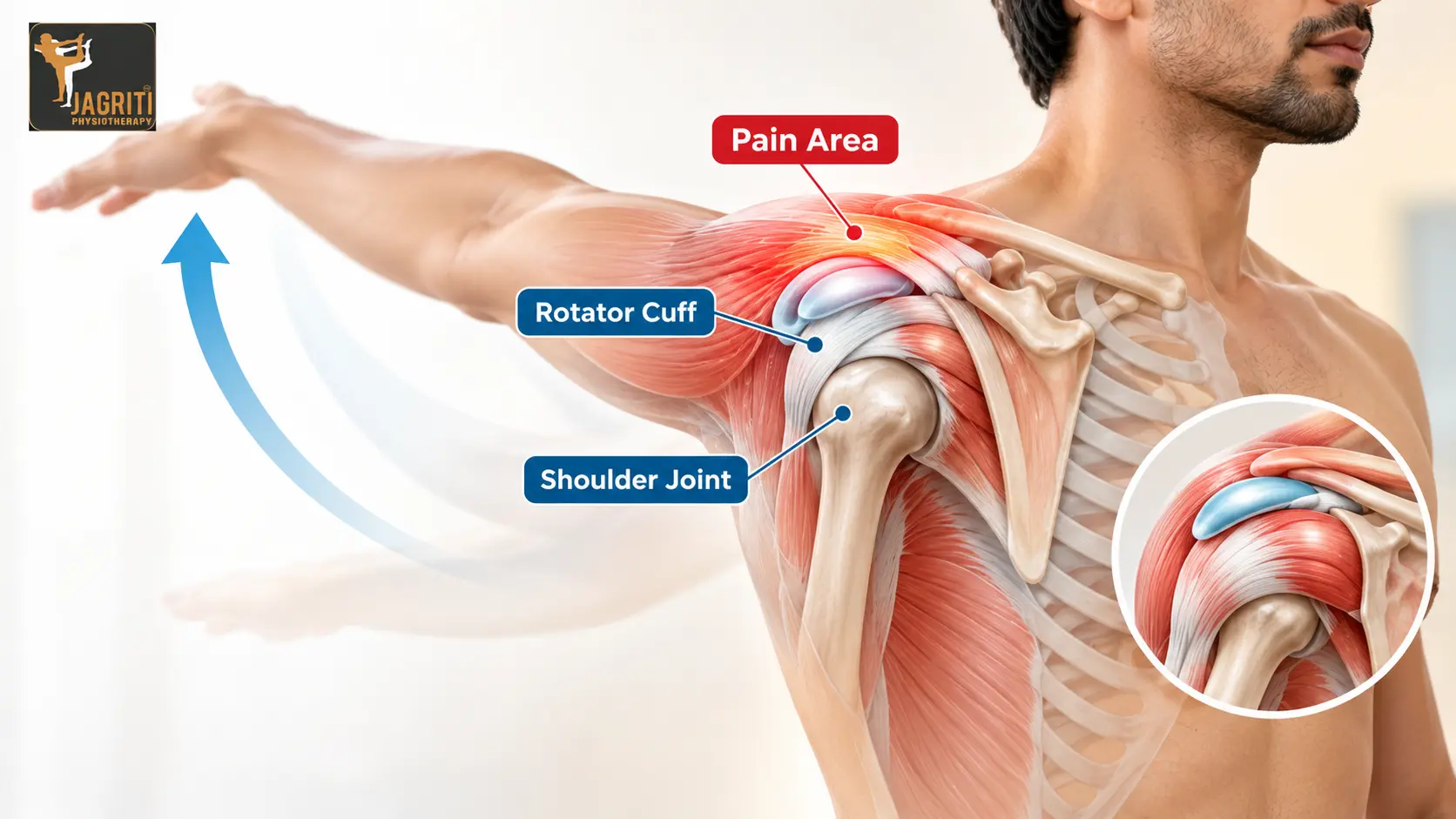
1. Rotator Cuff-Related Shoulder Pain
Rotator cuff-related pain is one of the most common causes of pain while raising the arm.
Symptoms may include:
- Pain when lifting the arm sideways
- Pain when reaching overhead
- Pain while carrying or lifting an object
- Discomfort when lying on the painful shoulder
- Weakness or reduced movement
- Pain that extends into the upper arm
Symptoms may develop after a change in activity, repetitive shoulder use, strenuous exercise, or sometimes without a clear injury.
2. Tendon Irritation or Bursitis
Tendons around the shoulder can become sensitive when their workload suddenly increases.
The shoulder also contains a small fluid-filled structure called a bursa, which helps reduce friction between tissues.
Shoulder pain linked to tendons or the bursa is often worse when the arm is raised to shoulder level or above. Everyday activities such as reaching into a cupboard, dressing, driving, or putting something on a shelf may become uncomfortable.
3. Frozen Shoulder
Frozen shoulder usually causes both pain and significant stiffness.
You may notice difficulty:
- Raising your arm
- Reaching behind your back
- Putting on clothes
- Washing or combing your hair
- Sleeping comfortably
Pain can also be worse at night. Frozen shoulder typically develops gradually and can restrict movement in several directions, rather than only causing pain during one specific movement.
4. Sudden Increase in Activity
Shoulder pain sometimes begins after doing much more than your body is used to.
Examples include:
- Increasing gym training
- Starting swimming
- Repeated overhead work
- Painting or home renovation
- Playing badminton or tennis
- Lifting heavy luggage
A sudden increase in activity or repeated overuse of shoulder muscles and tendons can contribute to symptoms.
5. Shoulder Injury
A fall, sudden pull, sports injury, or heavy lift can injure shoulder structures.
Rotator cuff injuries, AC joint injuries, fractures, or dislocations can all cause pain when raising the arm. Some injuries also cause sudden weakness or difficulty moving the shoulder.
Why Does My Shoulder Hurt When Lifting My Arm Sideways?
Some people feel relatively comfortable moving the arm forward but develop pain when lifting it out to the side.
This movement places greater demand on the muscles and tendons that control the shoulder.
With rotator cuff-related pain, symptoms can become noticeable as the arm moves towards or above shoulder height.
The location and range where pain appears can provide useful information during a physiotherapy assessment, but it should not be used alone to diagnose the problem.
Why Does My Shoulder Hurt When Reaching Overhead?
Overhead movement requires coordinated motion between the:
- Shoulder joint
- Shoulder blade
- Rotator cuff muscles
- Upper back
If one or more of these areas are painful, stiff, weak, or overloaded, reaching overhead may become uncomfortable.
This is why activities such as putting luggage in an overhead compartment, reaching for a high shelf, or hanging clothes can expose a shoulder problem that feels less noticeable during normal activities.
Why Does My Shoulder Hurt at Night?
Night pain is common with several shoulder conditions.
People with rotator cuff-related pain may experience discomfort when lying on the affected side, while frozen shoulder can also cause significant night pain.
Try avoiding prolonged pressure directly on the painful shoulder and support the arm comfortably with a pillow if needed.
Persistent or severe night pain should be assessed rather than repeatedly ignored.
Exercises That May Help Shoulder Pain
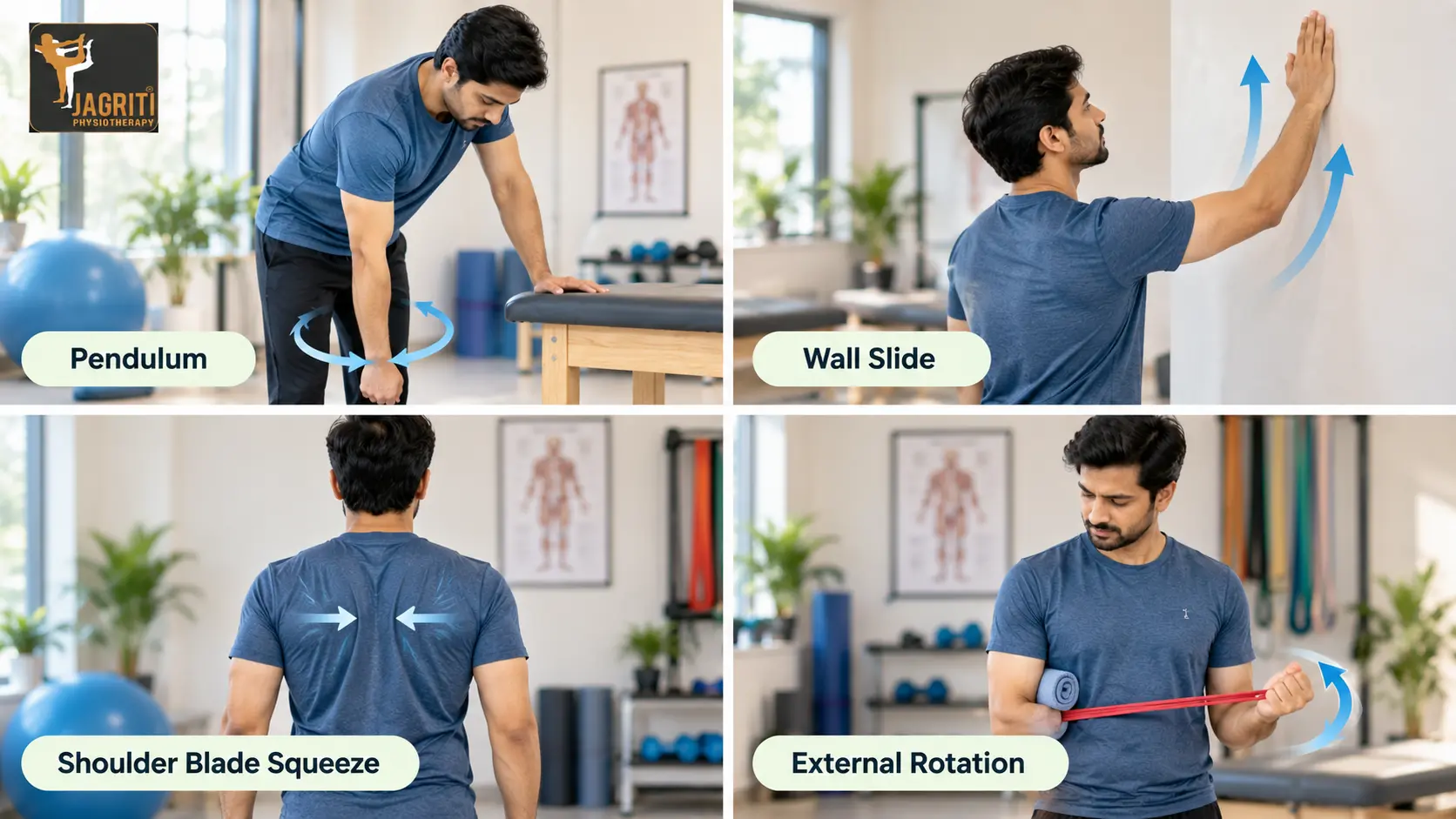
The right exercise depends on the cause of your symptoms.
If the pain is mild and there has been no significant injury, gentle movement and gradual strengthening may be appropriate.
1. Pendulum Exercise
Lean slightly forward while supporting yourself with the unaffected arm.
Allow the painful arm to hang relaxed.
Gently move it in small circles.
Do not force the movement.
2. Wall Slide
Stand facing a wall.
Place your hand or forearm against it and slowly slide upward within a comfortable range.
Stop before the movement becomes sharply painful.
Return slowly.
3. Shoulder Blade Squeeze
Sit or stand upright.
Gently draw your shoulder blades slightly backward and downward.
Hold briefly, then relax.
Avoid shrugging your shoulders.
4. Gentle External Rotation
Keep your elbow bent and close to your side.
Slowly rotate your forearm outward within a comfortable range.
Resistance can be added later if advised by a physiotherapist.
Important
Exercise should be progressive rather than aggressive.
The NHS advises keeping the shoulder gently moving rather than completely stopping its use, while also avoiding activities that clearly worsen symptoms.
If an exercise causes significant or lasting pain, stop and have the shoulder assessed.
Should You Stop Using Your Shoulder?
Usually, complete rest is not the goal.
Avoiding all shoulder movement for a long period can contribute to stiffness.
Instead, temporarily reduce activities that strongly aggravate symptoms while continuing comfortable movement.
For example, you might reduce:
- Repeated overhead lifting
- Heavy shoulder presses
- Throwing activities
- High-volume swimming
- Repetitive reaching
Then gradually rebuild strength and activity as symptoms settle.
How Can Physiotherapy Help Shoulder Pain?
Physiotherapy aims to identify why your shoulder is painful rather than simply treating the location of the pain.
A physiotherapist may assess:
- Shoulder range of movement
- Painful movements
- Rotator cuff strength
- Shoulder blade control
- Neck movement
- Upper-back mobility
- Functional tasks
- Previous injuries
- Work or sports demands
Treatment may include:
- Mobility exercises
- Progressive shoulder strengthening
- Rotator cuff rehabilitation
- Shoulder blade exercises
- Activity modification
- Movement retraining
- Gradual return to work or sport
Physiotherapy is commonly used in the management of shoulder pain, with exercise and movement advice forming an important part of treatment.
At Jagriti Physiotherapy in Jaipur, shoulder therapy is included within the clinic’s joint, orthopedic, sports rehabilitation, and pain-management services.
When Should Shoulder Pain Be Checked?
Consider a physiotherapy or medical assessment if:
- Pain keeps returning
- You cannot comfortably raise your arm
- Symptoms are worsening
- Shoulder movement is becoming increasingly restricted
- Pain regularly disturbs sleep
- You notice significant weakness
- Symptoms started after an injury
- Pain is interfering with work, exercise, or daily activities
Seek urgent medical assessment if you have severe sudden pain after an injury, cannot move your arm, notice a visible change in shoulder shape, or suspect a fracture or dislocation.
Shoulder Pain Treatment in Jaipur
If shoulder pain is making it difficult to reach overhead, dress, exercise, sleep, or perform normal daily activities, understanding the cause is the first step.
A physiotherapist can assess your movement, strength, activity demands, and symptoms before planning rehabilitation.
Jagriti Physiotherapy provides Knee & Shoulder Therapy, orthopedic physiotherapy, sports physiotherapy, and pain-management services in Jaipur.
Final Takeaway
Shoulder pain when raising your arm is common, but the cause is not always the same.
Rotator cuff-related pain is one common reason, but frozen shoulder, tendon irritation, joint problems, overload, and injury can produce similar symptoms.
Useful early steps usually include:
- Keeping the shoulder gently moving
- Reducing strongly aggravating activities
- Avoiding prolonged complete rest
- Gradually restoring mobility and strength
- Getting assessed if symptoms persist or movement becomes restricted
If shoulder pain is affecting normal activities, exercise, work, or sleep, a personalised physiotherapy assessment can help identify the problem and guide an appropriate rehabilitation plan.
Frequently Asked Questions
1. Why does my shoulder hurt when I raise my arm?
Ans: Common causes include rotator cuff-related shoulder pain, tendon irritation, bursitis, frozen shoulder, joint problems, or injury.
2. Why does my shoulder hurt when I lift my arm sideways?
Ans: Lifting the arm sideways places greater demand on the rotator cuff and surrounding structures, so an irritated or overloaded shoulder may become painful during this movement.
3. Is shoulder pain when lifting my arm a rotator cuff problem?
Ans: It can be, but not always. Several shoulder conditions can cause similar symptoms, so persistent pain should be assessed properly.
4. Can frozen shoulder cause pain when raising the arm?
Ans: Yes. Frozen shoulder typically causes both pain and stiffness, making it difficult to raise the arm or reach behind the back.
5. Should I exercise a painful shoulder?
Ans: Gentle movement is often encouraged, but strenuous or aggravating exercise should be modified. The correct exercise programme depends on the cause and severity of your symptoms.
6. Why is my shoulder pain worse at night?
Ans: Night pain may occur with conditions such as rotator cuff-related pain and frozen shoulder, particularly when lying directly on the affected side.
7. Can physiotherapy help shoulder pain?
Ans: Physiotherapy can assess movement, strength and activity-related factors and guide appropriate mobility and strengthening exercises.
8. How long does shoulder pain take to improve?
Ans: Recovery varies depending on the cause. Some new shoulder problems improve over several weeks, while others can take months. The NHS notes that shoulder pain can sometimes require six months or longer to fully recover.
About the Author

Dr Deepesh nainani
Dr. Deepesh Nainani (PT) is a leading physiotherapist in Jaipur, offering expert, patient-focused care. He leads Jagriti Physiotherapy with a skilled team across multiple specialties. Known for his achievements and modern treatment approach, he ensures effective recovery and long-term results, making him a trusted choice for physiotherapy in Jaipur.
Get Quote Now

