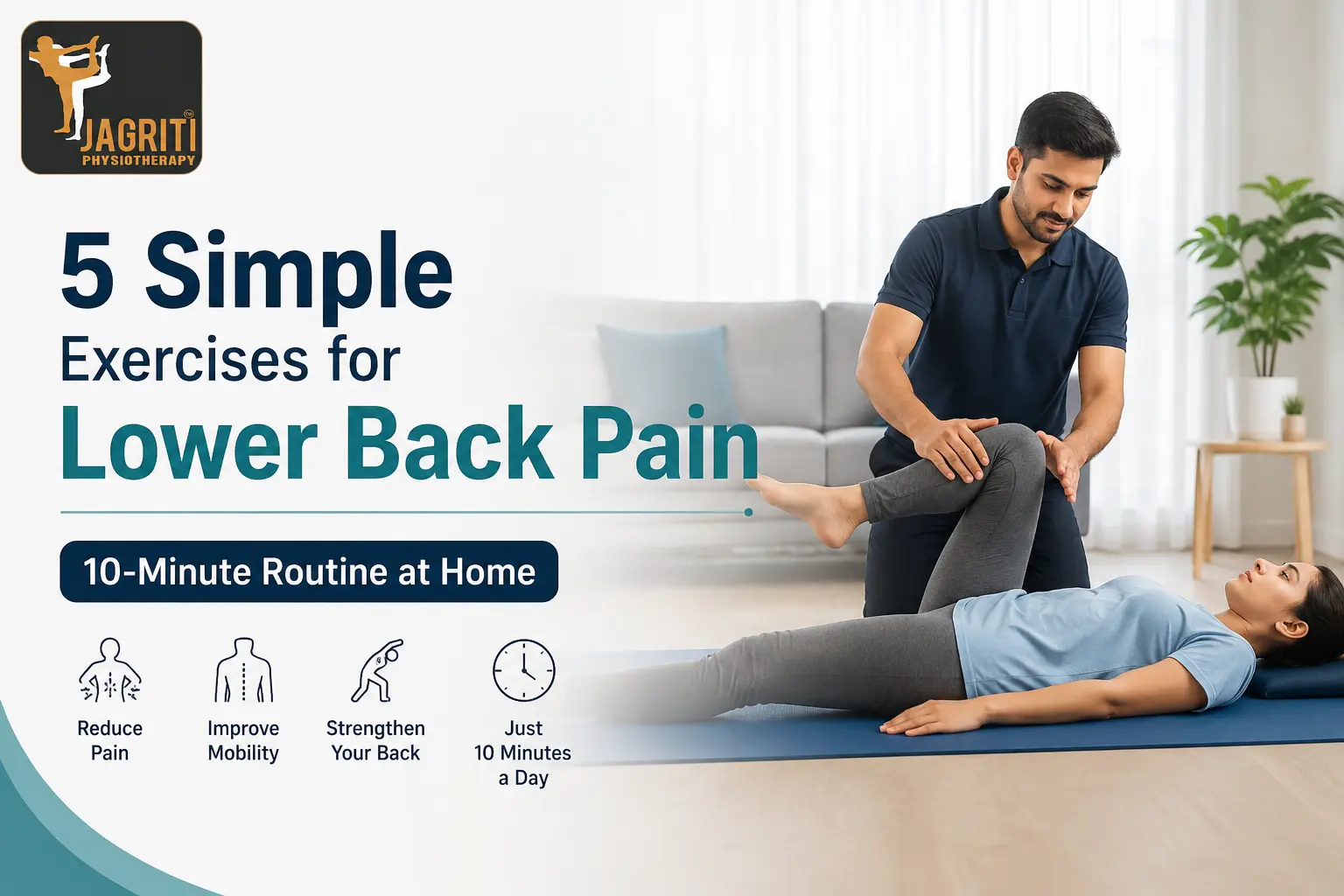
Lower back pain can make ordinary activities uncomfortable. Sitting at a desk, getting out of bed, bending down, driving, walking or standing for long periods can become difficult when your back feels stiff or sore.
If your lower back pain is mild and there are no warning signs of a serious problem, gentle movement can be a useful part of staying active and managing symptoms. You don’t necessarily need an expensive exercise machine, a gym membership or a long workout.
Sometimes, starting with just 10 minutes of controlled movement at home is more practical.
This simple routine combines gentle mobility exercises with basic strengthening movements for the lower back, hips and trunk. The goal isn’t to force your spine into uncomfortable positions. It is to move gradually, improve your comfort with movement and build strength over time.
Important: This article provides general educational information and is not a substitute for an individual assessment. If an exercise causes significant or worsening pain, stop it. People with severe pain, recent trauma, significant weakness or numbness, bladder or bowel changes, or other concerning symptoms should seek professional medical assessment.
A Simple 10-Minute Lower Back Exercise Routine
| Exercise | Time |
|---|---|
| Knee-to-chest stretch | 2 minutes |
| Gentle lower-back rotation | 2 minutes |
| Pelvic tilts | 2 minutes |
| Glute bridges | 2 minutes |
| Cat-cow movement | 2 minutes |
You can perform this routine on a comfortable floor or exercise mat.
Move slowly and breathe normally. You do not need to complete as many repetitions as possible. Quality and comfort are more important than speed.
1. Knee-to-Chest Stretch
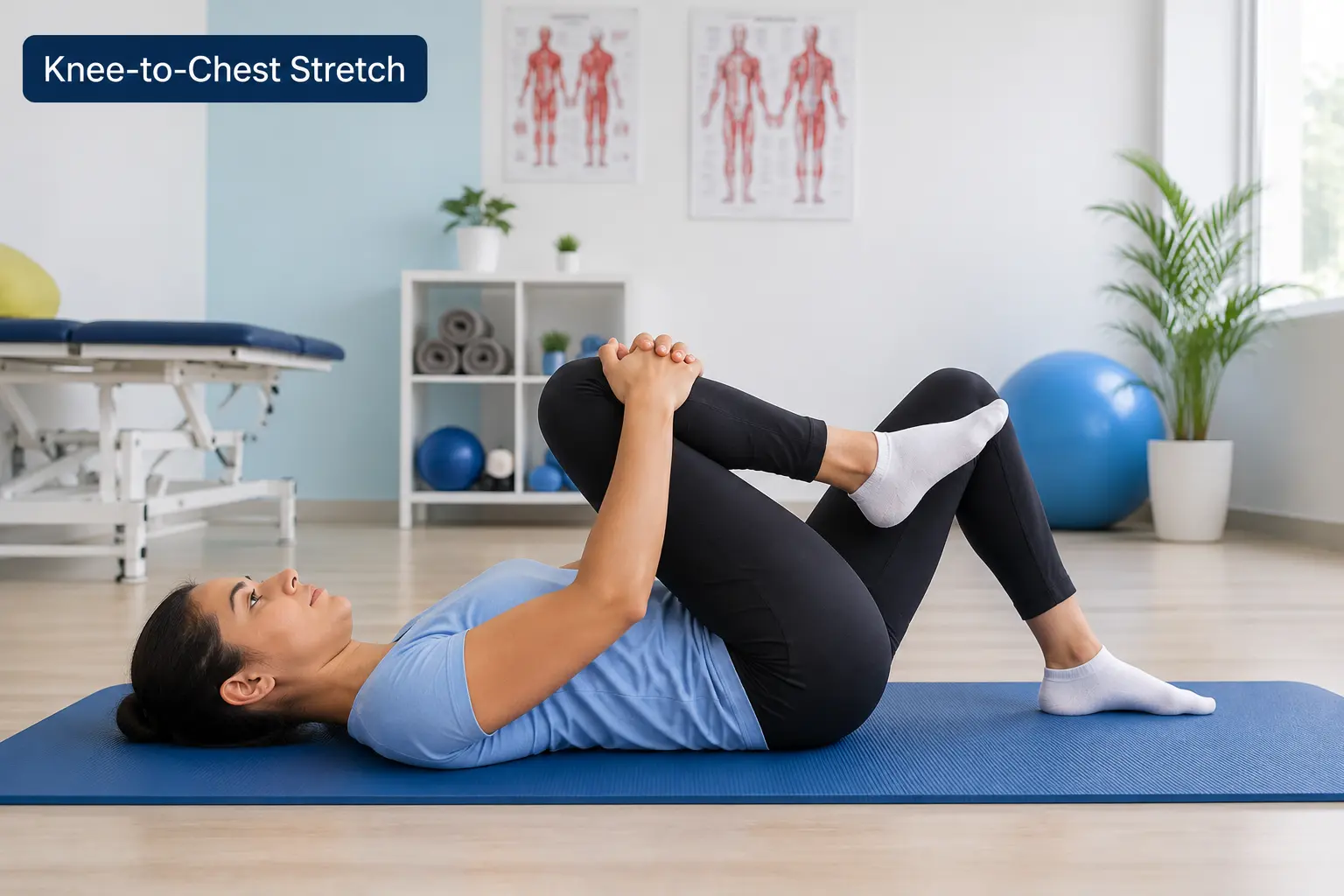
The knee-to-chest stretch is a simple movement for gently moving the lower back and hips.
It can be particularly comfortable when your back feels stiff after sitting or resting for a long time.
How to do it
- Lie on your back on a comfortable surface.
- Bend both knees and keep your feet flat on the floor.
- Slowly bring one knee toward your chest.
- Hold behind the thigh or around the knee, whichever feels comfortable.
- Gently bring the knee closer without pulling forcefully.
- Hold for about 5–10 seconds.
- Slowly return your foot to the floor.
- Repeat with the opposite leg.
Start with 2–3 repetitions on each side.
If the single-leg version feels comfortable, you can try bringing both knees toward your chest.
What should you feel?
You may notice a gentle stretch through your lower back, hip or buttock.
You should not need to force the movement or tolerate sharp pain.
Common mistake
Pulling the knee too aggressively is unnecessary. The purpose is gentle movement, not to see how far you can stretch.
2. Gentle Lower-Back Rotation
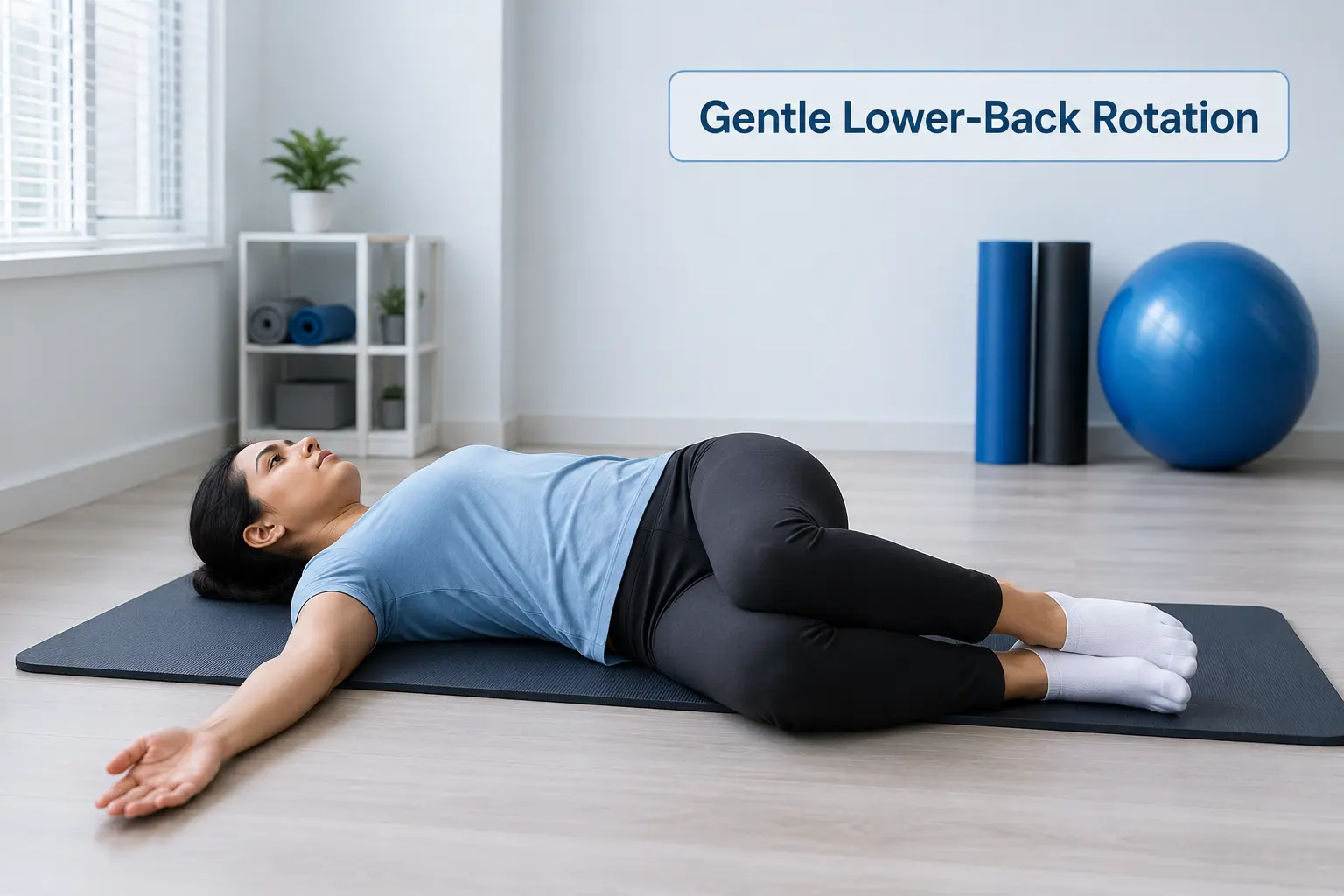
Your spine and hips naturally participate in rotational movements throughout the day. This exercise allows you to practice gentle rotation while your body is supported.
How to do it
- Lie on your back.
- Bend your knees and place your feet flat on the floor.
- Keep your arms relaxed beside you.
- Slowly allow both knees to move toward one side.
- Keep your shoulders comfortably supported.
- Stop when you feel a gentle stretch or comfortable movement.
- Hold for approximately 5–10 seconds.
- Return your knees to the centre.
- Repeat on the opposite side.
Perform 2–4 repetitions per side.
Make it easier
Your knees do not need to touch the floor.
Move only as far as you can comfortably control.
Common mistake
Avoid dropping your knees quickly or using momentum to increase the rotation.
Slow movement allows you to notice how your back responds.
3. Pelvic Tilts
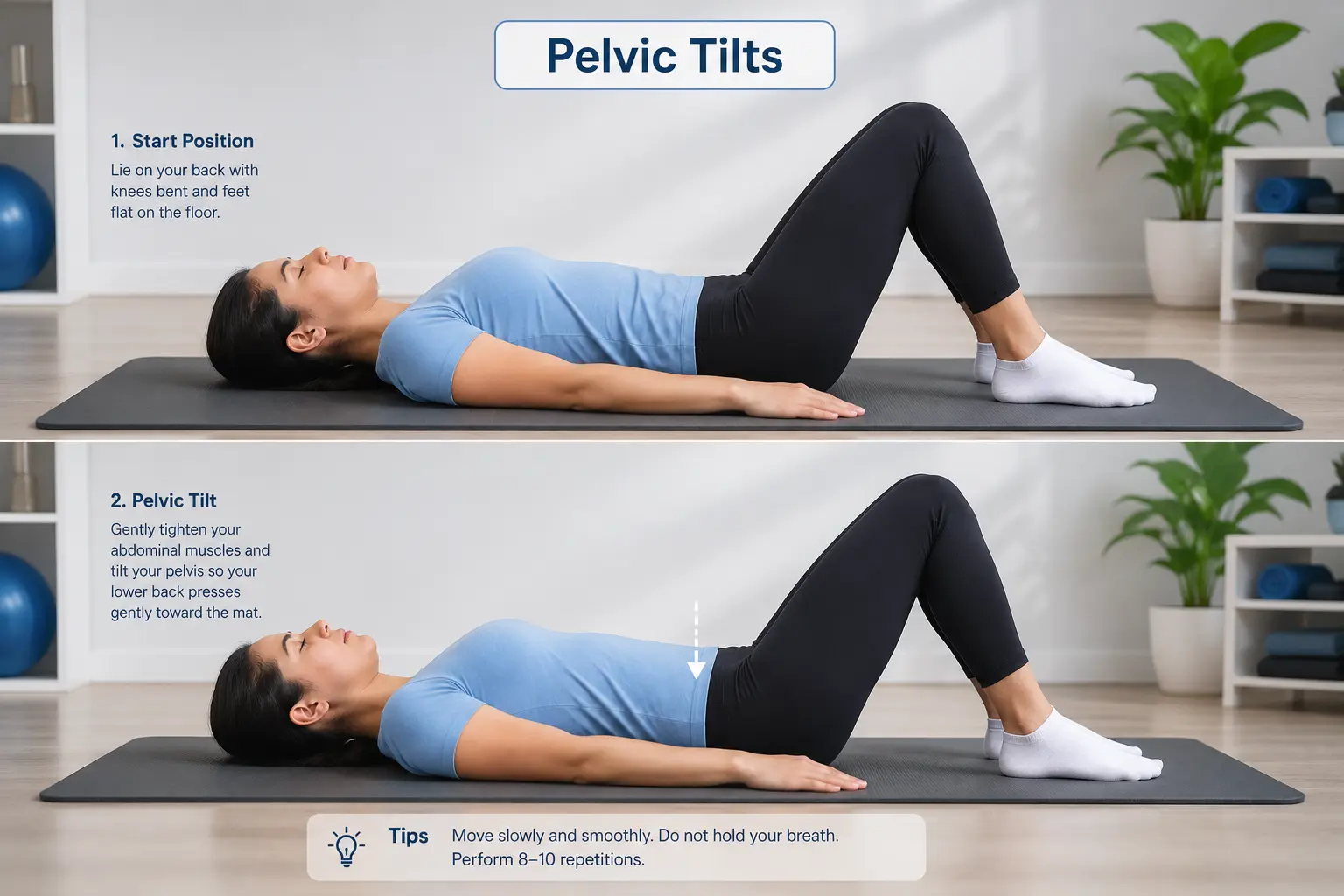
Pelvic tilts are a small but useful movement for learning how to control your pelvis and lower back.
Unlike a large stretch, this exercise focuses on controlled movement and abdominal engagement.
How to do it
- Lie on your back with your knees bent.
- Keep your feet flat on the floor.
- Relax your shoulders and neck.
- Gently tighten your abdominal muscles.
- Slowly tilt your pelvis so your lower back moves closer toward the floor.
- Hold for approximately 5 seconds.
- Relax.
- Return to a comfortable neutral position.
- Repeat.
Start with 5–8 repetitions.
Why include pelvic tilts?
People with back pain sometimes become cautious about moving their spine. Gentle pelvic movements can help you become more comfortable controlling your lower back instead of avoiding movement altogether.
Common mistake
Don’t try to press your back into the floor with maximum force.
The movement can be small.
Focus on control rather than effort.
4. Glute Bridge
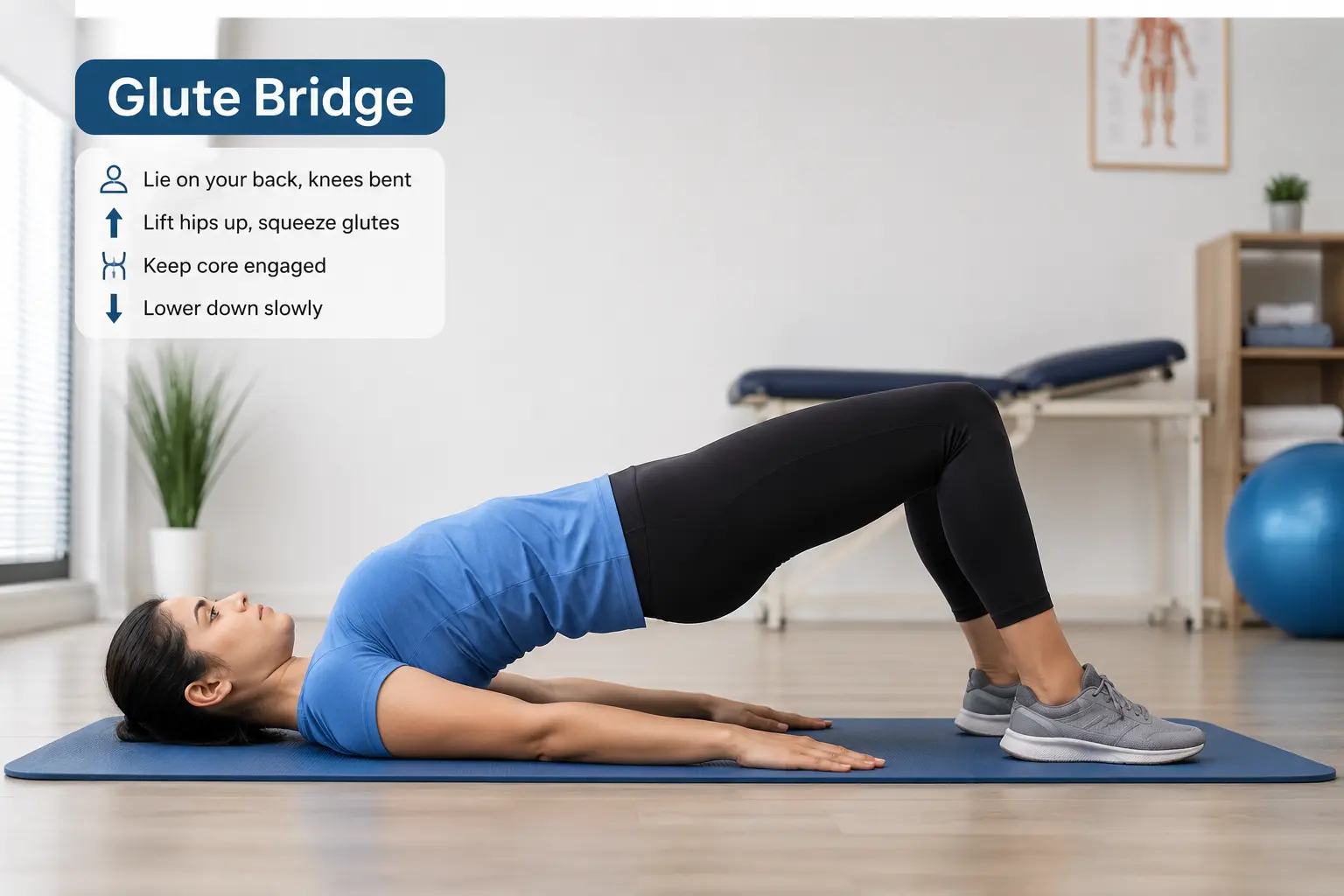
Lower back exercises shouldn’t consist only of stretching.
Your hips, buttocks and trunk contribute to everyday movements such as walking, climbing stairs, getting up from a chair and lifting objects.
The glute bridge is a simple strengthening exercise that can be performed without weights.
How to do it
- Lie on your back with your knees bent.
- Place your feet flat on the floor.
- Keep your feet approximately hip-width apart.
- Relax your arms beside you.
- Gently tighten your abdominal and buttock muscles.
- Slowly lift your hips from the floor.
- Stop at a comfortable height.
- Pause briefly.
- Lower your hips slowly.
Start with 5 controlled repetitions.
What should you focus on?
Think about using your buttock muscles to lift your hips, rather than trying to create a large arch in your lower back.
Common mistake
Trying to lift your hips as high as possible can cause unnecessary lower-back arching.
A smaller, controlled bridge is often a better starting point.
5. Cat-Cow Movement
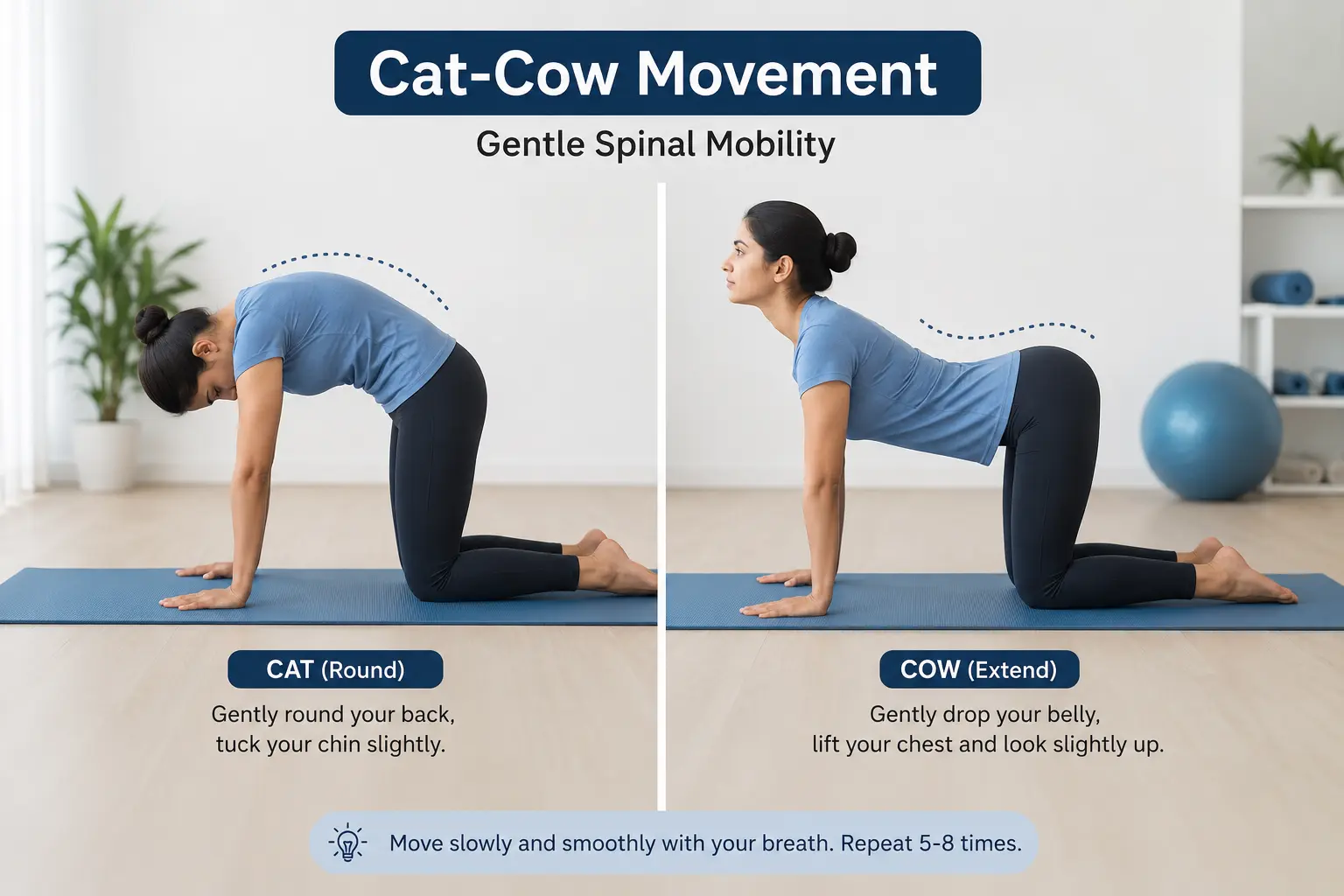
Cat-cow is a gentle mobility exercise that moves the spine through alternating positions.
It can be useful when your back feels stiff after prolonged sitting or inactivity.
How to do it
- Start on your hands and knees.
- Position your hands comfortably beneath your shoulders.
- Keep your knees beneath your hips.
- Slowly round your back upward.
- Allow your head and neck to relax naturally.
- Slowly move in the opposite direction.
- Allow your abdomen to move gently downward while your chest opens.
- Return to a comfortable neutral position.
- Repeat slowly.
Start with 3–5 controlled repetitions.
If getting on the floor is uncomfortable
You can try a supported version using a sturdy table or countertop.
Place your hands on the support and gently move your spine through the same general pattern.
Common mistake
Don’t perform cat-cow rapidly.
The benefit comes from controlled movement, not from trying to create the biggest possible spinal movement.
How to Complete the Routine in 10 Minutes
You can follow this sequence when you have a short break during the day.
Minutes 0–2: Knee-to-Chest
Perform gentle alternating repetitions. Spend a little extra time on the side that feels tighter, but don’t force the stretch.
Minutes 2–4: Lower-Back Rotation
Move your knees slowly from one side to the other.
Minutes 4–6: Pelvic Tilts
Perform approximately 5–8 controlled repetitions, resting briefly if necessary.
Minutes 6–8: Glute Bridges
Start with around five repetitions. Focus on controlled lifting and lowering.
Minutes 8–10: Cat-Cow
Finish with several slow, comfortable repetitions.
The goal isn’t to finish exactly 10 minutes of exercise at any cost.
If your back becomes uncomfortable during the routine, stop, reduce the range of movement or leave that exercise out.
What Should Lower Back Exercises Feel Like?
This is an important distinction.
A gentle stretch or mild muscular effort can be normal when starting an exercise. However, sharp, severe, rapidly increasing or unfamiliar pain is a reason to stop and reassess.
You should also pay attention to symptoms that travel into the leg, particularly if they are accompanied by numbness, tingling or weakness.
An exercise that feels helpful for one person may not be appropriate for another. Lower back pain can have different causes and presentations, so exercise selection should be individualized when symptoms persist.
Exercise and physical activity are important components of managing many types of low back pain, but they work best as part of an approach suited to the person’s symptoms, function and goals.
5 Mistakes to Avoid When Exercising With Lower Back Pain
1. Stretching as hard as possible
A stronger stretch isn’t automatically a better stretch.
Stay within a comfortable range.
2. Moving too quickly
Fast repetitions make it difficult to control the movement and recognize how your symptoms are responding.
3. Doing only stretching exercises
Mobility is useful, but long-term back care may also involve strengthening and general physical activity.
4. Ignoring worsening symptoms
Don’t assume that increasing pain means an exercise is “working.”
If your symptoms consistently worsen, stop and seek appropriate guidance.
5. Expecting an instant cure
A 10-minute routine can be a useful starting point, but lower back pain doesn’t always resolve immediately.
Recovery depends on factors such as the cause of the pain, how long you’ve had symptoms, your activity level and your overall health.
Is Walking Good for Lower Back Pain?
For many people, comfortable walking is a practical way to remain active.
If you’ve spent several hours sitting, getting up and taking a short walk can also help break up prolonged inactivity.
You don’t have to begin with a long walk.
Start with a comfortable amount and gradually increase your activity as your tolerance improves.
WHO recommends regular physical activity for adults and emphasizes starting with small amounts and gradually increasing activity when someone has been inactive.
However, if walking significantly increases your symptoms, especially if you develop new leg symptoms, don’t simply keep increasing the distance. Consider getting your condition assessed.
When Should You See a Physiotherapist for Lower Back Pain?
Home exercises may be appropriate for some people with mild, uncomplicated back pain.
However, professional assessment can be particularly useful when:
- Your lower back pain keeps returning.
- Pain is affecting your sleep.
- You are struggling with work or daily activities.
- You aren’t sure which exercises are suitable.
- Your symptoms aren’t improving.
- You have difficulty bending, walking or sitting.
- Pain extends into your buttock or leg.
- You have recurring episodes of back pain.
- You want a structured exercise and rehabilitation plan.
A physiotherapist can assess your movement, strength, flexibility and functional limitations and use that information to develop an individualized rehabilitation program.
This matters because lower back pain is a symptom rather than a single condition. The most appropriate exercises can vary considerably from one person to another.
When Should You Seek Medical Attention?
Not all back pain should be treated with home exercises.
Seek prompt medical evaluation if back pain occurs with concerning symptoms such as:
- New or worsening muscle weakness.
- Significant numbness.
- Numbness around the groin or saddle area.
- New loss of bladder or bowel control.
- Severe pain after a major accident or injury.
- Severe or rapidly worsening symptoms.
- Other unexplained symptoms that make you feel seriously unwell.
These symptoms require appropriate medical assessment rather than an online exercise routine.
If your back pain started after a significant fall, collision or other injury, seek professional advice before beginning exercises.
How to Prevent Lower Back Pain From Becoming a Recurring Problem
There isn’t always a single way to prevent back pain, but several everyday habits can support a healthier and more active lifestyle.
Break up long periods of sitting
If you work at a desk, change positions regularly and take short movement breaks.
Build strength gradually
Strong legs, hips and trunk muscles can help you handle everyday physical demands.
Stay physically active
Walking, recreational activities and appropriate exercise can all contribute to maintaining physical capacity.
Increase activity gradually
If you’ve been inactive for several weeks, avoid suddenly returning to intense workouts.
Build your activity level step by step.
Take sleep and recovery seriously
Poor sleep can affect how you feel and function during the day. Maintaining healthy sleep habits is part of overall back care.
Learn how to manage recurring symptoms
If your back pain repeatedly returns, don’t rely on the same temporary solution each time. A physiotherapy assessment can help identify contributing movement, strength or activity factors and create a longer-term plan.
Regular physical activity, self-management and rehabilitation are important parts of low back pain care.
What to Do After Your First 10 Minutes
If these exercises feel comfortable, you don’t need to immediately make them much harder.
Start by becoming consistent.
For example:
First week:
Learn the movements and focus on comfortable technique.
Second week:
Gradually increase repetitions if the exercises remain well tolerated.
Following weeks:
Progress toward more comprehensive strengthening and physical activity according to your needs.
The goal isn’t to collect dozens of back exercises.
The goal is to gradually improve your mobility, strength, confidence and ability to perform everyday activities.
For persistent or recurring pain, an individualized physiotherapy program can help determine what should be progressed and what should be modified.
Final Takeaway
If you’re experiencing mild lower back stiffness or uncomplicated back discomfort, a complicated workout isn’t necessarily the best place to start.
A simple 10-minute routine combining knee-to-chest stretches, gentle lower-back rotation, pelvic tilts, glute bridges and cat-cow movements can provide a practical starting point for mobility and strengthening.
Start gently.
Move slowly.
Don’t force painful movements.
And don’t assume that every lower back problem requires the same exercises.
If your symptoms persist, repeatedly return, interfere with normal activities or include numbness, weakness or pain extending into the leg, consider getting assessed by a qualified physiotherapist or healthcare professional.
For people looking for physiotherapy for lower back pain in Jaipur, Jagriti Physiotherapy can provide individualized assessment and rehabilitation based on your symptoms, movement and functional goals rather than relying on a generic exercise routine.
Frequently Asked Questions
1. What are the best exercises for lower back pain at home?
Ans: There isn’t one exercise that is best for everyone. Gentle mobility movements such as knee-to-chest, lower-back rotation and cat-cow, along with strengthening exercises such as bridges, can be useful starting options for some people. The appropriate exercises depend on your symptoms and how your body responds.
2. Can I relieve lower back pain in 10 minutes?
Ans: A short 10-minute routine may help some people move more comfortably and reduce stiffness, but it should not be considered a guaranteed cure. Persistent or worsening symptoms may require professional assessment.
3. Should I exercise when my lower back hurts?
Ans: For some types of uncomplicated lower back pain, gentle movement may be appropriate. However, don’t force painful movements or continue an exercise that clearly makes your symptoms worse.
4. How often should I do lower back exercises?
Ans: There isn’t a universal schedule. Start gradually and focus on consistency. If an exercise routine is comfortable and appropriate for you, you can gradually increase repetitions or activity as your tolerance improves.
5. Are stretches enough for lower back pain?
Ans: Not necessarily. Depending on the individual, a rehabilitation program may include mobility exercises, strengthening, walking, activity modification and other forms of physical rehabilitation. WHO recommends exercise as one component of non-surgical care for chronic primary low back pain.
6. Is walking good for lower back pain?
Ans: Comfortable walking can be a practical way for many people to remain active. Start with an amount you can tolerate and gradually increase it. If walking significantly worsens your symptoms or causes new neurological symptoms, seek professional guidance.
7. When should I see a physiotherapist for lower back pain?
Ans: Consider a physiotherapy assessment if your pain is persistent, keeps returning, affects daily activities, limits movement or isn’t improving. A physiotherapist can assess your individual movement and help create an appropriate rehabilitation plan.
8. Can sitting for long hours cause lower back pain?
Ans: Long periods of sitting can contribute to stiffness and discomfort in some people, particularly when combined with low levels of physical activity. Regular movement breaks, changing positions and maintaining overall physical activity can help reduce prolonged inactivity.
About the Author

Dr Deepesh nainani
Dr. Deepesh Nainani (PT) is a leading physiotherapist in Jaipur, offering expert, patient-focused care. He leads Jagriti Physiotherapy with a skilled team across multiple specialties. Known for his achievements and modern treatment approach, he ensures effective recovery and long-term results, making him a trusted choice for physiotherapy in Jaipur.
Get Quote Now

