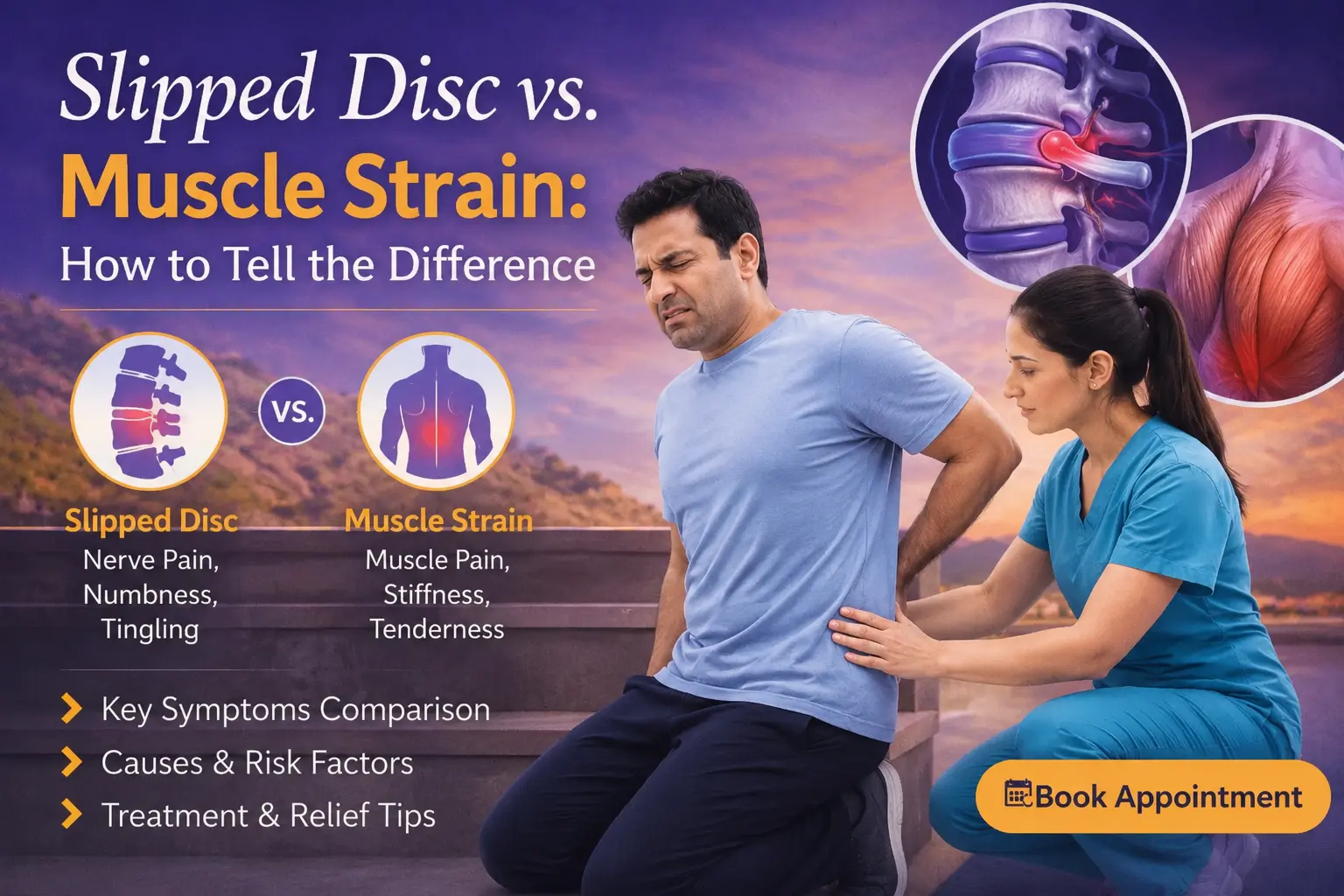
Lower back pain can hit out of nowhere. Whether you felt a sharp snap while lifting or woke up with an agonizing ache, your immediate question is likely: how to tell if back pain is muscle or disc?
The easiest way to tell the difference between a slipped disc and a muscle strain is by where the pain travels. A lumbar muscle strain strictly stays in your lower back or buttocks. A disc-related injury, however, pinches spinal nerves, causing sharp pain, tingling, or numbness that radiates down past your knee into your leg.
Understanding which lower back injury you are dealing with is vital, as treating a nerve-related problem with the wrong movements can make it worse. Let’s look at the specific signs of each condition so you can figure out what is happening.
How to Identify Your Back Pain
Instead of guessing, use these quick, symptom-matching checklists to evaluate your current discomfort.
5 Quick Signs Your Pain May Be a Slipped Disc
If a spinal cushion is bulging or herniated, it alters how your nerves function. Look for these indicators:
- Pain shoots down the leg: A sharp, electric shock-like sensation traveling down one leg (commonly known as sciatica). If your pain travels down the leg like this, learn more about these sciatica pain relief stretches that may help manage symptoms.
- Numbness or tingling: A “pins and needles” feeling in your thigh, calf, foot, or toes.
- Sitting worsens symptoms: The mechanical pressure on your lumbar discs increases when seated, causing pain to spike.
- Coughing or sneezing increases pain: Sudden abdominal pressure forces the disc to press harder against the nerve.
- Foot weakness develops: You experience difficulty lifting the front part of your foot when walking (foot drop).
5 Signs Your Pain Is More Likely a Muscle Strain
A lumbar strain means muscle fibers or ligaments have been stretched or micro-torn. Look for these indicators:
- Pain stays in the lower back: The ache remains localized and does not travel down your leg.
- Muscles feel tight or knotted: Your lower back feels stiff, rigid, or experiences intense, throbbing spasms.
- No numbness or tingling: Because nerves aren’t involved, you won’t feel any loss of sensation.
- Improves with rest: Lying flat on your back or finding a supported resting position brings noticeable relief.
- Clear trigger event: The pain started immediately after lifting a heavy object, a sudden twist, or an intense workout.
Quick Symptom Comparison Table
| Feature | Muscle Strain | Slipped Disc |
|---|---|---|
| Pain Location | Lower back and buttocks only | Lower back + radiating down the leg |
| Pain Type | Dull ache, stiffness, tight spasms | Sharp, shooting, electric shock feeling |
| Numbness | No | Common |
| Tingling | No | Common |
| Worse With | Movement, bending, twisting | Prolonged sitting, coughing, sneezing |
| Better With | Rest, lying flat | Gentle walking, standing upright |
Typical Recovery Timelines
How long you will be sidelined depends entirely on the structural severity of your injury.
| Condition | Typical Recovery Time | What to Expect |
|---|---|---|
| Mild Muscle Strain | 1–3 weeks | Responds well to basic rest, ice/heat, and gentle movement. |
| Moderate Muscle Strain | 3–6 weeks | Requires targeted physiotherapy to safely rebuild core strength and prevent scar tissue. |
| Herniated / Slipped Disc | 6–12 weeks | Requires specialized spinal decompression and rehabilitation to naturally relieve nerve pressure. |
Red Flags: When to Seek Immediate Medical Help
While most back issues can be safely evaluated at a clinic, certain symptoms require emergency medical care. Go to the nearest hospital or see a spine specialist immediately if you experience:
- Loss of bladder or bowel control
- Sudden, severe weakness in one or both legs (e.g., your leg gives out when standing)
- Numbness or a “dead” sensation around your groin or saddle area
- Extreme difficulty walking or a sudden loss of balance
How Professional Physiotherapy Heals Your Back Safely
Self-diagnosing can be risky. For example, certain forward-bending movements may increase pressure on an irritated disc and worsen symptoms in some people, severely aggravating your spinal nerves.
At Jagriti Physiotherapy, our physical assessment identifies the exact root cause of your pain. Whether you require deep tissue rehabilitation for a muscular tear or specialised spine physiotherapy services to relieve spinal nerve compression, we create personalized care pathways. Under the guidance of Dr. Deepesh Nainani, we help restore your mobility safely, get you out of pain, and reinforce your core muscles to protect your back against future injuries
Conclusion
While both slipped discs and muscle strains cause significant lower back pain, the biggest difference is whether symptoms travel down the leg. Muscle strain pain usually stays localized, while a slipped disc often causes sciatica, tingling, or numbness. If symptoms persist, worsen, or affect your daily activities, a professional physiotherapy assessment can help identify the true cause and guide you through the right treatment plan.
Frequently Asked Questions (FAQs)
1. How do I know if my back pain is nerve-related?
Ans: Nerve-related back pain often causes burning, tingling, numbness, or a sharp pain that travels down the leg. On the other hand, muscle pain typically remains localized in the lower back, feeling more like a deep, dull ache or tight spasm.
2. Can a slipped disc heal naturally?
Ans: Yes. Most slipped discs improve over time with targeted exercise therapy, posture correction, and specialized physiotherapy without ever needing surgery.
3. What is the fastest way to relieve a strained lower back muscle?
Ans: For a muscle injury, apply ice packs for 15 minutes at a time during the first 48 hours to suppress inflammation. Afterward, alternate with heat to relax painful spasms. Avoid prolonged bed rest, as light walking keeps blood flowing to heal the tissue.
4. When should I choose home physiotherapy over visiting a clinic in Jaipur?
Ans: If your back pain is so severe that sitting in a car or twisting your body to drive worsens your symptoms, home physiotherapy services are your safest option. For acute cases of a pulled muscle or severe sciatica, receiving professional care at home prevents further irritation to the injured area.
5. Is it safe to use a lumbar support belt for a slipped disc or muscle strain?
Ans: A lumbar support belt provides helpful temporary relief when you need to stand or walk with acute back disk pain. However, relying too heavily on a belt causes your natural core muscles to become lazy and weak, which can prolong your overall recovery time.
About the Author

Dr Deepesh nainani
Dr. Deepesh Nainani (PT) is a leading physiotherapist in Jaipur, offering expert, patient-focused care. He leads Jagriti Physiotherapy with a skilled team across multiple specialties. Known for his achievements and modern treatment approach, he ensures effective recovery and long-term results, making him a trusted choice for physiotherapy in Jaipur.
Get Quote Now

