
Quick Answer:
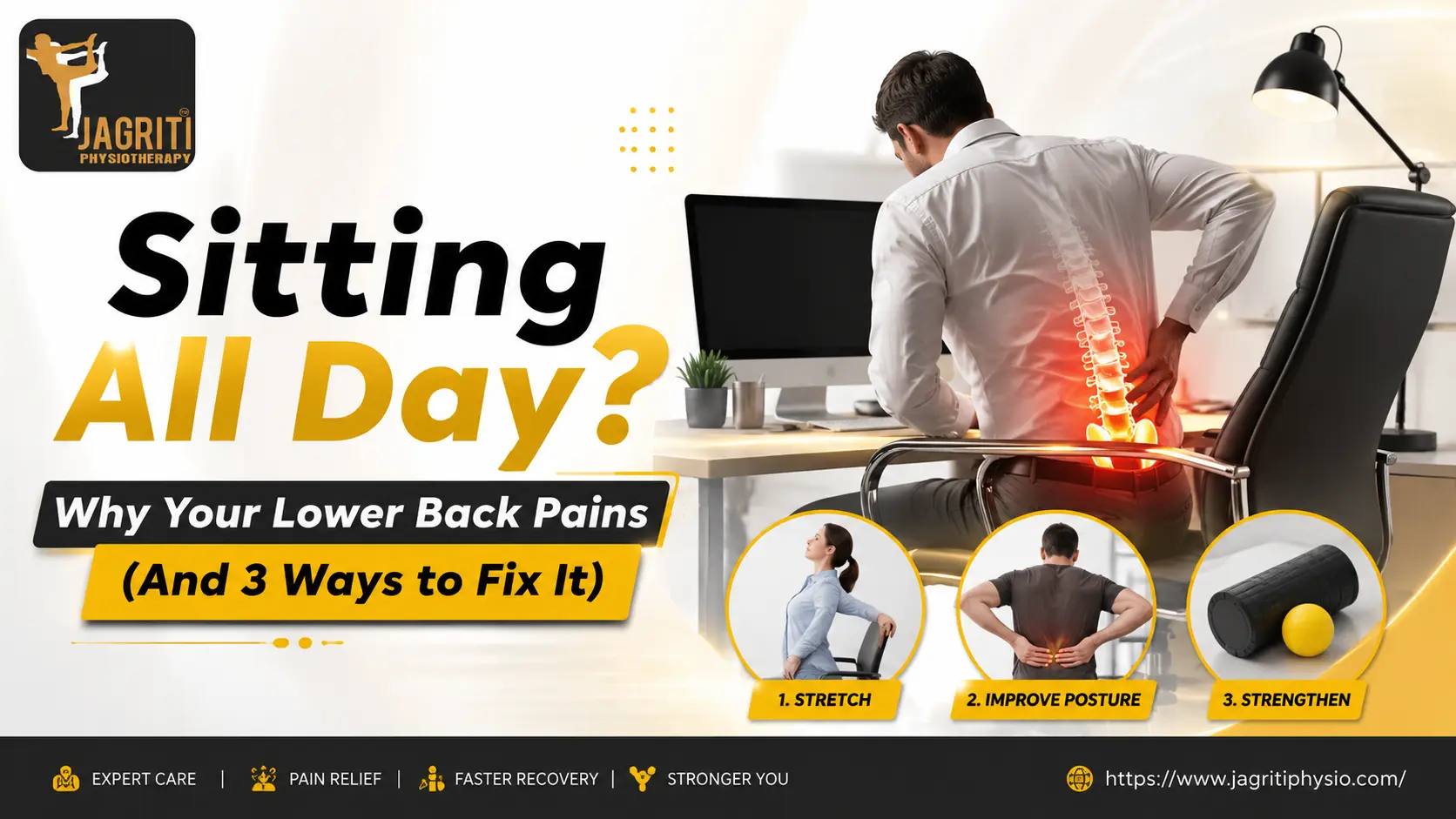
Sitting for long hours squeezes your lower spine, turns off your butt muscles (they basically fall asleep), and tightens the muscles at the front of your hips, which pulls your lower back out of its natural position. The fastest fix is simple: stand up and move every 30 minutes, stretch your hips and spine daily, and set up your desk so your body isn’t fighting bad posture all day. If pain sticks around for more than 2 weeks, it’s time to see a physiotherapist.
If you’ve ever stood up after a long work call and felt your lower back crack, stiffen, or send out a little jolt of pain, you’re not alone. Most people who sit at a desk for 8, 9, even 10 hours a day feel this at some point. You get up to grab a coffee or use the washroom, and for the first few steps, your back feels like a rusty hinge.
Here at Jagriti Physiotherapy, managed by Dr. Deepesh Nainani in Jaipur, this is one of the most common complaints we hear from software professionals, students preparing for exams, teachers, and even home-makers who spend hours sitting while working or studying. The good news? This kind of back pain is usually very fixable once you understand what’s actually causing it. Let’s break it down in plain, simple language.
Why Sitting for 8 Hours a Day Ruins Your Back
Your spine wasn’t really built to stay bent in one position for hours at a time. Here’s what happens inside your body when you sit too long.
1. Your Lower Spine Gets Squeezed (Lumbar Compression)
“Lumbar” is just the medical word for your lower back the five bones (called vertebrae) that sit right above your hips. When you sit, especially if you slouch, these bones get pushed closer together and the soft cushions between them (discs) get squeezed on one side. Doctors call this lumbar compression. Over time, this constant squeezing irritates the muscles, joints, and sometimes the discs themselves, leading to that dull, aching stiffness.
Think of it like sitting on a garden hose. Water (or in your body’s case, blood flow and nutrients) can’t move through as freely when there’s constant pressure on it.
2. Your Glutes "Fall Asleep" (Glute Amnesia)
Your glutes, your butt muscles are actually some of the strongest muscles in your body. They’re supposed to help support your lower back and control how you bend, walk, and stand. But when you sit on them for hours every day, they basically go quiet. Physiotherapists call this glute amnesia, it doesn’t mean the muscle disappears, it just means it forgets how to switch on properly.
When your glutes stop doing their job, your lower back muscles have to pick up the slack. They weren’t designed for that much extra work, so they get overworked, tight, and sore.
3. Tight Hip Muscles Pull On Your Spine
At the top of your thighs, there are muscles called hip flexors they’re the muscles that lift your knee up, like when you climb stairs. When you sit, these muscles stay in a shortened position for hours. Over time, they get tight and stiff, almost like a rubber band that’s been held in a bent position for too long.
Because these muscles connect to your lower spine and pelvis, tight hip flexors literally tug your lower back out of its natural alignment. This often creates that arched, achy feeling in your lower back, especially when you first stand up.
3 Simple Ways to Fix Your Lower Back Pain Today
The good news is that none of these fixes require fancy equipment. Just a bit of consistency.
Fix 1: The 30-Minute Reset Rule
Set a timer on your phone or laptop for every 30 minutes. When it goes off, stand up for just 60 to 90 seconds. Walk to get water, roll your shoulders back, or simply stand tall and gently arch your back the opposite way you’ve been sitting.
This one habit resets the pressure on your spine before it builds up into pain. It sounds too simple to work, but it’s one of the most effective things you can do because pain from sitting is really pain from staying still, not from sitting itself.
Fix 2: Two Daily Desk Stretches
You don’t need a yoga mat for these. Both can be done right at your desk or on the floor at home.
Seated Figure-4 Stretch (loosens tight hips)
- Sit tall in your chair.
- Cross your right ankle over your left knee, so your leg looks like the number “4.”
- Keep your back straight, and gently lean your chest forward until you feel a stretch in your right hip and glute.
- Hold for 20 to 30 seconds, then switch sides.
Cat-Cow Stretch (loosens the spine)
- Get on your hands and knees on the floor (or do a seated version at your desk).
- Slowly arch your back upward, like a cat stretching, tucking your chin toward your chest.
- Then slowly dip your back downward, lifting your chest and head up, like a cow.
- Move slowly between these two positions for 8 to 10 rounds.
Do both stretches once in the morning and once in the evening, and you’ll likely notice less stiffness within a week or two.
Fix 3: Fix Your Workspace Ergonomics
A big part of back pain from sitting comes down to how your desk is set up. Small changes here make a big difference:
- Chair: Your lower back should be supported by the chair’s backrest. If there’s a gap, roll up a small towel or use a lumbar support cushion behind your lower back.
- Screen height: The top of your screen should be at eye level. If you’re constantly looking down, you’re probably also rounding your lower back to compensate.
- Feet: Your feet should rest flat on the floor (or on a footrest), with your knees roughly level with your hips. Dangling feet or crossed legs shift pressure unevenly onto your spine.
These changes cost little to nothing but can meaningfully reduce the muscle strain on your lower back throughout the day.
Most sitting-related back pain is simple muscle fatigue tight, tired muscles that respond well to movement, stretching, and better posture. But sometimes back pain is a signal of something that needs a closer look.
See a Spine physiotherapist if you notice:
- Pain that lasts longer than 2 weeks despite stretching and movement
- Pain that shoots down your leg, past your knee
- Numbness, tingling, or weakness in your leg or foot
- Pain that wakes you up at night
- Back pain following a fall, accident, or injury
If any of these sound familiar, it’s worth getting checked rather than guessing. This is exactly where Dr. Deepesh Nainani at Jagriti Physiotherapy can help. Instead of just offering a quick fix like a massage or a painkiller, the approach at Jagriti Physiotherapy focuses on finding the actual root cause of your pain whether that’s poor movement patterns, muscle imbalances, posture habits, or an old injury that never fully healed.
Being based right in Jaipur, the clinic sees this exact kind of desk-related back pain regularly, and treatment plans are built around your specific daily routine, not a generic one-size-fits-all stretch sheet.
Conclusion
Sitting all day doesn’t have to mean living with a sore, stiff lower back. Now you know exactly why it happens your spine gets compressed, your glutes stop doing their job, and your tight hip muscles pull your back out of alignment. More importantly, you also know how to fix it: take a break every 30 minutes, stretch your hips and spine daily, and set up your desk so it supports good posture instead of working against it.
Most people who follow these three steps consistently start feeling noticeably better within a week or two. But if your pain sticks around, spreads down your leg, or shows any of the warning signs we covered above, please don’t just push through it or wait for it to “go away on its own.” Getting it looked at early is always easier than fixing a problem that’s had months to get worse.
Frequently Asked Questions (FAQs)
1. Is sitting worse for back pain than standing?
Ans: For most people, yes sitting puts more direct pressure on your lower spine than standing does. But standing still in one spot for hours isn’t great either. The real key is alternating between sitting, standing, and walking throughout the day rather than staying locked in any single position.
2. How long does lower back pain from sitting take to heal?
Ans: For simple muscle-related pain, most people start feeling better within 1 to 2 weeks once they add movement breaks, stretch daily, and fix their desk setup. If pain lasts longer than that, it’s a good idea to get it assessed by a physiotherapist rather than waiting it out.
3. Can physiotherapy fix lower back pain permanently?
Ans: Physiotherapy can’t change the fact that you sit for work, but it can genuinely fix the underlying issues like weak glutes, tight hip flexors, or poor movement habits that are causing your pain in the first place. Many people who complete a proper treatment plan see long-term relief, not just temporary comfort.
4. What are the warning signs that my back pain needs medical attention instead of stretching?
Ans: Watch for pain shooting down your leg, numbness or tingling, weakness in your foot or leg, pain that wakes you up at night, or any back pain that started after a fall or injury. These signs mean it’s time to see a professional rather than self-treating with stretches.
5. Should I use a lumbar support pillow or a standing desk to prevent desk back pain?
Ans: Both can help, but neither is a magic fix on its own. A lumbar pillow supports your lower back’s natural curve while sitting, and a standing desk lets you change position throughout the day. Ideally, use them together alternate between sitting (with lumbar support) and standing every 30 to 60 minutes for the best results.
About the Author

Dr Deepesh nainani
Dr. Deepesh Nainani (PT) is a leading physiotherapist in Jaipur, offering expert, patient-focused care. He leads Jagriti Physiotherapy with a skilled team across multiple specialties. Known for his achievements and modern treatment approach, he ensures effective recovery and long-term results, making him a trusted choice for physiotherapy in Jaipur.
Get Quote Now

