
Neck pain is extremely common, especially among people who spend long hours working on computers, driving, using smartphones, or sitting with poor posture. But when neck pain keeps returning or is accompanied by stiffness, headaches, tingling, or arm symptoms, many people begin to wonder: Is it normal neck pain, or could it be cervical spondylosis?
The short answer is that normal mechanical neck pain is often related to temporary muscle, joint, posture, or movement strain, while cervical spondylosis refers to age-related changes in the discs, joints, and bones of the cervical spine. However, symptoms can overlap, so persistent or neurological symptoms should be professionally assessed.
What Is Normal Neck Pain?

“Normal neck pain” is not a specific medical diagnosis. It commonly refers to temporary or mechanical neck discomfort caused by factors such as prolonged sitting, poor workstation ergonomics, awkward sleeping positions, muscle tension, repetitive movements, or minor strain.
Typical symptoms may include:
- Localised pain around the neck and shoulders
- Muscle tightness or tenderness
- Mild difficulty turning the head
- Pain after long periods at a desk or on a phone
- Temporary stiffness after waking
- Symptoms that improve with movement, rest, or activity modification
For many people, uncomplicated muscular neck pain settles gradually once the aggravating activity is reduced and normal movement is restored.
What Is Cervical Spondylosis?
Cervical spondylosis describes age-related degenerative changes affecting structures in the neck, including the spinal discs, vertebral joints, and surrounding tissues.
These changes become increasingly common with age. Importantly, having degenerative changes on an X-ray or MRI does not automatically mean they are responsible for someone’s pain. Many people have cervical spondylosis without experiencing noticeable symptoms.
When symptoms do occur, they commonly include neck pain, stiffness, and reduced cervical movement.
Cervical Spondylosis vs Normal Neck Pain: Key Differences
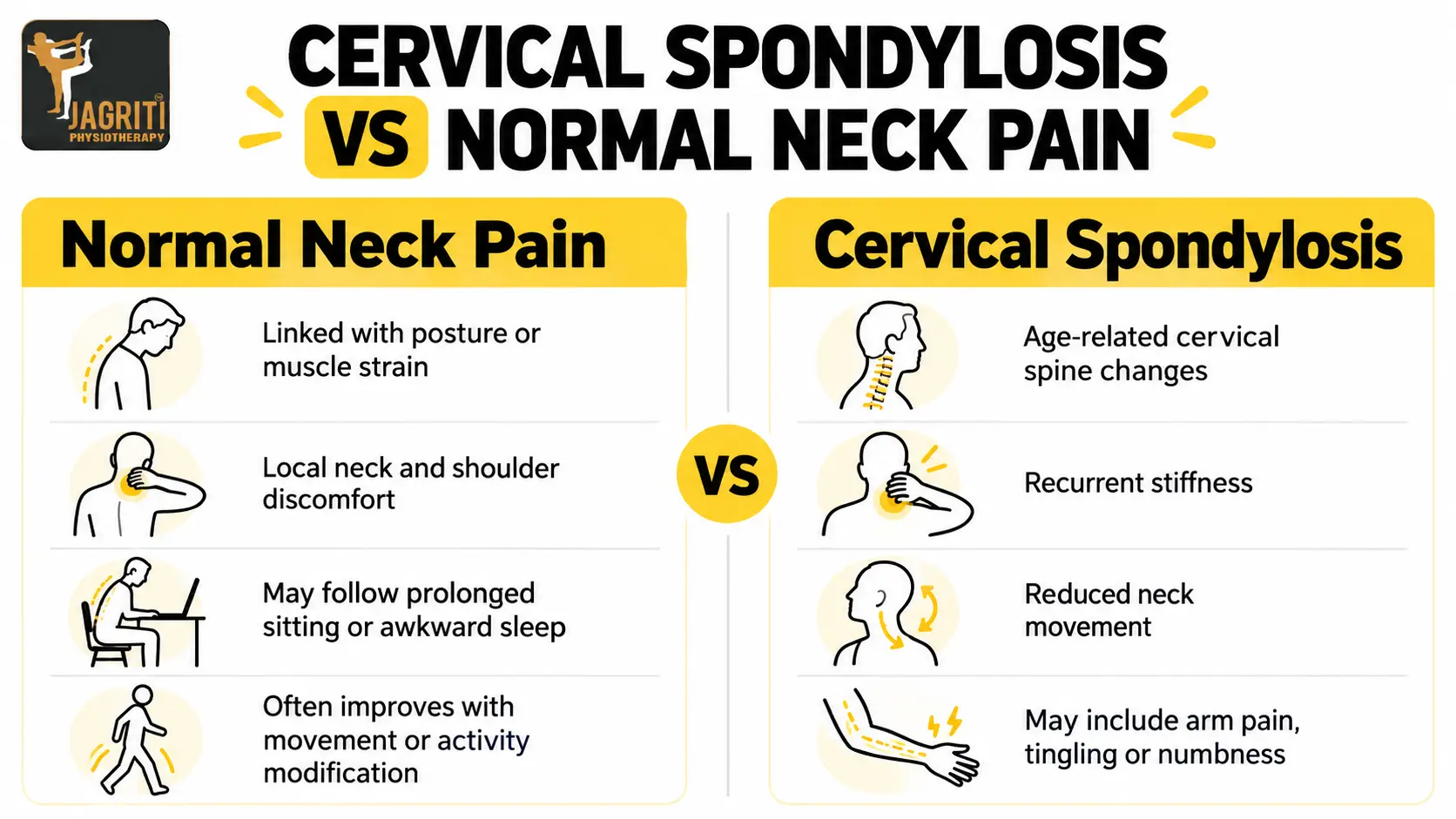
One useful distinction is the pattern and persistence of symptoms.
Ordinary posture- or muscle-related neck pain often develops after a clear trigger, such as working at a laptop for several hours, sleeping awkwardly, or suddenly increasing physical activity. The discomfort may remain primarily around the neck, shoulders, and upper back.
Cervical spondylosis may cause more persistent or recurrent stiffness and reduced neck mobility. In some cases, changes in the cervical spine can irritate or compress a nerve, causing pain to travel into the shoulder, arm, or hand.
Possible nerve-related symptoms include:
- Tingling or pins and needles in the arm or hand
- Numbness
- Reduced grip or muscle strength
- Pain travelling from the neck into the arm
- Difficulty with certain neck movements
These symptoms should not be diagnosed based on internet information alone. A clinical assessment can help determine whether the problem is muscular, joint-related, nerve-related, or associated with another condition.
Can Poor Posture Cause Cervical Spondylosis?
Poor posture itself is not the same as cervical spondylosis.
Cervical spondylosis primarily involves degenerative changes that commonly occur with ageing. However, prolonged static posture, repetitive neck positions, and inadequate movement can contribute to neck muscle fatigue, stiffness, and discomfort.
This is why improving workstation setup, changing positions regularly, maintaining appropriate physical activity, and strengthening the muscles supporting the neck and upper back can be useful parts of managing many forms of neck pain.
When Should Neck Pain Be Checked?
An occasional stiff neck after long working hours may not be concerning. Professional assessment becomes more important when pain:
- Continues for several weeks
- Frequently returns
- Progressively becomes worse
- Travels into the shoulder, arm, or hand
- Is associated with tingling, numbness, or weakness
- Significantly limits neck movement
- Interferes with work, sleep, or everyday activities
Urgent medical assessment is particularly important for new difficulty walking, sudden weakness or loss of coordination, severe symptoms following trauma, or loss of bladder or bowel control.
How Can Physiotherapy Help Cervical and Neck Pain?
Physiotherapy treatment should be based on the person’s symptoms and assessment rather than simply an imaging report.
A physiotherapist may assess neck range of motion, muscle strength, posture, upper-back mobility, neurological symptoms, work habits, and functional limitations.
Depending on the findings, physiotherapy for cervical spondylosis or mechanical neck pain may include mobility exercises, progressive strengthening, movement retraining, ergonomic guidance, posture education, and manual therapy where appropriate.
For people looking for spine physiotherapy in Jaipur, Jagriti Physiotherapy provides individualized assessment and rehabilitation for neck pain, cervical problems, back pain, sciatica, and other spine-related movement conditions.
Treatment is more useful when it addresses the factors contributing to an individual’s symptoms rather than following the same exercise program for every patient.
Sleep habits can also influence symptoms. People who frequently wake with neck stiffness may benefit from reviewing their pillow height and sleeping posture. Jagriti Physiotherapy’s guide on best sleeping positions for cervical pain explains how spinal alignment and pillow support may affect morning discomfort.
Can Cervical Spondylosis Be Managed Without Surgery?
In many people with symptomatic cervical spondylosis, management is conservative. Appropriate activity, exercise, physiotherapy, lifestyle modification, and medical management may help control symptoms and maintain function.
Surgery is generally considered in selected situations, particularly when significant spinal cord or nerve compression causes progressive neurological problems or when conservative treatment is unsuccessful.
The correct approach depends on the individual’s symptoms, physical examination, medical history, and, when required, imaging.
Final Takeaway
The main difference between cervical spondylosis and normal neck pain is that cervical spondylosis involves degenerative changes in the cervical spine, while everyday neck pain is often associated with temporary muscle, posture, joint, or movement-related factors.
Because both can produce similar pain and stiffness, self-diagnosis is unreliable.
If neck pain keeps returning, affects your daily activities, or is accompanied by arm pain, numbness, tingling, or weakness, consider a professional assessment. Jagriti Physiotherapy in Jaipur provides personalized physiotherapy assessment and rehabilitation for cervical pain, neck stiffness, posture-related problems, and other spine conditions.
Frequently Asked Questions
1. How do I know if my neck pain is cervical spondylosis?
Ans: Symptoms alone cannot confirm cervical spondylosis. Persistent stiffness, reduced movement, arm pain, tingling, or weakness may justify further assessment, but a healthcare professional should determine the underlying cause.
2. Does cervical spondylosis always cause pain?
Ans: No. Age-related cervical spine changes are common, and some people with imaging evidence of cervical spondylosis have no symptoms.
3. Can physiotherapy help cervical spondylosis?
Ans: Physiotherapy can help many people manage pain, stiffness, strength, mobility, posture, and daily function. Treatment should be individualized after assessment.
4. Is neck pain from laptop use cervical spondylosis?
Ans: Not necessarily. Long periods at a computer commonly cause muscular or posture-related neck discomfort. Recurrent or persistent symptoms should be assessed rather than assumed to be cervical spondylosis.
About the Author

Dr Deepesh nainani
Dr. Deepesh Nainani (PT) is a leading physiotherapist in Jaipur, offering expert, patient-focused care. He leads Jagriti Physiotherapy with a skilled team across multiple specialties. Known for his achievements and modern treatment approach, he ensures effective recovery and long-term results, making him a trusted choice for physiotherapy in Jaipur.
Get Quote Now