
Neck pain and stiffness are common complaints, especially among people who spend long hours at a desk, use smartphones frequently, or experience age-related changes in the cervical spine. When these symptoms persist or repeatedly return, one possible cause is cervical spondylosis.
Cervical spondylosis refers to age-related degenerative changes in the bones, discs and joints of the neck. Many people have these changes without experiencing symptoms, while others may develop neck pain, stiffness, headaches or symptoms that extend toward the shoulder or arm.
The good news is that many people can manage cervical spondylosis with conservative approaches such as appropriate exercise, activity modification, posture improvement and physiotherapy. Treatment should be based on the individual’s symptoms and clinical assessment rather than a generic exercise routine.
What Is Cervical Spondylosis?
Cervical spondylosis is a degenerative condition affecting the cervical spine, the seven vertebrae that make up the neck.
As we age, the discs between the vertebrae can gradually lose water and height. The joints and surrounding structures may also undergo degenerative changes, and bone spurs can develop. These changes are common with increasing age and do not necessarily mean that a person will experience pain.
However, when these changes contribute to joint stiffness, inflammation, muscle tension or irritation of nearby nerves, symptoms may occur.
Is Cervical Spondylosis the Same as Cervical Arthritis?
The terms are closely related. Cervical spondylosis is commonly used to describe degenerative or wear-and-tear changes in the cervical spine, while cervical osteoarthritis refers more specifically to degenerative changes affecting the neck joints.
The important point is that an X-ray or MRI showing degenerative changes does not automatically mean those changes are the cause of your pain. Symptoms and physical examination findings also matter.
What Causes Cervical Spondylosis?
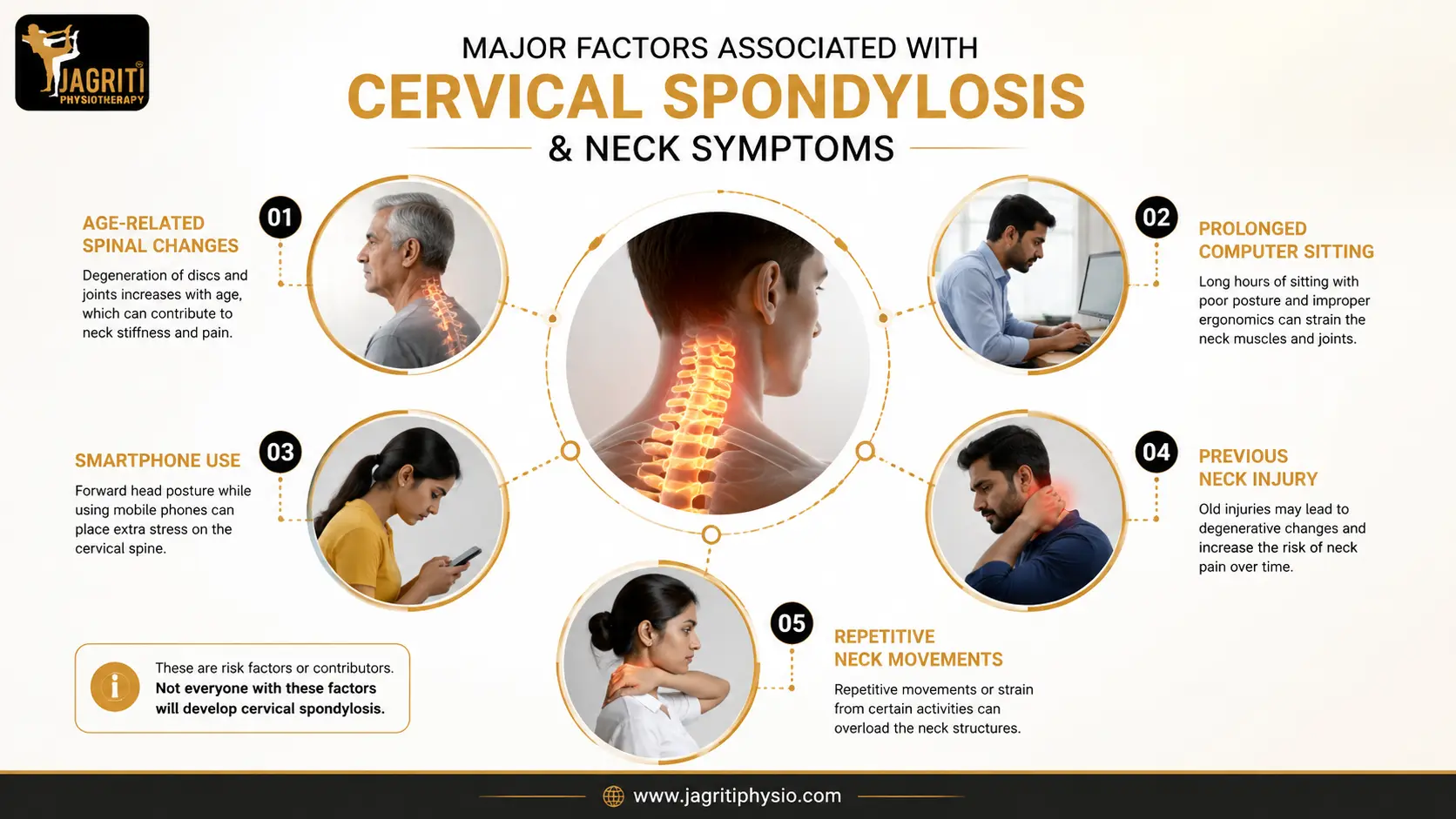
Age-related changes are the primary factor associated with cervical spondylosis, but several other factors can influence the condition or contribute to neck symptoms.
1. Age-Related Wear and Tear
Degenerative changes in the cervical discs and joints become increasingly common with age. Disc dehydration and loss of disc height can change how forces are distributed through the neck.
2. Previous Neck Injuries
A previous neck injury may contribute to degenerative changes or make the area more susceptible to symptoms later in life.
3. Prolonged Static Postures
Spending long periods in the same position, such as sitting at a computer or looking down at a phone, can place additional strain on the muscles and joints around the neck. Poor posture does not necessarily mean it has caused cervical spondylosis, but improving prolonged or uncomfortable postures can help manage neck symptoms.
4. Repetitive Neck Movements
Certain jobs, sports or activities involving repetitive neck movements may increase mechanical stress on the cervical region.
5. Family History and Individual Factors
A family history of cervical spondylosis may increase susceptibility. Fitness level, activity habits and other individual factors can also influence how a person experiences neck pain.
Cervical Spondylosis Symptoms
Not everyone with cervical spondylosis develops symptoms. When symptoms occur, they can vary from mild stiffness to more significant pain or nerve-related problems.
Common cervical spondylosis symptoms include:
- Neck pain
- Neck stiffness
- Reduced neck movement
- Pain around the shoulders or shoulder blades
- Headaches that may begin around the back of the neck
- Muscle tightness or spasms
- Pain extending from the neck toward the shoulder or arm
- Tingling or numbness in an arm or hand
- Weakness in an arm or hand in cases involving nerve compression
Neck clicking or grinding sensations can also occur with degenerative changes and are not necessarily a sign of serious damage by themselves.
Can Cervical Spondylosis Cause Headaches?
Yes, neck-related problems can contribute to headaches, particularly headaches that originate around the back of the neck. However, not every headache is caused by cervical spondylosis.
If headaches are new, severe, persistent or associated with other concerning symptoms, they should be medically evaluated rather than automatically attributed to the neck.
Can Cervical Spondylosis Cause Arm Pain or Tingling?
It can. Degenerative changes in the cervical spine may sometimes contribute to irritation or compression of a spinal nerve. This can produce symptoms such as radiating arm pain, numbness, tingling or weakness.
These symptoms deserve proper assessment because they can also occur with other cervical spine conditions.
Cervical Spondylosis vs. Cervical Radiculopathy vs. Cervical Myelopathy
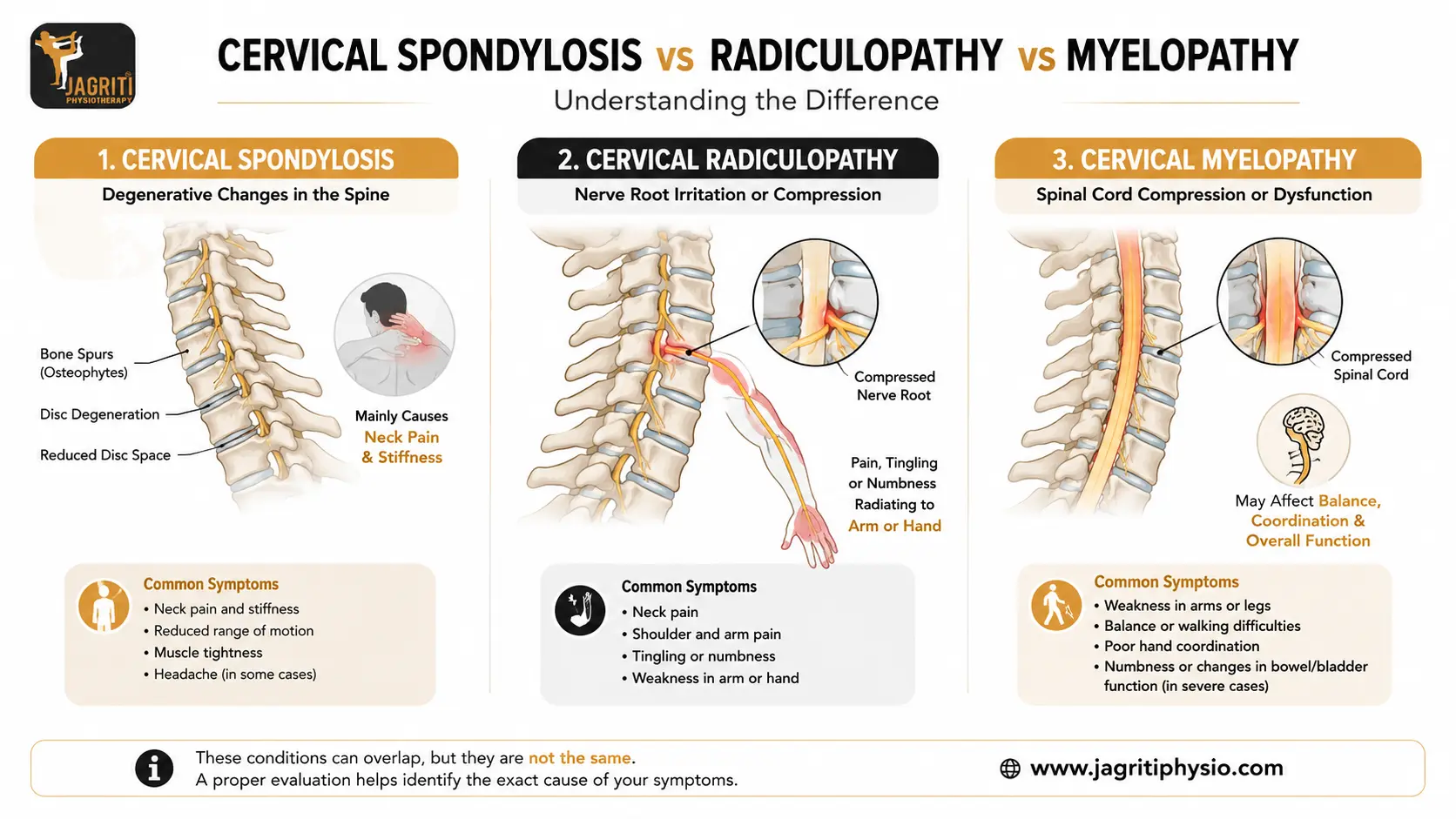
These terms are sometimes confused, but they describe different clinical situations.
| Condition | What It Generally Means | Possible Symptoms |
|---|---|---|
| Cervical Spondylosis | Degenerative changes in the cervical spine | Neck pain, stiffness, reduced movement |
| Cervical Radiculopathy | Irritation or compression of a cervical nerve root | Arm pain, tingling, numbness or weakness |
| Cervical Myelopathy | Compression or dysfunction involving the spinal cord | Balance problems, coordination difficulties, weakness or other neurological symptoms |
How Is Cervical Spondylosis Diagnosed?
Diagnosis usually begins with a detailed history and physical examination.
A healthcare professional may assess:
- Where your pain is located
- How long you have had symptoms
- What activities make symptoms better or worse
- Neck range of motion
- Muscle strength
- Sensation and reflexes when appropriate
- Shoulder and upper-limb movement
- Neurological signs
Imaging such as an X-ray or MRI may be considered depending on the symptoms and clinical findings. Not everyone with neck pain requires imaging, and scan findings should be interpreted alongside symptoms and examination findings.
How Is Cervical Spondylosis Treated?
The appropriate cervical spondylosis treatment depends on the severity and type of symptoms.
Conservative management may include:
Physiotherapy
Along with exercise and rehabilitation, appropriate pain management and control strategies may help people manage discomfort and remain active during recovery.
Exercise and Physical Activity
A suitable exercise programme can help maintain movement and strengthen muscles that support the neck and upper body.
Posture and Ergonomic Changes
Adjusting workstation setup and reducing prolonged static positions can help manage symptoms associated with daily activities.
Medication
A doctor or pharmacist may recommend medication when appropriate for pain and stiffness. Medication should be selected according to the person’s medical history and individual circumstances.
Medical or Surgical Treatment
Most people are managed without surgery. Surgery may be considered in selected situations involving significant nerve or spinal cord problems, particularly when neurological symptoms are progressing or conservative treatment is not appropriate or effective.
How Does Physiotherapy Help With Cervical Spondylosis?
Cervical spine physiotherapy focuses on improving function and helping manage symptoms rather than simply treating an X-ray finding. A physiotherapist can assess your symptoms, neck movement, posture, muscle strength and functional limitations before developing an appropriate treatment plan.
A physiotherapist can first assess your symptoms, neck movement, posture, muscle strength and functional limitations. Based on that assessment, treatment may include:
Pain and Muscle-Tension Management
Appropriate physiotherapy techniques may help reduce pain and muscle tension and make movement more comfortable.
Improving Neck Mobility
Gentle, appropriate mobility exercises can help maintain or improve cervical range of motion when stiffness is limiting daily activities.
Strengthening the Neck and Shoulder Muscles
Weakness or poor control around the neck, shoulder and upper-back region can affect movement. A progressive strengthening programme may help improve muscular support and function.
Improving Posture and Movement Habits
A physiotherapist can identify movement or workstation habits that may be contributing to discomfort and recommend practical modifications.
Ergonomic Education
Your treatment may include advice on desk setup, screen positioning, breaks from prolonged sitting and ways to reduce unnecessary strain during everyday activities.
Home Exercise Programme
A personalised home programme can help maintain progress between physiotherapy sessions. Regular participation is important because physiotherapy often works alongside an active exercise and self-management approach.
At Jagriti Physiotherapy, a physiotherapy programme for cervical spondylosis can be planned around the individual’s symptoms, mobility, posture and functional needs rather than relying on the same exercises for every patient.
What Exercises Are Commonly Used for Cervical Spondylosis?
There is no single exercise programme that is appropriate for everyone with cervical spondylosis. Exercises should depend on symptoms, mobility, strength and whether there are any nerve-related signs.
Depending on the assessment, a physiotherapist may prescribe exercises involving:
- Gentle cervical mobility
- Chin-tuck or deep neck
- muscle activation
- Shoulder-blade control
- Upper-back strengthening
- Shoulder mobility
- Postural strengthening
- General physical activity
The goal is generally to improve movement, strength and function without unnecessarily aggravating symptoms.
Important: Do Not Force Painful Neck Exercises
Exercises found online are not automatically suitable for every person with neck pain.
Avoid aggressively stretching or forcing the neck. If an exercise significantly increases pain, causes new numbness or tingling, produces weakness, dizziness or other concerning symptoms, stop and seek professional advice.
A personalised assessment is particularly important when symptoms travel into the arm or are accompanied by neurological changes.
Lifestyle and Posture Tips for Managing Cervical Spondylosis
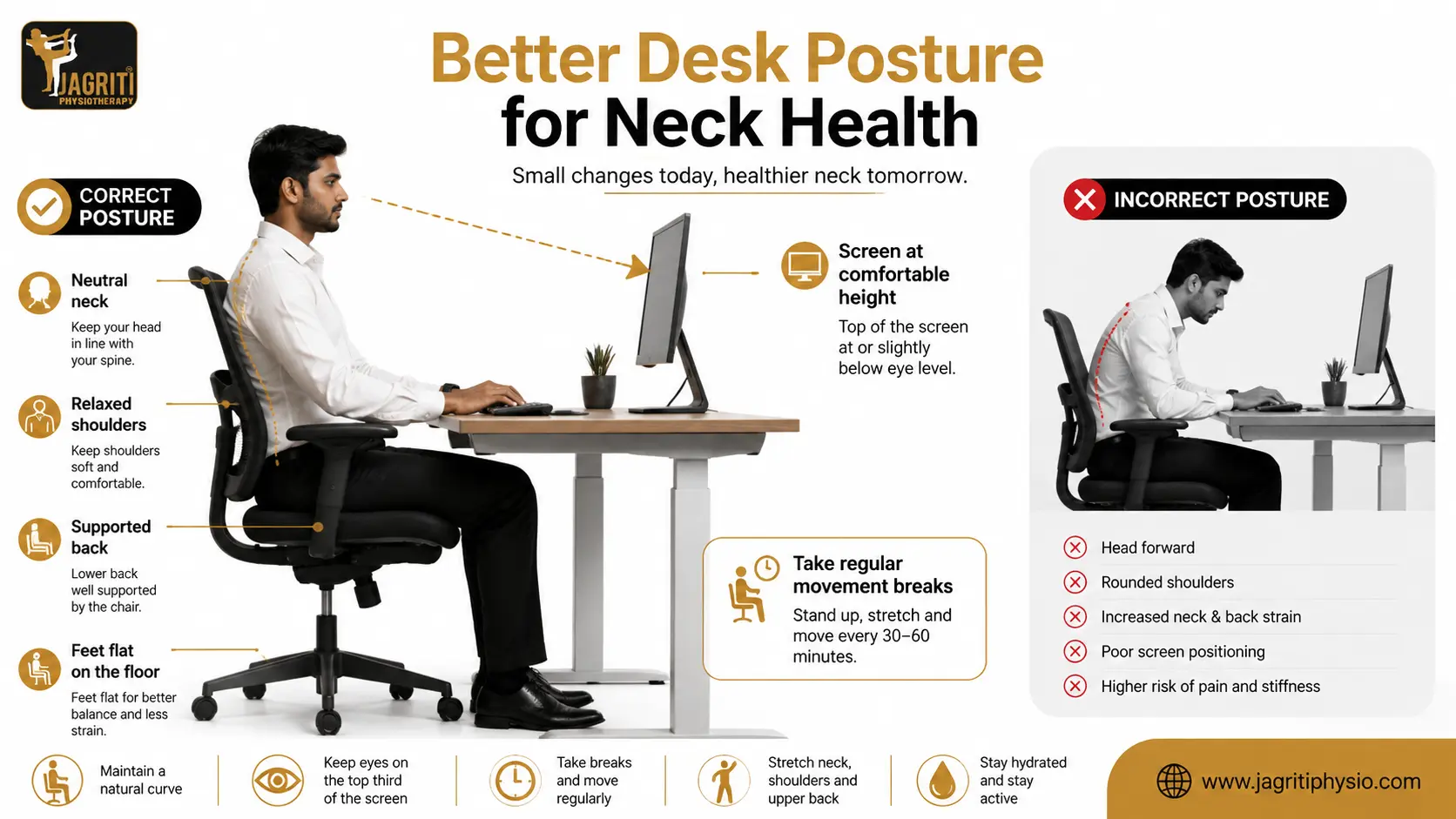
Small changes to daily habits can make it easier to manage recurring neck symptoms.
While Working
- Keep your screen at a comfortable viewing height.
- Avoid remaining in one position for long periods.
- Take regular movement breaks.
- Adjust your chair and workstation so that you can work comfortably.
While Using a Smartphone
Try to avoid spending long periods with your head continuously bent forward. Bringing the phone closer to eye level can reduce the need for prolonged downward positioning.
During Sleep
Choose a comfortable sleeping position and pillow arrangement that allows your neck to remain supported without excessive bending.
Stay Physically Active
Avoid unnecessary prolonged rest. Appropriate physical activity and prescribed exercises can help maintain movement and strength. The NHS also recommends gentle neck exercise, posture improvement and continuing usual activities where appropriate.
When Should You See a Physiotherapist or Doctor?
Consider professional assessment if:
- Neck pain or stiffness continues for several weeks
- Symptoms repeatedly return
- Neck movement is becoming increasingly restricted
- Pain is interfering with work, sleep or daily activities
- Pain travels from the neck into the shoulder or arm
- You experience persistent tingling or numbness
- You notice weakness in an arm or hand
A physiotherapist can assess musculoskeletal symptoms and determine whether physiotherapy is appropriate or whether further medical evaluation is needed.
Red-Flag Symptoms That Need Prompt Medical Attention
Do not rely on physiotherapy alone if you develop concerning neurological symptoms.
Seek prompt medical assessment for symptoms such as:
- New or worsening weakness in the arms or legs
- Problems with walking or balance
- Significant coordination or hand-function problems
- New loss of bladder or bowel control
- Severe neck pain that begins suddenly or worsens rapidly
- Significant symptoms following a serious injury
Problems with walking, coordination or bladder/bowel control can be signs of serious spinal cord involvement and require urgent medical evaluation.
Can Cervical Spondylosis Be Prevented?
Age-related changes in the cervical spine cannot always be prevented. However, maintaining good physical health and taking care of your neck can help support mobility and reduce avoidable strain.
Helpful habits include:
- Staying physically active
- Following an appropriate strengthening programme
- Avoiding prolonged static positions
- Taking regular breaks from screens
- Setting up your workstation comfortably
- Maintaining healthy movement habits
- Getting persistent or recurring symptoms assessed rather than ignoring them
The objective is not to prevent every degenerative change, but to maintain good function and manage symptoms effectively.
Conclusion
Cervical spondylosis is a common condition involving degenerative changes in the cervical spine. While these changes become more common with age, not everyone with cervical spondylosis experiences pain or other symptoms.
When symptoms do occur, management may involve exercise, physiotherapy, activity modification, posture and ergonomic changes, and medical treatment when appropriate. Physiotherapy can help improve mobility, strength and functional movement while providing a personalised approach to symptom management.
If neck pain, stiffness or restricted movement is affecting your everyday life, an assessment by a qualified healthcare professional can help identify the likely cause and determine the most appropriate treatment approach.
Medical disclaimer: This article is intended for general educational purposes and does not replace an examination or diagnosis by a qualified healthcare professional. If you have significant neurological symptoms, severe or rapidly worsening pain, or symptoms following a serious injury, seek appropriate medical care promptly.
Frequently Asked Questions (FAQs)
1. What is cervical spondylosis?
Ans: Cervical spondylosis is a term used for age-related degenerative changes affecting the discs, joints and bones of the neck. Many people have these changes without experiencing symptoms.
2. What are the most common cervical spondylosis symptoms?
Ans: Common symptoms include neck pain, stiffness, reduced movement and headaches. Some people may also experience pain, tingling, numbness or weakness extending into the shoulder, arm or hand when nerves are affected.
3. Can cervical spondylosis be treated with physiotherapy?
Ans: Physiotherapy can be an important part of conservative management for suitable patients. Treatment may include exercise, mobility work, strengthening, movement education and advice for managing symptoms. The exact programme should be based on an individual assessment.
4. Which exercises are good for cervical spondylosis?
Ans: Exercises may include gentle neck mobility, deep neck muscle activation, shoulder-blade exercises, upper-back strengthening and postural exercises. The appropriate exercises vary between individuals, particularly when pain radiates into the arm or neurological symptoms are present.
5. Can cervical spondylosis cause headaches?
Ans: Cervical problems can contribute to headaches that originate around the neck and back of the head. However, headaches have many possible causes, so persistent or unusual headaches should be assessed appropriately.
6. Can cervical spondylosis cause shoulder or arm pain?
Ans: Yes. Cervical degenerative changes can sometimes contribute to irritation or compression of a cervical nerve, which may cause symptoms that extend into the shoulder or arm.
7. How long does cervical spondylosis treatment take?
Ans: There is no fixed recovery period. Treatment duration depends on the severity and duration of symptoms, underlying problems, response to treatment and consistency with the recommended exercise and self-management programme. Symptoms can also fluctuate or return over time.
8. When should I see a physiotherapist for cervical spondylosis?
Ans: Consider seeing a physiotherapist when persistent neck pain, stiffness or movement restrictions are affecting your daily activities. Professional assessment is especially useful when symptoms keep returning or when you need a personalised exercise and rehabilitation programme.
About the Author

Dr Deepesh nainani
Dr. Deepesh Nainani (PT) is a leading physiotherapist in Jaipur, offering expert, patient-focused care. He leads Jagriti Physiotherapy with a skilled team across multiple specialties. Known for his achievements and modern treatment approach, he ensures effective recovery and long-term results, making him a trusted choice for physiotherapy in Jaipur.
Get Quote Now

