

Does the outside of your elbow hurt when you lift a bag, hold a cup, turn a doorknob, work with tools, or spend long hours using a computer mouse? One possible cause is tennis elbow, medically known as lateral epicondylitis or lateral elbow tendinopathy.
Despite its name, tennis elbow is not limited to tennis players. It can affect office workers, gym-goers, tradespeople, homemakers, musicians, and anyone whose work or activities repeatedly load the wrist and forearm muscles.
The typical pattern is pain around the outside of the elbow that becomes worse with gripping, lifting, twisting, or wrist movement. Pain may sometimes extend into the forearm.
What Is Tennis Elbow?
Tennis elbow affects the tendons where forearm muscles attach near the bony area on the outside of the elbow.
These muscles help control wrist extension, gripping, and many everyday hand movements. Repeated or suddenly increased loading can irritate or gradually change the tendon, producing pain and reduced ability to use the arm comfortably.
Common activities associated with tennis elbow include repeated gripping, lifting weights, racquet sports, using hand tools, painting, repetitive kitchen work, and prolonged computer-mouse use. However, some people develop symptoms without one obvious cause.
What Does Tennis Elbow Feel Like?
The most recognizable symptom is tenderness or pain on the outer side of the elbow.
You may notice discomfort when:
- Lifting a bottle, bag, pan, or dumbbell
- Gripping or shaking someone’s hand
- Turning a door handle or opening a jar
- Using a screwdriver or similar tool
- Moving the wrist repeatedly
- Typing or using a mouse for extended periods
- Playing racquet sports
Some people also notice forearm discomfort or reduced grip strength. Symptoms often develop gradually rather than after one major injury.
Can Using a Computer Mouse Cause Tennis Elbow?
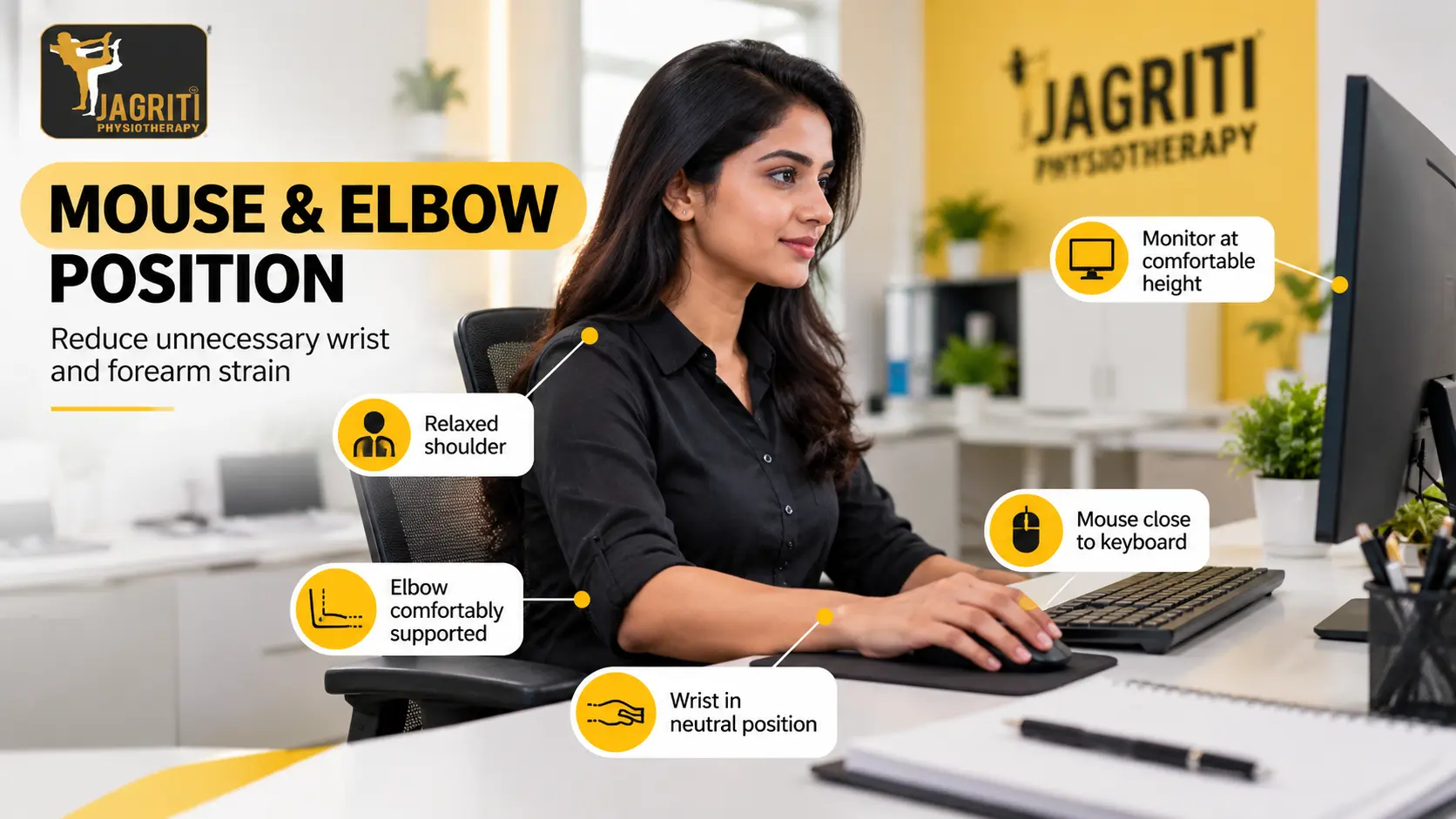
Frequent mouse use can contribute to elbow symptoms in some people because it involves repeated small movements of the wrist and forearm. However, mouse use alone does not mean that someone has tennis elbow.
Workstation height, mouse position, prolonged static posture, the amount of repetitive hand activity, exercise habits, previous injuries, and overall tendon loading may all influence symptoms.
If elbow pain repeatedly appears during computer work, changing the workstation setup and reducing prolonged repetitive wrist activity may help. But persistent pain should be assessed rather than assuming it is simply an ergonomic problem.
Is All Outer Elbow Pain Tennis Elbow?
No.
Pain around the elbow can have several causes, including muscle strains, joint problems, bursitis, nerve irritation, or pain referred from the neck or shoulder. Mayo Clinic notes that elbow symptoms can occasionally originate from the neck, upper spine, or shoulder.
For example, elbow or forearm discomfort accompanied by neck pain, numbness, tingling, or symptoms travelling into the hand may require assessment for a nerve-related problem. Jagriti Physiotherapy’s guide to cervical spondylosis vs normal neck pain can help patients understand why arm symptoms sometimes need a broader neck and neurological assessment.
Similarly, if symptoms occur mainly while moving the shoulder or raising the arm, it may be useful to understand common causes of shoulder pain when raising your arm rather than assuming the elbow is the only source.
What Should You Do If Lifting Makes Your Elbow Hurt?
Completely avoiding every movement is not always necessary. A better starting point is often to temporarily reduce activities that clearly aggravate the elbow while keeping the arm moving comfortably.
You may need to modify heavy gripping, repetitive lifting, wrist-intensive exercises, racquet activity, or prolonged computer work for a period.
The next step is gradually restoring the forearm’s ability to tolerate load.
Structured stretching and strengthening exercises are commonly used during tennis-elbow rehabilitation. The American Academy of Orthopaedic Surgeons specifically includes progressive forearm exercises in rehabilitation programs for lateral and medial epicondylitis.
The right exercise level, however, depends on the severity and irritability of the condition.
How Can Physiotherapy Help Tennis Elbow?
A physiotherapist does more than simply treat the painful point on the elbow.
Assessment may include:
- Location and behaviour of the pain
- Grip strength
- Wrist and elbow movement
- Forearm muscle strength
- Activities that trigger symptoms
- Sports or gym technique
- Workstation and occupational demands
- Neck and shoulder screening when indicated
Based on those findings, physiotherapy for tennis elbow may involve progressive strengthening, mobility exercises, activity modification, education about tendon loading, and appropriate manual techniques.
At Jagriti Physiotherapy in Jaipur, patients with elbow and upper-limb problems can receive individualized musculoskeletal assessment through the clinic’s orthopedic physiotherapy. Jagriti’s pain-management program also addresses muscle, joint, sports, and workplace-related pain.
For suitable cases where travel is difficult, Jagriti Physiotherapy’s online physiotherapy in Jaipur service also specifically includes tennis elbow among conditions that may be supported through remote exercise and rehabilitation guidance.
When Should Elbow Pain Be Checked?
Consider professional assessment when elbow pain keeps returning, is progressively worsening, limits grip or lifting, interferes with work or exercise, or does not begin improving despite reasonable activity modification.
Seek more urgent medical assessment after significant trauma, visible deformity, severe difficulty moving the arm, or if symptoms include significant numbness or tingling.
Can Tennis Elbow Heal Completely?
Many people improve without surgery, but tendon recovery can take time. Tennis elbow may last for several months, and recovery depends on factors such as symptom duration, activity demands, tendon loading, rehabilitation consistency, and individual health factors.
Gradually rebuilding strength and load tolerance is generally more useful than repeatedly returning to the same aggravating activity as soon as the pain temporarily settles.
Final Takeaway
Elbow pain while lifting, gripping, or using a mouse may be related to tennis elbow, but similar symptoms can also come from other structures around the elbow, shoulder, or neck.
Instead of relying only on rest or repeatedly avoiding activity, identifying the actual trigger and gradually restoring strength is important.
If elbow pain is affecting work, gym training, sports, or everyday activities, Jagriti Physiotherapy in Jaipur provides personalized orthopedic and pain-management physiotherapy focused on assessing the cause of symptoms and developing an appropriate rehabilitation plan.
This article is intended for general educational purposes and does not replace individual medical diagnosis or treatment.
Frequently Asked Questions
1. Why does my elbow hurt when I lift something?
Ans: Pain on the outside of the elbow during lifting can occur when the forearm tendons are sensitive to load. Tennis elbow is one possible cause, but an assessment may be needed if symptoms persist.
2. Can a computer mouse cause tennis elbow?
Ans: Repeated mouse and wrist activity may contribute to symptoms in some people, particularly when combined with prolonged work and other repetitive activities. It is not the only possible cause.
3. Can physiotherapy help tennis elbow?
Ans: Physiotherapy can support recovery through progressive forearm strengthening, load management, movement assessment, and modification of aggravating activities.
4. Should I stop working out if I have tennis elbow?
Ans: Not necessarily. Exercises that significantly aggravate symptoms may need temporary modification, while other activities can often continue. A physiotherapist can help determine an appropriate training load.
About the Author

Dr Deepesh nainani
Dr. Deepesh Nainani (PT) is a leading physiotherapist in Jaipur, offering expert, patient-focused care. He leads Jagriti Physiotherapy with a skilled team across multiple specialties. Known for his achievements and modern treatment approach, he ensures effective recovery and long-term results, making him a trusted choice for physiotherapy in Jaipur.
Get Quote Now

