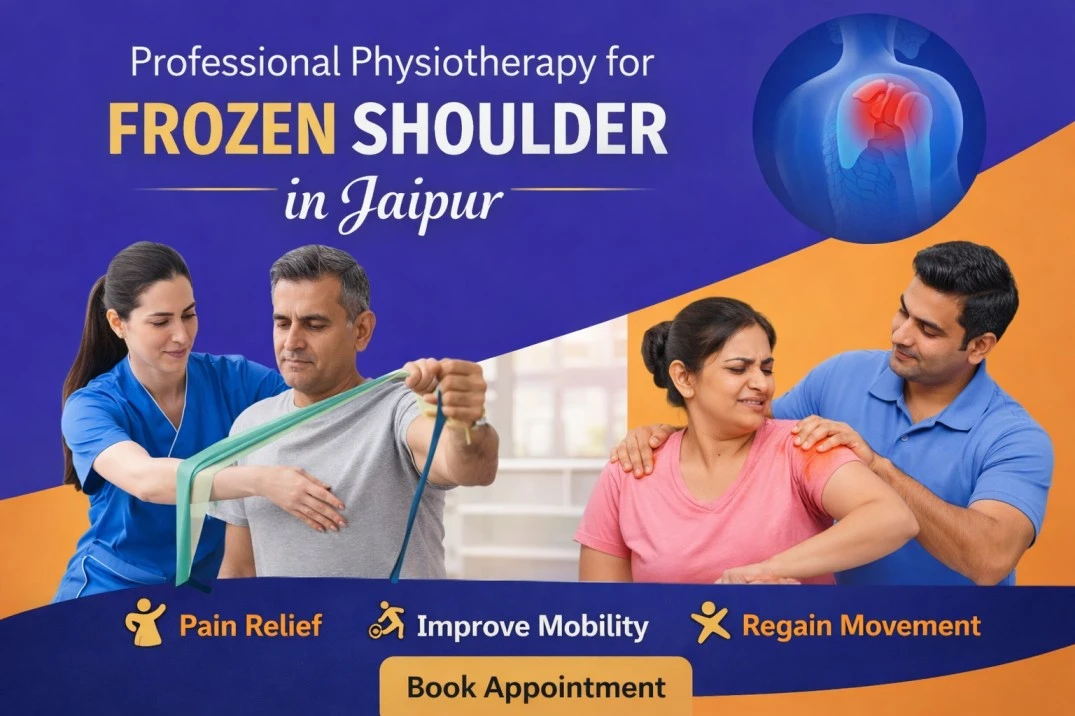
If you find yourself struggling to reach for a glass on a high shelf, struggling to fasten a bra, or waking up in pain because you rolled onto your shoulder, you are not alone. Adhesive capsulitis, commonly known as Frozen Shoulder, is a frustrating and often painful condition that limits your daily independence.
At Jagriti Physiotherapy in Jaipur, we see many patients who have lived with this stiffness for months, hoping it would simply “go away.” While it can eventually resolve on its own, the recovery process can take years without the right intervention. Our goal is to accelerate that timeline, reduce your pain, and restore your range of motion through expert, evidence-based care.
What is Frozen Shoulder?
Frozen shoulder occurs when the thick, fibrous connective tissue surrounding your shoulder joint—the capsule—becomes inflamed, thickened, and tight. As the capsule shrinks and hardens, scar tissue (adhesions) begins to form, significantly restricting the space available for your shoulder joint to move.
Essentially, your shoulder joint becomes “stuck.” While the exact cause isn’t always clear, it is often linked to prolonged immobility following surgery, injury, or underlying conditions like diabetes. Understanding what is frozen shoulder is the first step toward reclaiming your mobility.
Common Frozen Shoulder Symptoms & Causes
Recognizing the signs early can significantly improve your prognosis. Most patients report a dull, aching pain in the shoulder area that worsens when they attempt to move it.
Common Symptoms:
- Pain: A deep, aching sensation that is often worse at night, making it difficult to sleep on the affected side.
- Stiffness: A progressive decrease in the range of motion. You may notice you can no longer reach behind your back or lift your arm to put on a jacket.
Common Causes:
- Immobility: Periods of restricted shoulder movement due to injury, rotator cuff issues, or post-surgery recovery.
- Systemic Conditions: People with diabetes are at a significantly higher risk. Other factors include thyroid disorders, cardiovascular disease, and Parkinson’s.
- Age and Gender: It is most common in individuals between the ages of 40 and 60, and it appears to affect women more frequently than men.
The 4 Stages of Frozen Shoulder
Understanding the 4 stages of frozen shoulder is vital for determining the appropriate treatment approach:
- Freezing Stage (Painful): Characterized by a slow onset of pain. As the pain increases, your shoulder range of motion starts to become limited. This stage can last anywhere from 6 weeks to 9 months.
- Frozen Stage (Adhesive): Pain may actually begin to decrease, but the stiffness intensifies. The shoulder becomes very rigid, making daily tasks challenging. This stage typically lasts 4 to 6 months.
- Thawing Stage: Your range of motion starts to return to normal. This is a gradual process that can take anywhere from 6 months to 2 years.
- Recovery: The final phase where strength and mobility return to near-normal levels.
Also Read: Pain Between Shoulder Blades – Causes, Symptoms, and Effective Treatment
Clinical Diagnosis: Special Test for Frozen Shoulder
If you visit our clinic in Jaipur, our experts don’t just rely on guesswork. We utilize a special test for frozen shoulder in physiotherapy to differentiate between a frozen shoulder and other issues like rotator cuff tears or arthritis.
These clinical tests involve passive and active range-of-motion assessments. By stabilizing your shoulder blade (scapula) and moving your arm in various planes, we can determine if the joint capsule is truly restricted. Accurate diagnosis is the cornerstone of effective frozen shoulder treatment.
The Role of Physiotherapy in Frozen Shoulder Treatment
Many patients ask, “Is physiotherapy good for frozen shoulder?” The answer is a resounding yes. Physiotherapy is widely considered the gold standard for managing frozen shoulder.
For patients dealing with persistent shoulder stiffness, restricted movement, or difficulty performing daily activities, orthopedic physiotherapy can provide a structured treatment approach focused on improving mobility, reducing pain, and restoring shoulder function.
Best Physiotherapy Exercises for Frozen Shoulder
At Jagriti Physiotherapy, we tailor our approach to your specific stage of recovery. The best physiotherapy for frozen shoulder involves a combination of manual therapy (to stretch the capsule) and a structured home exercise program.
Also Read: Left Shoulder Pain – Causes, Symptoms, and Effective Treatment
Effective physiotherapy exercises for frozen shoulder include:
- Pendulum Stretch: Relax your shoulders and let your affected arm hang down. Lean forward slightly and gently swing your arm in small circles.
- Towel Stretch: Hold one end of a towel behind your back and pull it upward with your healthy hand to gently stretch the stiff shoulder.
- Wall Crawls: Stand facing a wall and slowly walk your fingers up the surface, keeping your arm as straight as possible.
How to Cure Frozen Shoulder Quickly
We understand the desire for relief. If you are wondering how to cure frozen shoulder quickly, the secret is early intervention. The longer you wait, the more “frozen” the tissue becomes.
How to Cure Frozen Shoulder Quickly at Home:
While home care cannot replace professional assessment, you can manage symptoms by:
- Applying Gentle Heat: Use a heating pad before exercising to loosen the muscles and tissues.
- Avoiding Overuse: While movement is essential, avoid heavy lifting that causes sharp, stabbing pain.
- Consistent Routine: The most common mistake is stopping exercises when the pain decreases. Consistency is what truly accelerates the “thawing” process.
Why Choose Jagriti Physiotherapy in Jaipur?
Living with a frozen shoulder in Jaipur doesn’t have to be a permanent reality. At Jagriti Physiotherapy, we combine clinical expertise with a compassionate approach. We don’t just treat the joint; we treat the patient. Our goal is to get you back to your favorite activities—whether that’s cooking, playing with your grandkids, or simply sleeping through the night without pain—as quickly and safely as possible.
FAQs — Frequently Asked Questions
1. Is physiotherapy good for frozen shoulder?
Ans: Yes, it is highly effective. Physiotherapy helps reduce inflammation, manage pain, and restore movement through specialized manual techniques and guided exercise.
2. Is physiotherapy compulsory for frozen shoulder?
Ans: It isn’t “compulsory” in a medical sense, but it is strongly advised. Physiotherapy significantly reduces the recovery time and prevents long-term joint stiffness.
3. How to cure frozen shoulder quickly?
Ans: The fastest way to recover is to seek professional physiotherapy during the early “freezing” stage. Combining clinical manual therapy with a consistent home exercise plan provides the best results.
4. What is frozen shoulder?
Ans: It is a condition characterized by stiffness and pain in the shoulder joint. It happens when the capsule surrounding the joint thickens and becomes inflamed, restricting motion.
5. How to cure frozen shoulder quickly at home?
Ans: You can manage symptoms at home by using gentle heat, performing daily pendulum stretches, and avoiding activities that cause severe pain. However, always consult a physiotherapist to ensure your exercises are safe and appropriate for your current stage.
About the Author

Dr Deepesh nainani
Dr. Deepesh Nainani (PT) is a leading physiotherapist in Jaipur, offering expert, patient-focused care. He leads Jagriti Physiotherapy with a skilled team across multiple specialties. Known for his achievements and modern treatment approach, he ensures effective recovery and long-term results, making him a trusted choice for physiotherapy in Jaipur.
Get Quote Now

